6 Things You Shouldn’t Have to Get Used To at Work
Not everything that becomes “normal” at work is actually healthy. Over time, certain behaviors get normalized to the point where they are accepted without question. You start hearing phrases like "That's just how things work here" or "You'll get used to it," and what once felt uncomfortable starts to feel expected.
However, just because a behavior is common does not mean it’s acceptable. For instance, if your team consistently misses deadlines due to poor time management but everyone shrugs it off as standard practice, this should be recognized as a significant issue rather than something to adapt to. Some workplace behaviors are red flags that indicate deeper problems needing immediate attention.
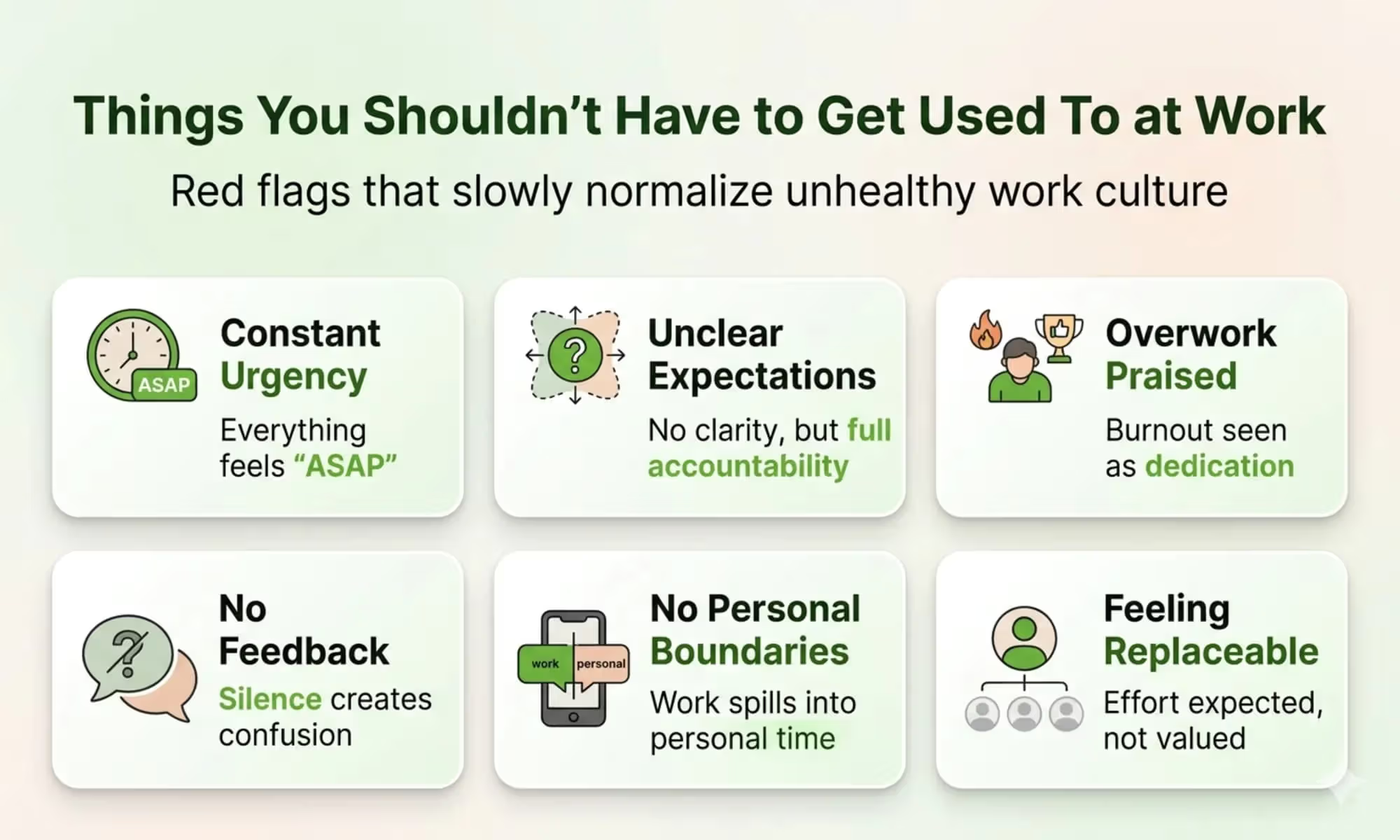
1. Constant Urgency
In some workplaces, urgency becomes the de facto mode of operation, where every task is marked “ASAP” and each request feels like an emergency, fostering a relentless pressure that permeates daily work life. This environment demands rapid responses, constant availability, and prioritizes speed over quality, leading to a cycle of stress and exhaustion.
Healthy teams recognize the importance of discerning priorities rather than treating every task with equal urgency. Prioritization is key—understanding what truly requires immediate attention versus what can wait without compromising outcomes or deadlines.
For instance, responding immediately to a minor technical issue while neglecting a critical project update can lead to significant repercussions down the line. Over time, chronic urgency manifests in tangible consequences such as stress, poor decision-making, and ultimately burnout.
Consider a scenario where an employee is tasked with handling multiple high-priority projects simultaneously; this constant state of emergency leaves little room for contemplation or strategic planning. As a result, decisions are often made hastily, leading to errors that could have been avoided with more careful consideration.
2. Unclear Expectations
Clarity is essential for good work, yet many environments fail to provide it, leaving employees uncertain. The common directive “figure it out” often replaces concrete guidance, causing stress and confusion. This ambiguity wastes time as individuals second-guess their decisions rather than focusing on execution, leading to project failure and personal frustration.
Working on a new project without specific goals or benchmarks is frustrating. You start researching but find your efforts misaligned with expectations due to the lack of clear direction, causing inefficiencies and missed deadlines. According to Gallup, over 50% of employees report feeling unclear about their job responsibilities at times.
Making more guidance available can lead to better outcomes without micromanagement. Clear expectations enhance creativity by enabling informed decision-making and innovation. When employees know exactly what is expected, they take ownership and act with confidence, leading to a productive and satisfying work environment.
3. Overworking Being Praised
Working late nights can be seen as dedication in a fast-paced environment, but when it becomes the norm, it highlights deeper issues within an organization’s culture and management practices. Employees who frequently stay late or skip breaks might signal poor planning by their managers, unrealistic expectations without adequate resources, and systemic inefficiencies that need addressing.
Sustainable performance depends on maintaining balance between work demands and personal well-being; glorifying overwork can lead to burnout among employees. Recent studies show up to 75% of workers experience symptoms of burnout due to excessive workload pressures, affecting individual health, team morale, and overall productivity.
"Burnout is the great masquerade of success," writes Dr. Michael Leiter in his research on workplace wellness. Indeed, when exhaustion, cynicism, and reduced professional efficacy are seen as badges of honor rather than signs of systemic issues needing attention, organizations risk fostering an unhealthy environment that chases short-term gains at the expense of long-term sustainability.
A realistic scenario involves managers asking team members to work through weekends without additional support or resources. This can indicate mismanaged priorities and lack of strategic planning. Addressing these underlying issues is crucial for promoting healthy workplace dynamics that encourage genuine dedication rather than forced overextension.
4. Silence Instead of Feedback
Feedback is essential for personal and professional growth, yet in some workplaces, it's often absent or vague. Without clear direction, even the most dedicated employee can feel lost. For instance, when a team member consistently submits high-quality work but receives no acknowledgment from their supervisor, they might start to wonder if their efforts are truly valued.
This silence can be incredibly damaging. When mistakes aren't addressed and explained, employees may repeat them out of sheer confusion or lack of guidance. Over time, this uncertainty can erode confidence and hinder performance.
A study by the Corporate Leadership Council found that 67% of high-performing managers provide regular feedback to their teams, highlighting just how crucial it is for success. On the flip side, consider a scenario where a manager actively seeks out opportunities to praise good work and constructively addresses errors. Such clear communication fosters an environment of trust and continuous improvement.
Conversely, prolonged silence can signal that something is amiss in the leadership style or organizational culture. It's telling when managers don't engage with their teams' successes and failures—it often points to underlying issues rather than a lack of problems.
5. Disrespect for Personal Time
Boundaries matter, yet in certain corporate cultures, they are often disregarded to the detriment of employees' personal lives. This disregard can manifest in various ways, such as messages and emails sent after work hours or during weekends.
For instance, when managers send non-urgent emails late at night expecting an immediate response, it sends a clear signal that work is expected beyond regular business hours. Another common issue is scheduling meetings during employees' personal time, like on evenings or holidays, which further blurs the distinction between professional and private life.
According to a recent study by the Harvard Business Review, 94% of workers in high-stress jobs report feeling overworked due to such behaviors. This constant intrusion into personal space can lead to burnout and decreased job satisfaction.
Healthy workplaces understand that time is not just about productivity but also about well-being. When companies respect their employees' boundaries, it fosters a more balanced lifestyle where work and personal life coexist without overlap.
For example, a company implementing a policy of no emails after 7 PM can see an improvement in employee morale and job performance, as workers have the time to recharge and focus on other aspects of their lives.
6. Feeling Replaceable Instead of Supported
Everyone desires to feel valued in their work environment, but sometimes reality falls short. In such environments, employees put in effort without acknowledgment for hard work and high-quality results. Support from colleagues and superiors is scarce, making recognition rare.
This can lead to feelings of replaceability rather than being an irreplaceable part of the team. The shift isn't just demotivating; it affects how you engage with your work and whether you see yourself staying long-term. A study found that 40% of employees feel undervalued, correlating closely with higher turnover rates.
In strong organizational cultures, there's a clear investment in people—both financially and emotionally. Support includes regular feedback, professional development opportunities, and genuine interest from leadership in career growth. When these elements are present, employees feel recognized and empowered to contribute more fully.
Take John, for instance, who worked at a tech startup where his ideas were sidelined despite clear benefits for clients. After years of feeling unappreciated, he left for a competitor that offered recognition and room to innovate. This improved John's personal satisfaction and bolstered the new company’s innovation pipeline.
Why These Behaviors Get Normalized
The patterns that lead to normalized behaviors often develop gradually over time, rarely announced as official policies. Instead, they tend to surface through the collective habits of team members and the prevailing leadership styles within an organization.
For instance, a manager might consistently overlook minor infractions like late arrivals or missed deadlines, setting a precedent that others follow without explicit instruction. As these behaviors become ingrained, employees gradually adapt to them, often ceasing to question their validity.
This adaptation can be subtle; what once seemed out of place may eventually feel routine and accepted by the group. A striking example is seen in tech companies where a culture of long working hours becomes normalized over time despite numerous studies indicating its negative impact on mental health and productivity.
Breaking this cycle requires heightened awareness and a proactive approach to address these issues before they become entrenched. For instance, instituting regular feedback sessions or anonymous surveys can help surface concerns early and foster an environment where questioning norms is encouraged rather than stifled.
What You Should Expect Instead
A healthy workplace prioritizes transparency, open communication, realistic goals, respect for boundaries, consistent feedback, recognition, and support. Clear channels ensure employees feel comfortable sharing thoughts, fostering trust. Achievable objectives align with team capabilities, preventing overwhelm and boosting morale.
Regular check-ins address issues before they escalate. Companies must respect working hours and workload limits to prevent burnout. Constructive feedback addresses areas of improvement promptly. Celebrating achievements and providing resources significantly boost motivation. These elements contribute essential components to a healthy work environment.
How to Respond
Your surroundings and circumstances may feel beyond your control, but the way you react is entirely within your grasp. Setting clear boundaries can help protect your well-being and maintain a healthy work-life balance, especially in challenging environments.
For instance, when faced with overwhelming tasks or unclear expectations, it's crucial to seek clarity early on to avoid misunderstandings and stress. Documenting your contributions meticulously not only serves as proof of your efforts but also helps you stay organized and focused.
This practice is particularly beneficial during performance reviews or when negotiating better opportunities. A real-life example involves an employee who kept a detailed log of her projects and accomplishments, which she used to secure a promotion within six months.
Additionally, exploring alternative job prospects can be a proactive step toward finding a more supportive and conducive work environment. Even the smallest actions can lead to significant changes over time. By consistently taking these steps, you empower yourself to either improve your current situation or transition smoothly into a better one.
Conclusion
You shouldn't adapt to every discomfort at work; some issues are clear red flags that demand immediate attention. They signal the need for change rather than acceptance. The goal isn't merely surviving in a toxic environment but thriving and contributing meaningfully.
For instance, if your feedback is consistently ignored or belittled by superiors, it’s crucial to recognize this as a sign of systemic disrespect rather than personal failure. Working environments should foster growth and mutual respect, not stifle them.
According to a study, over 50% of employees who leave their jobs cite a lack of appreciation and recognition as the primary reason. This isn't about making work perfect but ensuring it supports your professional development and well-being. Sometimes, stepping away from a hostile or unappreciative workplace can lead to more fulfilling career opportunities.