 WORKPLACE SIGNALS
 Talk Like a Leader: 10 Powerful Reframes That Build Authority and Trust
Why “Talk Like a Leader” Matters More Than You Think
The way you communicate at work profoundly impacts how people perceive your leadership. Effective communication builds trust, clarity, and influence with team members, stakeholders, and even yourself. It's what sets apart a mediocre leader from an exceptional one.
Consider a manager who frequently says "I'm not sure" or "Let me check on that." Such phrases undermine authority and erode trust. In contrast, a leader who confidently articulates their vision creates a productive and motivated environment.
The shift between casual language and leadership communication lies in subtle phrasing changes. Adopting an intentional approach moves you from creating confusion to fostering alignment and confidence. Learning to communicate with authenticity, authority, and conviction is invaluable both professionally and personally.
The Hidden Cost of Poor Leadership Communication
When leaders communicate poorly, consequences can be severe. Phrases like "That's just how it is" or "Just get it done" undermine trust and create uncertainty. These statements may seem innocuous but convey a lack of empathy, leading team members to feel unheard and undervalued. For instance, managers who say "I don't have time to explain" or "Just figure it out" might solve immediate issues but cause long-term problems such as disengagement and unclear expectations, decreasing morale and productivity. High-performing individuals can struggle in environments where communication lacks intention, feeling frustrated and undervalued. Great leadership communication is achievable by replacing vague language with clarity, purpose, and respect. Effective communication inspires trust, fosters collaboration, and drives results. Leaders must use language that conveys empathy, respect, and intention to improve relationships and achieve greater success.
Reframing Communication to Build Authority and Trust
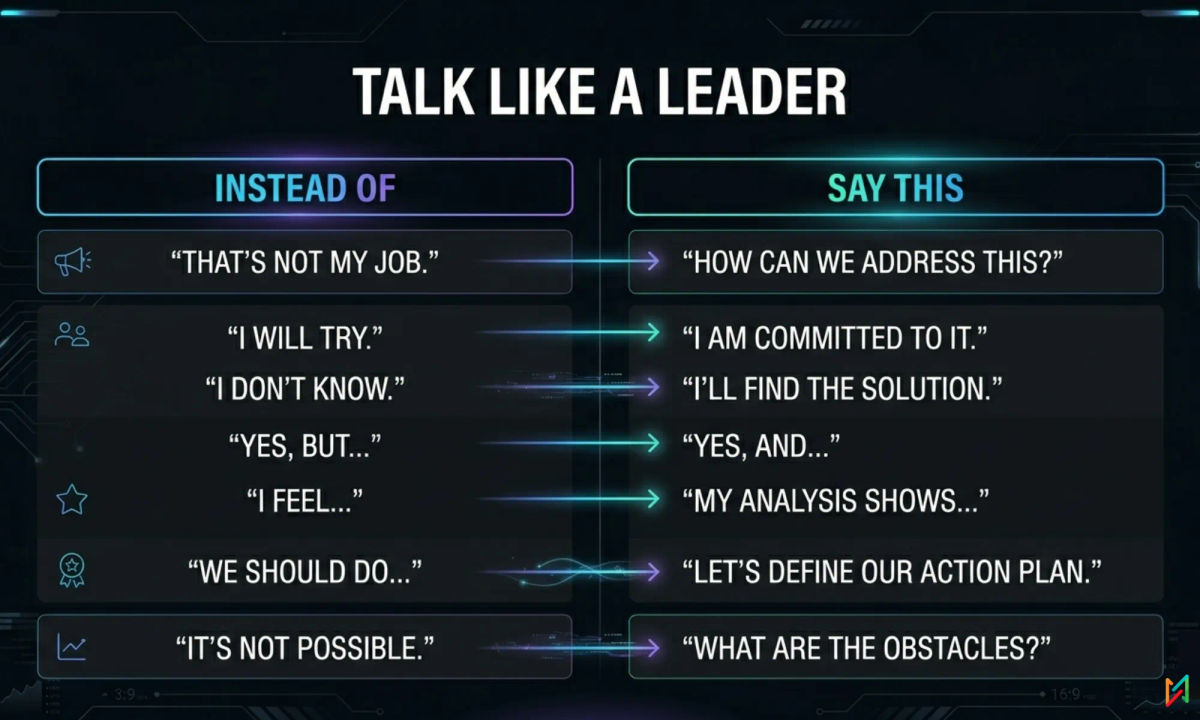
Talking like a leader means being deliberate with your words, ensuring each statement adds value. This fosters trust and credibility. For example, when discussing a new project, avoid stifling comments like "That's just how it is." Instead, say, "Here's why we're doing it this way," providing context and encouraging collaboration. Another shift is from "You need to do this" to "Here's what needs to happen and why—let me know your thoughts." This turns a command into a collaborative direction, showcasing authority while inviting input. These changes demonstrate commitment to team members' growth, strengthening trust and fostering a positive work environment.
Turning Resistance Into Collaboration
In today's fast-paced work environments, effective communication is crucial for success. Learning to talk like a leader transforms resistance into collaboration by acknowledging others' viewpoints. Saying "Let’s look at challenges and find solutions together" invites problem-solving and encourages expertise sharing, creating an empowering environment. Leaders focus on moving conversations forward through active listening, asking open-ended questions, and reframing issues as growth opportunities. They refine ideas and seek input to ensure alignment and commitment, fostering a culture where people feel safe sharing perspectives and collaboration thrives.
Creating Space for Better Conversations
In today's fast-paced environment, leaders struggle to prioritize meaningful conversations amidst chaos. Effective communication requires intentional effort and willingness to pause. Knowing when to step back and create space for better discussions is key. Consider a scenario where you're asked to address a critical issue that's been on your plate for weeks. You might be tempted to dismiss it with "I don't have time for this." However, reframing your response to "Let's revisit this when we can give it the proper focus and attention" demonstrates respect and acknowledges the topic's importance. This approach yields tangible results by prioritizing thoughtful discussions and ensuring important topics receive deserved attention. Creating space is not just about managing time; it cultivates transparency, trust, and collaboration. Leaders must navigate these complexities effectively, balancing urgency with deliberation.
Encouraging Curiosity Instead of Ego
Effective communication in the workplace is crucial for success and relationship-building, yet it often gets overlooked. Humility is undervalued; dismissive phrases like "I already know that" create barriers to collaboration. Replacing ego with curiosity transforms your style: instead of asserting authority, you encourage dialogue. For example, responding to a team member's idea by asking "That's a great point—how do you see it applying here?" shows value for their input and opens discussion. This approach builds stronger relationships, fosters collaboration, and leads to better decisions. Leaders prioritizing curiosity demonstrate openness and willingness to learn, showing vulnerability that drives trust and results.
Taking Ownership and Driving Solutions
Effective leadership communication is not just about conveying information; it's also about taking ownership of the message. When leaders say "That's not my problem," they create division and reduce accountability, ultimately hindering the team's ability to work together towards a common goal. This mindset can lead to finger-pointing and blame-shifting, rather than focusing on solutions.
A crucial aspect of leadership communication is setting the tone for collaboration. Instead of saying "Let's figure out who's responsible for this," leaders should adopt a solution-oriented approach by asking, "What's the best way to tackle this challenge together?" This subtle shift in language reinforces shared responsibility and encourages teams to work collectively towards finding answers.
In high-performing teams, challenges are addressed collaboratively, and progress becomes a shared goal. When leaders take ownership of the conversation and focus on solutions rather than problems, they empower their teams to do the same. By shifting the tone from "What's going wrong?" to "How can we make it right?", leaders create an environment where innovation and growth thrive.
Challenging the Status Quo Thoughtfully
The status quo is comfortable yet stagnant for organizations. Many companies stick to outdated processes out of habit, stifling innovation. Successful leaders seek improvement even in tried-and-true methods by questioning their relevance. This critical thinking encourages employees to evaluate existing processes and consider new approaches while respecting past decisions. Embracing inquiry uncovers hidden opportunities for growth. This balanced approach respects tradition and fosters innovation, enabling employees to contribute ideas and insights. When executed correctly, it leads to significant breakthroughs and a more dynamic organization overall. Challenging the status quo aims to create a brighter future rather than dismissing the past.
Giving Feedback That Drives Growth
As a leader, providing effective feedback is essential. The way you deliver it can inspire growth or stifle progress. Constructive feedback, not criticism, empowers team members to learn from mistakes and develop new skills. Saying "Next time, consider this approach—let's walk through it together" can make all the difference. By focusing on future improvement rather than past failures, you build trust and foster a positive work environment. Good feedback helps individuals become more capable and confident professionals without discouraging them.
Supporting Without Losing Accountability
Effective leaders balance supporting team members with maintaining accountability for success. The old approach of just telling someone to "get it done" neglects providing clarity and support, leading to confusion and subpar results. A better approach is offering guidance while supplying necessary resources, like saying "Let me know if you need support to get this done right." This ensures urgency and efficiency. Finding this balance is crucial: teams given clear direction and support are more likely to succeed than those left on their own. Leaders who offer support without sacrificing accountability create an environment where team members feel empowered to take ownership of their work and strive for excellence.
Navigating Disagreement with Respect
In any team, disagreement is inevitable. It defines the culture and affects decision-making. A common mistake is approaching disagreements with accusation or condescension, which shuts down conversation. Effective leaders acknowledge differences and invite discussion, saying things like "Let's explore what we can learn from each other." This approach maintains a constructive conversation focused on understanding, making individuals feel comfortable sharing their thoughts. Respectful disagreement leads to better decisions by considering multiple perspectives and encouraging critical thinking. It is crucial for leaders and essential for building strong teams.
Why These Reframes Work
In a world where misunderstandings can escalate into conflicts, it's essential to have a framework for reframing conversations. Each reframe is built on the principle of replacing reaction with intention, transforming interactions from defensive and divisive to collaborative and constructive. Effective leaders use this approach by responding to criticism not defensively but constructively, turning focus towards solutions and improving processes. For example, when faced with timeline complaints, they ask clarifying questions like "What specific concerns do you have about the timeline?" or "How can we work together to find a solution that meets everyone's needs?" This intentional approach encourages collaboration and problem-solving. The long-term benefits of consistently using reframes are profound: stronger relationships, increased trust, loyalty, and success.
How to Start Talking Like a Leader Today
Effective communication marks exceptional leaders despite many struggling to find the right tone. Improving starts with awareness of intentional language's importance. Reflect on daily phrases that could be clearer, more respectful, or collaborative. Reframe them; for example, say "Let's explore alternative perspectives" instead of "You're wrong." This avoids misunderstandings and fosters open communication. Consistency is key—incorporate small changes daily to develop a leadership voice that inspires trust and confidence. Clear, respectful, and collaborative language sets you up for success personally and professionally.
Final Thoughts on How to Talk Like a Leader
Talking like a leader is about wielding influence through effective communication. Clear, concise, empathetic language diffuses tension and fosters collaboration. Progress in communication comes from taking small steps towards improvement, learning from mistakes, and adapting to change rather than striving for perfection. This journey defines leadership.