 WORKPLACE SIGNALS
 5 Habits of Highly Effective Leaders That Actually Work
Great Leaders Don’t Wing It—They Build Systems
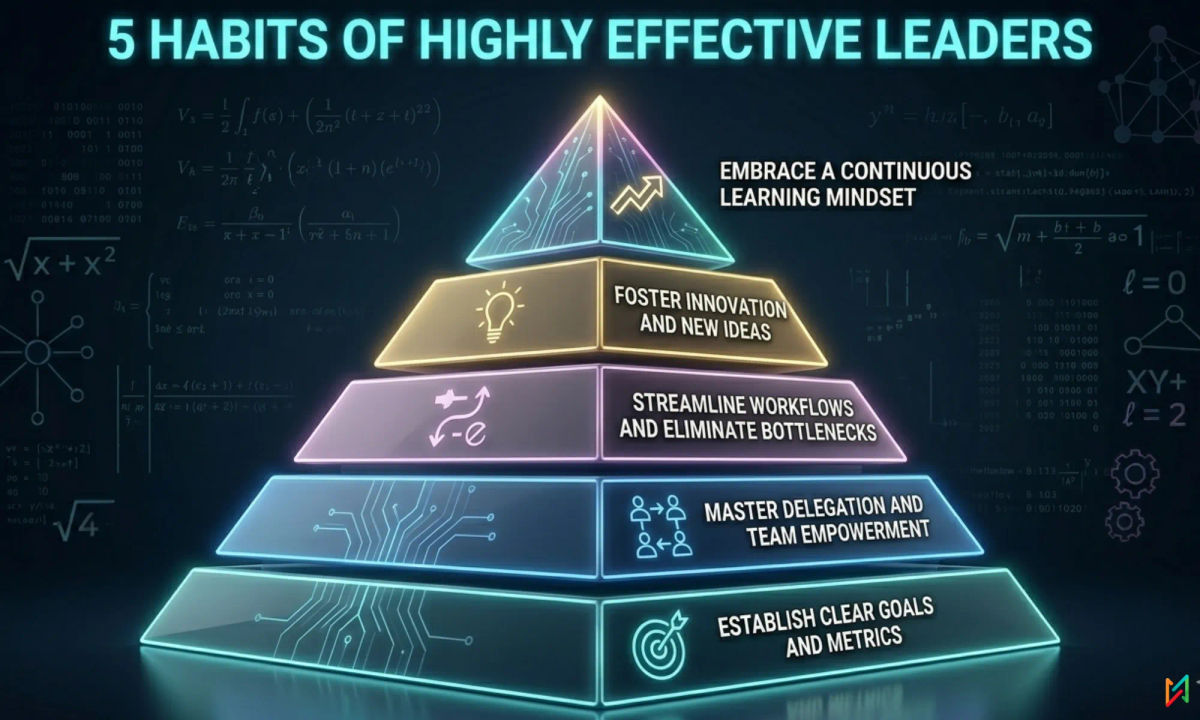
Aspiring leaders often lean on their gut instincts, which can lead to unpredictable outcomes and a lack of consistency. In contrast, great leaders establish systems that become the backbone of their daily operations. A simple yet powerful habit is setting clear goals and prioritizing tasks rigorously. For example, a sales leader who commits to making 50 calls each day will see a significant improvement in focus and motivation compared to someone without such a defined objective.
Creating these systems doesn’t have to be an arduous process; it’s about focusing on simplicity and consistency. By doing so, leaders can foster an environment where their teams are not only productive but also innovative and capable of growth. This approach ensures that the organization can scale efficiently while maintaining high performance levels.
Moreover, building systems is an ongoing journey of refinement and improvement. Leaders must continuously adapt these systems to stay relevant in a rapidly changing landscape. For instance, a tech company might need to adjust its project management system every quarter to keep up with evolving market demands and technological advancements.
"A well-oiled machine doesn’t just run smoothly; it adapts and evolves." This perspective highlights the importance of flexible systems that not only perform but also grow alongside the organization’s needs.
Hyper-Focus Creates Real Progress
The art of hyper-focus distinguishes exceptional leadership by demanding a clear vision and the courage to prioritize ruthlessly. Leaders who master this skill cut through noise, eliminating non-essential tasks that sap energy and detract from key objectives. This clarity enables them to make meaningful progress daily, focusing solely on activities that drive success. For instance, consider a CEO who streamlined sales processes, cutting out redundant steps that slowed down the conversion rate. By hyper-focusing on these improvements, this leader managed to increase conversions by 20%, demonstrating how small gains can compound into significant impacts over time.
Consistent hyper-focus also has the surprising benefit of freeing mental energy for more strategic thinking and nimble responses to new opportunities. When leaders aren’t bogged down by minutiae, they have the bandwidth to identify trends and pivot quickly when necessary. For example, a tech startup CEO noticed an uptick in user engagement on mobile apps over desktop platforms. By hyper-focusing on this trend, she was able to reallocate resources towards mobile development, which doubled their app downloads within six months. This flexibility is crucial in today’s fast-paced business environment, where adaptability can mean the difference between thriving and merely surviving.
Moreover, hyper-focus isn’t just about efficiency; it fosters a culture of discipline and accountability. When team members see leaders prioritizing key tasks without distraction, they are inspired to do the same. This creates a ripple effect throughout the organization, reinforcing a mindset that values focus and impact over busywork. As a result, hyper-focused teams often outperform those that are scattered and reactive.
Delegating Decisions Builds Stronger Teams
Effective leadership goes beyond assigning tasks; it involves empowering team members to make decisions that drive results. In high-performing sales teams, reps are given autonomy within predefined guidelines, which accelerates decision-making processes and fosters a sense of ownership among team members. This approach not only boosts organizational agility but also enhances responsiveness to market changes and the ability to seize new opportunities.
When leaders delegate decision-making authority, they free themselves up to focus on strategic initiatives and growth opportunities. This empowerment transforms employees into critical thinkers who can make informed decisions and take proactive action, contributing significantly to overall team performance. For instance, a sales manager might allow her team to negotiate pricing terms within a specific range, leading to quicker deals and higher customer satisfaction.
Delegating decision-making power does not just benefit the organization—it transforms individuals into confident leaders capable of tackling complex challenges independently.
Data from Fortune 500 companies shows that teams with high levels of autonomy outperform those with micromanaged tasks by as much as 37%. This indicates a direct correlation between employee empowerment and organizational success. By fostering an environment where decision-making is shared, leaders create resilient teams better equipped to navigate the unpredictable landscape of modern business.
Removing Bottlenecks Unlocks Performance
The moment a leader becomes the bottleneck, progress slows down. This happens when they take too much control or become overly involved in every aspect of their team's work, leaving others waiting for approvals and direction. Overcoming this involves building systems, processes, and support structures that allow teams to operate independently with necessary resources and autonomy. The goal is not abandonment but creating an environment where they can thrive. Removing bottlenecks accelerates progress, motivating people to collaborate effectively and drive results. Organizations see improved efficiency, increased innovation, and enhanced competitiveness. For example, a software development team I worked with was struggling to deliver features on time because the lead developer constantly tweaked code. By removing this bottleneck, we established clear guidelines, delegated tasks, and empowered them to make decisions about their own work. Suddenly, they were delivering features faster than ever before, and morale skyrocketed. Recognizing when you're inadvertently becoming a bottleneck and taking steps to remove these blockers increases productivity and fosters ownership and accountability among team members.
Creativity Requires Protection
The daily grind of organizational management can easily consume the time and energy of even the most seasoned leaders. As companies expand, meetings and urgent priorities tend to overshadow creative thinking unless there is a deliberate effort to allocate specific time for it.
Forward-thinking leaders understand that setting aside time for reflection and exploration is not merely beneficial but essential. This practice serves as an investment in fostering innovation, enhancing decision-making processes, and laying the groundwork for strategic planning. For instance, consider a startup founder who dedicates one day each week to immersing herself in industry reports, engaging in brainstorming sessions with her team, and exploring new ideas.
This approach has tangible benefits: it allows the leader to stay ahead of market trends, adapt swiftly to changes, and maintain a competitive edge. For example, a startup founder who prioritizes creative time may be better prepared to pivot her business strategy when faced with an unexpected shift in consumer demand. By nurturing creativity, leaders like this can drive meaningful innovation that sets their companies apart from the competition.
Challenges Become Opportunities
The most successful organizations view challenges not as obstacles but as opportunities for growth. Great leaders understand that setbacks are not failures but rather valuable lessons that help companies adapt to changing market conditions and achieve long-term success. Amazon's transition into cloud computing under Jeff Bezos is a prime example of this philosophy in action, despite facing stiff competition from established players like Microsoft and IBM.
By embracing challenges head-on, leaders like Bezos foster an environment where innovation and resilience are the norm. Experimentation with new approaches, learning from mistakes, and continuous improvement become the driving forces behind organizational success. This mindset transforms how companies view failures; instead of seeing them as roadblocks, they see them as crucial feedback that guides future decisions.
"The most dangerous thing for a company is to be in a comfort zone," says an industry expert, highlighting the importance of staying agile and responsive even when faced with significant challenges. A practical example illustrates this point: when Google entered the mobile phone market, it didn't just compete—it redefined how smartphones were built and used, showcasing the power of embracing challenges.
Why These Habits Matter
Habits shape leadership styles and personal development by enhancing clarity, accelerating progress, and fostering growth. In leadership roles, cultivating specific habits is crucial for significant organizational impact. For instance, mastering hyper-focus and effective delegation allows leaders to make measurable progress toward objectives while building team capabilities and trust. This focus on strategic initiatives drives overall efficiency and productivity.
Eliminating bottlenecks in operational processes enhances execution speed and quality. By streamlining workflows, leaders free up time to address complex challenges and innovate at scale, propelling the organization forward. Resilience isn’t just about bouncing back from failure; it’s about using each setback as a stepping stone toward greater strength and wisdom.
These habits are skills that can be honed through deliberate practice and commitment. For example, consider John Doe, who improved his delegation skills by assigning tasks based on team members' strengths rather than just workload balance. This not only boosted efficiency but also increased morale and trust within the team. Adopting these practices with dedication leads to remarkable transformations in personal fulfillment and professional achievement.
Final Thought
Making strides towards excellence, not flawlessness, characterizes great leadership. A practical approach involves attending one industry conference each year and reading a leadership book every three months. This strategy nurtures growth without inundating your schedule or overwhelming ambitions, setting a precedent of continuous learning within the team. Employees begin to view these habits as an integral part of the company culture, fostering more engaged discussions during meetings and enhancing their willingness to experiment with new ideas.
Consistency in leadership practices translates into tangible outcomes like higher productivity and improved morale. For instance, after several quarters of focused reading and networking, a manager might observe a 15% increase in innovative project proposals from team members. Gradual progress is often more impactful than sporadic bursts aimed at perfection, as it allows for steady development without the pressure to achieve instant results.