 WORKPLACE SIGNALS
 The Ultimate Job Interview Cheat Sheet (Answers That Actually Work)
The conventional wisdom among job seekers is memorizing interview answers leads to success, but seasoned interviewees know reciting rehearsed responses often backfires, revealing lack of genuine thought process and adaptability. Interviewers prefer candidates who structure their thinking on the fly and convey complex ideas clearly.
For example, when asked about overcoming a difficult challenge, top answers showcase both the event and decision-making processes behind it. By focusing on logical response structuring and effective communication of problem-solving approaches, you demonstrate cognitive abilities. Sometimes, admitting uncertainty or lack of knowledge can show maturity and willingness to learn.
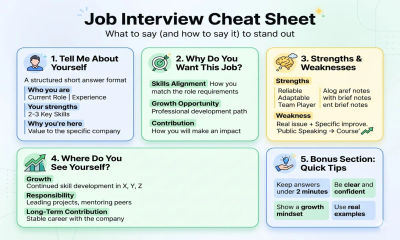
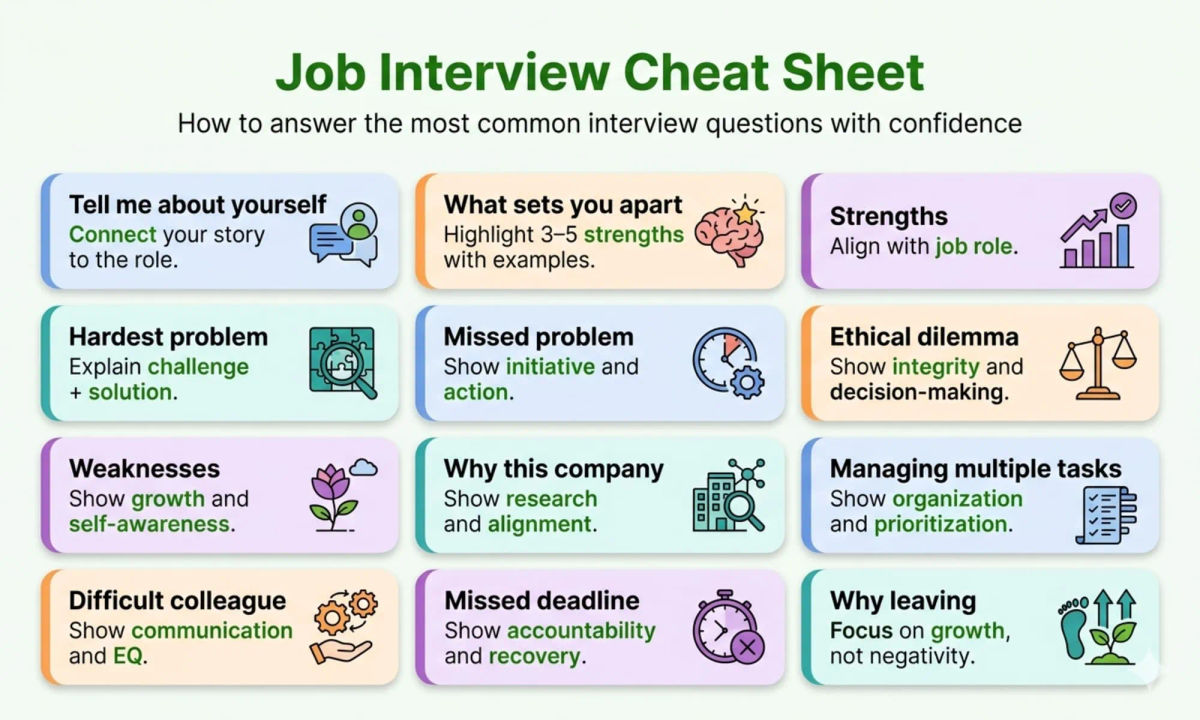
1. Tell Me About Yourself
This isn't a personal question; instead, it's an opportunity to position yourself for the role you're interviewing for. Share your professional journey by highlighting relevant experiences that align closely with the job requirements and company culture.
- Connect your experience to the job by mentioning specific projects or achievements that demonstrate your skills and fit for the role.
- Explain why this particular role makes sense for you, drawing on past successes and future career goals. For example, if you've been in similar roles before, discuss how your previous work has prepared you uniquely for this position.
Keep it concise and relevant by focusing solely on information that is directly pertinent to the job description. Think of this section as a professional story rather than a detailed biography, emphasizing how your past prepares you for what lies ahead.
2. What Sets You Apart from Other Candidates?
To answer effectively, reflect on your unique strengths and how they align specifically with the role. For instance, if a job listing emphasizes leadership skills, highlight specific instances of exceptional leadership. Highlight 3–5 key strengths relevant to the position, such as project management or technology proficiency.
Back up these strengths with concrete examples. Mention a project where you implemented a new system that increased efficiency by 20%, showcasing both technical skills and impact on business outcomes. Avoid vague claims and keep your response specific to the position.
This question is an opportunity to demonstrate not just what you can do, but why you are uniquely positioned to excel in this role. By focusing on concrete examples linked directly to the job description, you can set yourself apart from other candidates.
3. What Is the Hardest Problem You’ve Worked On?
The hardest problem I tackled was optimizing a complex supply chain system for a multinational corporation, reducing costs by 15% while maintaining high service levels. This required navigating intricate logistics and understanding diverse market conditions across regions.
Initially, integrating different software systems and aligning with stakeholders seemed overwhelming. I approached the problem by breaking it down into smaller components. First, I identified bottlenecks through a thorough analysis.
Then, I designed automated reports providing real-time insights into performance metrics, allowing us to make informed decisions about which areas needed attention. For example, streamlining inventory management in Europe led to significant savings without impacting delivery times.
The outcome was transformative. We met cost reduction goals and improved operational efficiency and customer satisfaction ratings. This experience underscored the importance of meticulous planning and innovative thinking when tackling complex issues globally.
4. Share an Experience Where You Identified a Missed Problem
In my previous role as a project manager, I noticed our team consistently missed critical deadlines due to vague task definitions and unclear milestones. Upon closer inspection, I found that ambiguous language in project documentation had led everyone to assume different interpretations of the goals, causing delays and rework.
I spearheaded a revision of our documentation, introducing detailed task descriptions and specific deadlines for each phase. This improved accountability within the team and reduced overall project duration by 15%, proving clear communication is essential in project management.
5. Tell Me About an Ethical Dilemma
Discussing ethical dilemmas requires focusing on integrity and principles rather than just outcomes. A common scenario involves conflicts between company confidentiality and personal ethics, such as discovering harmful practices. get to know How to Actually Resolve Conflict as a Manager (9-Step Framework That Works).
During my tenure at a tech firm, I faced an ethical dilemma when uncovering evidence that our software was being used in ways it wasn't designed for, potentially harming users. After consulting with legal and ethics advisors, I escalated the issue internally and eventually reported it to regulatory bodies.
This decision highlighted that standing up for what is right can come at a personal cost but ultimately protects consumers and the company's reputation. According to the Ethics & Compliance Officer Association, 74% of respondents believe ethical behavior leads to better business outcomes over time.
6. What Are Your Greatest Strengths?
Your answer should demonstrate how your unique strengths align perfectly with the job requirements, such as highlighting a specific achievement where you increased productivity by 30% through leadership. Use the job description to identify relevant skills and experiences, focusing on providing concrete examples of their impact.
For example, describe a challenging situation you faced and the innovative solution you implemented if problem-solving is required. Strengths without proof lack credibility; back up claims with quantifiable results or testimonials from colleagues or supervisors for added weight.
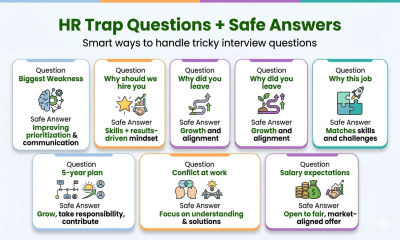
7. What Are Your Weaknesses?
When asked about weaknesses in a job interview, the question is designed to assess your self-awareness and readiness for personal development. A common mistake candidates make is choosing an irrelevant weakness or one that doesn’t show effort towards improvement. For instance, saying you’re not good at public speaking without discussing steps you’ve taken to enhance this skill would be less effective.
Instead, choose a genuine area where you need improvement and highlight your proactive approach. Perhaps you struggle with time management but have implemented tools like Asana or Trello to better organize tasks. This shows that despite acknowledging a weakness, you are taking concrete steps towards rectifying it.
"The goal is growth—not perfection."
8. Why Do You Want to Work Here?
The question "Why do you want to work here?" tests your preparation and genuine interest in the company. Conduct thorough research before any interview, focusing on the organization's products or mission statements to understand what sets them apart from competitors.
- Understanding Amazon’s focus on customer obsession can provide a unique perspective on how your personal values align with its culture.
This level of understanding allows you to connect the company's goals with your own professional experiences and aspirations, making your response more compelling. For instance, highlighting a past project where you prioritized user satisfaction could be particularly relevant.
Specific answers showing alignment and thoughtfulness stand out among generic responses. A well-researched and personalized answer can significantly enhance an interviewee's chances of leaving a lasting impression on the hiring panel.
9. Describe a Situation Where You Managed Multiple Responsibilities
In my previous role as a project manager, I juggled multiple responsibilities including overseeing software development and customer support. Balancing these tasks required an organized approach to maintain quality and timelines.
I created detailed Gantt charts monthly to visualize project timelines and identify potential bottlenecks early on. This helped allocate resources more efficiently and ensured every team member understood their responsibilities clearly, enabling us to foresee delays in development and adjust staffing accordingly when launching a new customer support platform.
Setting clear priorities based on each task's impact was crucial. I often used the Eisenhower Box technique to categorize tasks into urgent and important categories, helping me focus on what truly mattered without getting bogged down by less critical items during peak periods with competing deadlines.
"By focusing on systems rather than just effort, we streamlined processes and improved productivity."
10. Give an Example of Working with a Difficult Person
Working with a challenging colleague requires emotional intelligence and composure under pressure. In my experience, collaborating with Sarah, known for her abrupt communication style and reluctance to compromise, was particularly demanding. Initially, every interaction seemed met with resistance or impatience.
To address this, I observed patterns objectively and suggested scheduling regular meetings well before project deadlines to discuss potential roadblocks early on. This buffer allowed us to tackle issues together rather than individually.
Communication was key; I listened actively and validated Sarah’s concerns whenever possible. Focusing on the issue at hand instead of personal feelings helped us find practical solutions that suited both our needs, improving our working relationship and setting a positive precedent for future challenges.
11. Tell Me About a Time You Missed a Deadline
Discussing missed deadlines often reveals a lot about one's maturity and ability to handle responsibilities gracefully. At my previous company, an unforeseen technical issue delayed the launch of a critical new feature by two weeks. This experience underscored the importance of clear communication with stakeholders.
The problem began when our cloud service experienced unexpected downtime, which disrupted our development timeline. I immediately informed my team and upper management about the delay, emphasizing transparency throughout the process. Despite the setback, we worked diligently to meet all other project milestones on time.
"When a deadline looms and technical issues arise, honesty is the best policy."
Interestingly, this situation actually improved our long-term relationship with stakeholders. By openly discussing challenges and providing regular updates, we gained their trust and understanding. One specific example was when I sent out weekly progress reports detailing what had been accomplished since the last update. This helped keep everyone informed without creating undue panic. Explore more on our
12. Why Do You Want to Leave Your Current Role?
When asked why you want to leave your current role, focus on professionalism and maturity. Highlight growth opportunities that align with your career goals, such as more responsibility or specialized training. Avoid negativity about your current employer; instead, frame your departure positively for personal development.
Discuss how the new role fits into long-term plans and what skills or experiences it offers that benefit you and potential employers. Your response should reflect ambition and excitement about future possibilities without dwelling on past grievances.
How to Use This Cheat Sheet
To effectively use this cheat sheet, it's crucial to approach the material with a clear mindset and practical goals. Rather than trying to memorize specific answers, focus on grasping the underlying purpose of each question. For instance, if you're preparing for an interview where common questions are asked, understanding why these queries are posed can help tailor your responses appropriately.
Once you have a firm grasp of the intent behind each question, work on crafting well-structured answers that address the core issues. This preparation not only ensures that you provide relevant information but also helps in maintaining a clear and confident tone during discussions or presentations. Remember, the aim is to convey preparedness without sounding rehearsed; striking this balance can be challenging yet rewarding.
The goal isn't to sound like a robot delivering perfect answers but rather to appear well-prepared while remaining authentic and natural in your communication.Expert Interview Coach
What Interviewers Are Really Looking For
Behind every interview question, hiring managers seek three traits: problem-solving skills, effective communication, and cultural fit. These qualities are essential for professional success but hard to assess from a resume alone. For instance, when asked about past challenges, candidates must articulate the problem clearly and explain their solution process, demonstrating both problem-solving and communication abilities.
While it’s tempting to focus on technical prowess or achievements, interviewers also value enthusiasm and genuine interest in joining the team. A LinkedIn statistic shows 85% of professionals believe positive relationships at work are crucial for career success.
Conclusion
Interviews are about demonstrating clear thinking and confidence, not reciting perfect answers. Use this guide as a framework to structure your responses and align them with the company's values and culture. Tailor each answer to highlight problem-solving skills over task lists, showing you can think clearly under pressure and adapt to new challenges. Avoid rote responses; instead, communicate thoughtfully.