 WORKPLACE SIGNALS
 The Power of Quiet People and Why They Make Exceptional Leaders
Quiet Doesn’t Mean Weak—It Means Different
In today's fast-paced and often loud world, it's easy to assume that leaders need to be outgoing, charismatic, and always in the spotlight. However, this notion overlooks the immense value of quiet leadership. Quiet individuals bring a unique set of strengths to the table, one that is often overlooked but no less impactful.
Take the example of a successful entrepreneur who prefers to listen more than they speak. They may not be the loudest person in the room, but their thoughtful questions and insightful observations inspire their team to work together seamlessly towards a common goal. This type of leadership is not about being loud or attention-seeking; it's about being intentional and focused on creating meaningful connections.
The takeaway here is that quiet doesn't mean weak. Rather, it means different. It means valuing the power of thoughtful consideration over impulsive action. As leaders, we must recognize the value of quiet leadership and learn to harness its strengths. By doing so, we can create a more collaborative, innovative, and effective work environment for everyone involved.
They Listen More Than They Speak
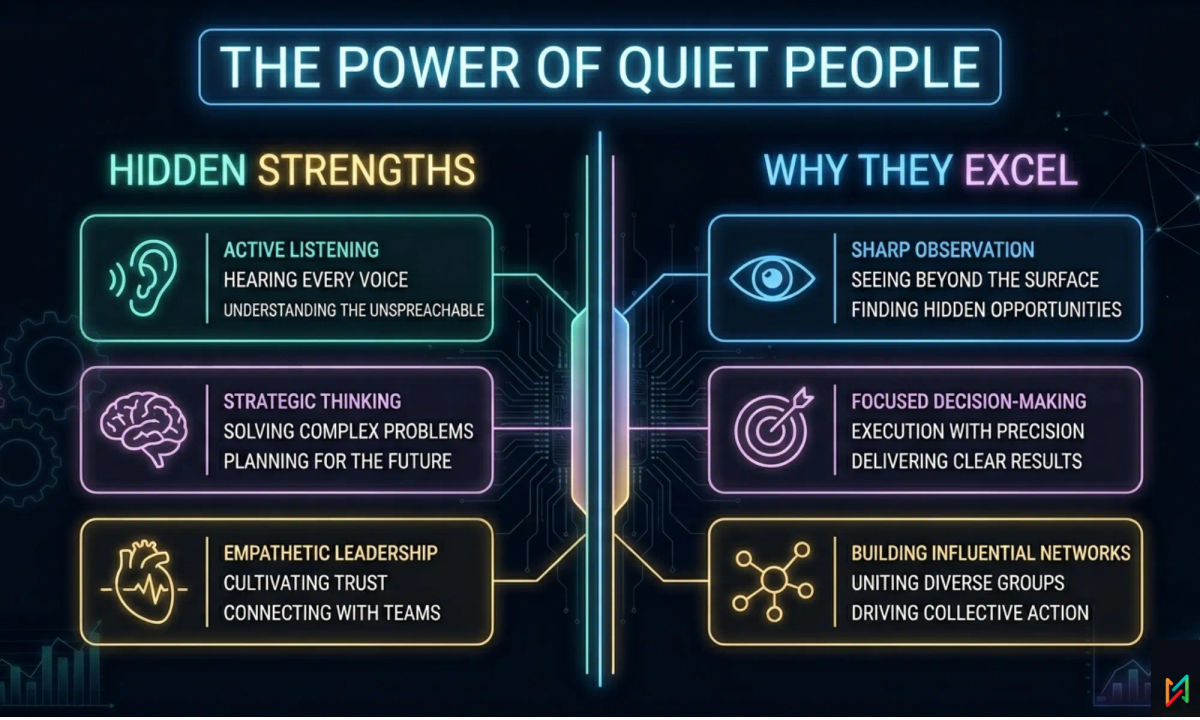
One of the most valuable strengths of quiet individuals is their ability to listen actively. Instead of focusing on what to say next, they focus on understanding. This allows them to pick up on nuances, emotions, and details that others may miss. When we listen deeply, we gain a deeper understanding of the people around us, which can lead to more effective communication and stronger relationships. By prioritizing listening over speaking, quiet individuals create an environment where everyone feels heard and valued.
In a leadership context, this translates into better decision-making. When people feel heard, they are more engaged, more open, and more willing to contribute. Listening becomes a strategic advantage. For instance, consider a manager who takes the time to listen to their team members' concerns and ideas. This not only helps them build trust but also fosters a sense of ownership and accountability among team members. By listening actively, leaders can create an environment where everyone feels valued and motivated to contribute.
The practical takeaway from this is that effective communication is about more than just expressing oneself. It's also about creating space for others to share their thoughts and feelings. As quiet individuals, we have a unique opportunity to model this behavior and create a culture of listening in our personal and professional relationships. By doing so, we can build stronger connections, resolve conflicts more effectively, and achieve greater success.
They Think Deeply Before Acting
Quiet people often take time to reflect before making decisions, a trait that can lead to more thoughtful and well-analyzed outcomes. This deliberate approach sets them apart from those who act impulsively, relying solely on gut feelings. By considering multiple perspectives and potential consequences, quiet individuals are better equipped to navigate the complexities of any situation.
In today's fast-paced world, where decisions often have far-reaching implications, thoughtful leaders are in high demand. They bring stability and clarity when it matters most, whether in personal or professional settings. When faced with a critical choice, they take the time to gather relevant information, weigh the pros and cons, and think through the potential outcomes. This level of introspection enables them to make more informed decisions that benefit themselves and those around them.
The value of deep thinking becomes even more apparent when considering high-stakes situations. In these cases, a moment's hesitation can have significant consequences. Thoughtful leaders recognize this and take the necessary time to evaluate their options carefully. By doing so, they minimize the risk of costly mistakes and maximize the chances of achieving their goals.
They Notice What Others Overlook
The ability to observe and notice subtle details is a remarkable trait that sets quiet individuals apart. These people possess an uncanny ability to absorb information, process it, and make connections that others might miss. They are like master detectives, scrutinizing every detail, no matter how small or insignificant it may seem.
This observational skill allows them to pick up on cues that others overlook, from the tone of a colleague's voice to the body language of a team member. By paying attention to these minute details, they can anticipate potential issues and proactively address them before they escalate into full-blown problems. For instance, if a team member is struggling with a task or seems frustrated, a quiet individual might notice and intervene early on, preventing a breakdown in communication.
The implications of this skill are far-reaching. Quiet individuals who can observe and respond effectively are often the unsung heroes behind successful teams and projects. By taking the time to understand team dynamics, they can facilitate more productive meetings, mediate conflicts, and foster a sense of community among colleagues. Moreover, their ability to anticipate and address potential issues can save countless hours of rework, frustration, and wasted resources. In essence, quiet individuals notice what others overlook, and this remarkable skill is the key to their success.
They Lead with Empathy and Understanding
Quiet leaders often possess an uncanny ability to develop strong empathy due to their willingness to listen and observe. By doing so, they gain a deep understanding of different perspectives, allowing them to connect with people on a fundamental level.
When leaders demonstrate this empathetic approach, it fosters trust within their teams. Team members feel supported, respected, and understood, which creates an environment where individuals are more inclined to share their ideas and take the initiative. This leads to increased collaboration, improved communication, and a general sense of camaraderie.
The practical takeaway from this leadership style is that empathy and understanding can be powerful tools for driving success. By recognizing and valuing individual perspectives, leaders can create a culture where diverse ideas are welcomed and valued. As a result, organizations benefit from the creative problem-solving and innovative thinking that emerges when people feel heard and respected.
They Focus on Quality Over Noise
In a world where attention is often sought through loud and flashy means, there exists a quiet breed of individuals who prefer to make an impact by focusing on quality rather than noise. These people are characterized by their attention to detail and dedication to producing work that is precise and meaningful.
Their approach may not always garner the same level of recognition as more boisterous methods, but it ultimately leads to consistent performance and a reputation built on delivering real value. For instance, a quiet software developer might spend countless hours perfecting their code, resulting in a product that is both functional and elegant. Meanwhile, their louder counterparts may be busy touting their latest project on social media, without necessarily putting in the same level of effort.
As we strive to stand out in a crowded landscape, it's essential to recognize the value of quiet focus. By prioritizing quality over quantity, we can create meaningful work that resonates with others and leaves a lasting impression. This mindset is not just limited to individual pursuits; it also applies to businesses and organizations seeking to make a positive impact through their products or services.
Why Quiet People Excel as Leaders
When it comes to leadership, we often think of charismatic personalities who command attention and inspire others. However, quietly effective leaders are just as crucial for success. They possess a unique combination of skills that enable them to excel in high-pressure situations. Thorough preparation is key to their approach, allowing them to stay focused under pressure and make informed decisions.
One notable example of a quiet leader is Steve Jobs, co-founder of Apple. Despite his reputation as a demanding perfectionist, Jobs was known for listening intently to others, often preferring to let them do the talking. This active listening enabled him to build strong relationships with his team and understand their perspectives. When faced with challenges, Jobs' calm demeanor allowed him to think clearly, making crucial decisions that propelled Apple's growth.
Their humility is another trait that sets quiet leaders apart. They recognize that success is not solely dependent on their own abilities but also on the achievements of those around them. As a result, they focus on empowering others, fostering a sense of community and shared responsibility within their teams. By doing so, they create an environment where everyone feels valued, motivated, and inspired to achieve great things.
How Quiet People Can Thrive at Work
As the saying goes, "quiet strength" is a powerful force that can be leveraged to achieve great things in the workplace. While quiet individuals already possess strong natural advantages, such as being thoughtful and reflective, they can amplify their impact by being intentional about how they show up. By recognizing these strengths and building upon them, quiet workers can become more effective contributors to their teams.
One way quiet people can thrive at work is by creating space for focused work. This allows them to recharge and maintain the clarity of thought that is essential for tackling complex tasks. Additionally, being selective about networking means they're not wasting energy on superficial relationships or trying to fit into a mold that doesn't suit their personality. Instead, they can focus on building meaningful connections with like-minded colleagues who share similar values.
To sustain their energy levels throughout the day, quiet workers can take small breaks to recharge and refocus. This might involve taking a short walk outside, practicing some deep breathing exercises, or simply stepping away from their desks to clear their minds. By leveraging these simple yet effective strategies, quiet individuals can maintain their productivity and stay energized even in environments that demand constant interaction. Furthermore, by using their listening skills to contribute meaningfully in meetings, they can position themselves as thoughtful contributors rather than passive participants.
Final Thought
In today's fast-paced and ever-changing business landscape, the concept of effective leadership is more crucial than ever. Yet, many leaders are still stuck in the mindset that being loud, charismatic, and assertive is what it takes to succeed. But I'm here to tell you that this approach is outdated and ineffective. Leadership is not about volume; it's about impact.
Take the example of a quiet and reserved leader who listens attentively to their team members' concerns and ideas. They don't dominate conversations or try to one-up others, but instead, they ask thoughtful questions and empower their team to take ownership of projects. This approach not only fosters a culture of trust and collaboration but also leads to more innovative and effective solutions.
The takeaway here is that quiet people don't need to change who they are to become great leaders. Their natural strengths – listening, thinking, observing, and empathizing – are exactly what modern leadership needs. When used intentionally, these qualities don't just support leadership; they define it. By embracing their unique approach, quiet leaders can make a significant impact without sacrificing their authenticity or values.