 WORKPLACE SIGNALS
 How to Find Purpose in Work Without Changing Jobs (5 Proven Frameworks)
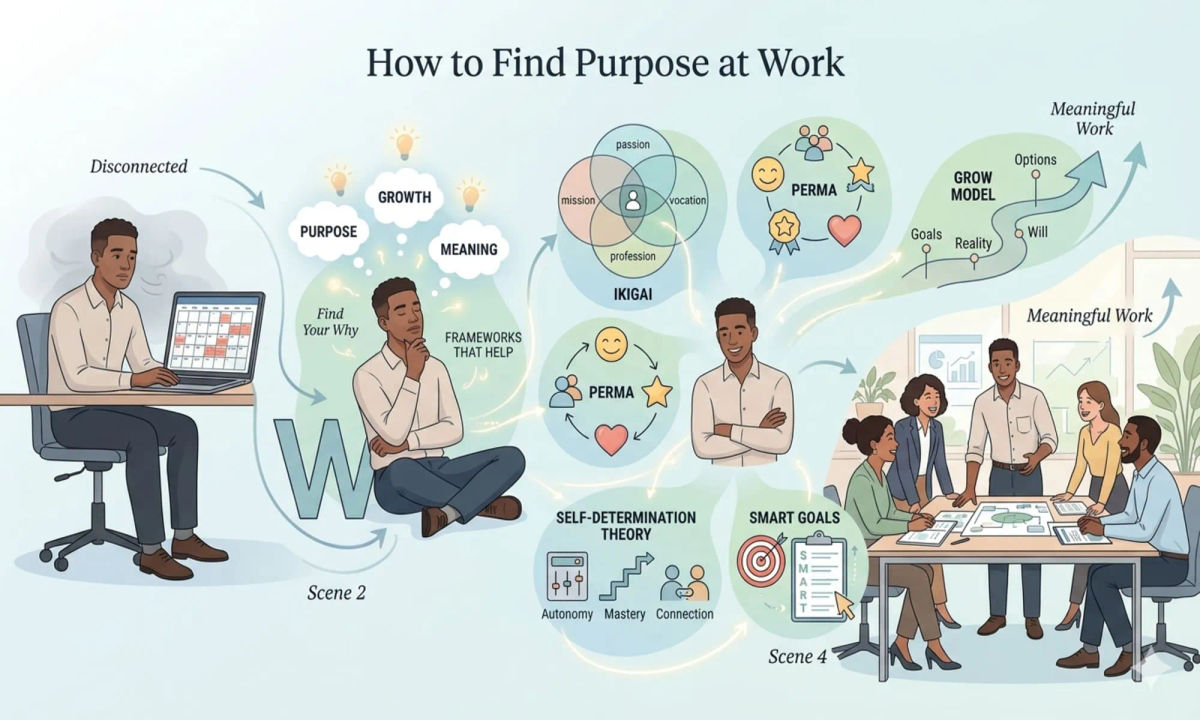
The realization that most professionals miss is the sheer volume of time—around 80,000 hours—spent at work over a lifetime. This number underscores how crucial it is to feel engaged and fulfilled in your professional endeavors.
Consider Sarah, who has worked for a decade but feels disconnected from her job's inspiring aspects, leading to diminishing quality of life and affecting her performance and career advancement. Many people continue in roles where they are underutilized or unfulfilled, risking long-term consequences for their mental health and satisfaction. Taking control early ensures these hours are not just spent working but lived.
When Work Looks Fine… But Feels Off
You might recognize this feeling: your calendar is packed, performance reviews are positive, and managers are satisfied. Yet, something doesn’t feel quite right. It’s as if you’re showing up every day, doing the work expected of you, and playing your assigned role—yet somehow disconnected from it all.
The quiet question that begins to surface in such moments isn’t about whether things are going well but rather why they don’t feel more meaningful: “Shouldn’t this feel more meaningful?” This sentiment is surprisingly common. According to a recent survey, nearly 40% of employees report feeling unfulfilled despite outward signs of success.
Recognizing these feelings doesn’t mean there’s anything inherently wrong with you or your efforts. Instead, it suggests that deeper alignment between what you do and who you are is missing. For instance, imagine Sarah, a marketing specialist who excels at strategy but finds her creativity stifled by repetitive tasks. Despite strong performance reviews, she feels disconnected from the core aspects of her role that truly ignite her passion.
The Real Problem: Disconnection From Purpose
Contrary to popular belief, the issue isn't about a lack of skill or capability. It’s not that your job is inherently bad for you or that you're incapable in your current role. The real problem lies in your personal alignment with what truly matters—your values and passions are often misaligned with your daily work.
- You might feel disconnected from the core values that drive meaningful engagement, leading to a sense of disconnection from your professional life.
- Your day-to-day actions can be guided by vague intentions instead of clear goals, which results in aimlessness and frustration.
- There’s also an absence of structured support or systems designed to help you reconnect with your purpose more effectively.
The silver lining is that drastic measures like quitting your job or starting anew are not necessary. Instead, what’s needed are better frameworks and tools—like a personalized goal-setting system—to guide you toward clarity and connection with your true purpose. Consider how setting specific weekly goals tied to your personal values can enhance focus and fulfillment.
5 Frameworks That Can Transform How Work Feels
Workplace productivity and satisfaction can often feel like a mystery, but there are practical mental models that can make all the difference. These frameworks, such as the Eisenhower Matrix or GTD (Getting Things Done), offer tangible steps to manage time and tasks effectively.
By breaking down priorities into urgent versus important categories, you can focus on what truly matters and let go of distractions.
One example is the Pomodoro Technique, which has been shown to significantly improve concentration levels among professionals by structuring work into short intervals with regular breaks. This method not only boosts productivity but also enhances mental well-being by preventing burnout through consistent rest periods. For instance, a software developer named Alex used this technique and reported a 20% increase in coding efficiency.
Another powerful framework is the OKR (Objectives and Key Results) system, which helps teams align their goals with company objectives while maintaining flexibility in achieving them. This approach encourages transparency and accountability within teams, fostering a collaborative environment where everyone understands how their work contributes to larger business outcomes. Ultimately, these frameworks are not just tools but also mindsets that can revolutionize your perception of work.
💛 1. IKIGAI — Rediscover Your Spark
Ikigai offers a way to reconnect with purpose in your career. It involves identifying where personal interests, skills, market needs, and remuneration intersect. Start by reflecting on four key questions: What do I love doing? What am I good at? What does the world need most?
How can this translate into something I earn a living from? The point of convergence is often your true ikigai. Embracing Ikigai doesn’t always mean drastic career changes. It’s about enhancing value and satisfaction in your current role or integrating meaningful work within it. For example, a software developer might add sustainability features to apps for eco-friendly solutions.
Ikigai serves as a powerful tool for immediate adjustments and long-term planning. By continuously assessing how personal passions, professional strengths, market demands, and income opportunities intersect, you can make informed decisions leading to a fulfilling career journey.
🔎 2. PERMA — Redefine What Success Feels Like
Most individuals narrowly define success through external markers such as promotions, salary increases, and job titles. True fulfillment stems from personal well-being and meaningful engagement with one's work.
- Positive Emotions: Do you derive genuine joy from your tasks?
- Engagement: Are you fully immersed in your daily activities?
- Relationships: Is working with colleagues rewarding?
- Meaning: Does the impact of your work resonate deeply with your values?
- Achievement: Are you moving forward towards clear objectives?
Even minor improvements in two or three areas can significantly alter one’s perception of job satisfaction. When people focus on the nuances that bring genuine happiness and purpose, it transforms their view of success. This expanded view makes work more fulfilling, fostering a humane approach to career advancement and personal growth.
🔓 3. Self-Determination Theory — Fix Your Motivation
Your level of motivation depends on three primary needs: autonomy, mastery, and connection. Autonomy means feeling in control of your actions based on personal values and goals, leading to deeper engagement. Mastery involves a sense of competence and continuous improvement, boosting motivation as you grow. Connection refers to being valued within a community, crucial for intrinsic motivation; disconnected team members often report lower job satisfaction despite achievements.
Meeting these needs makes work inherently rewarding, energizing rather than draining. Focus on fostering autonomy by owning tasks, pursuing mastery through skill development, and cultivating meaningful relationships for support.
- Pursue opportunities for task ownership (autonomy).
- Engage actively in learning new skills (mastery).
- Cultivate supportive relationships with colleagues and friends (connection).
➡️ 4. GROW Model — Move Forward When You Feel Stuck
Feeling stuck at work can be demotivating. The GROW model helps by guiding individuals through four stages: goal definition, reality assessment, option exploration, and commitment to action. Goal definition involves identifying what you truly wish to achieve, which might seem straightforward but often requires clarity.
For example, an employee considering a career change must pinpoint their desired outcome. Reality assessment entails objectively evaluating your current situation. This step reveals the gap between where you are now and your goal.
Option exploration encourages brainstorming feasible solutions or pathways aligned with personal aspirations. Someone interested in data science might explore full-time jobs and freelance projects. The final stage, commitment to action, involves determining precise next steps. Even small actions can significantly enhance momentum and motivation.
🎯 5. SMART Goals — Turn Intention Into Action
Motivation without a clear path often dissipates, leaving good intentions unfulfilled. SMART goals provide the structure needed to transform aspirations into actionable steps: Specific, Measurable, Achievable, Relevant, and Time-bound.
- Specific: Goals must be clear and well-defined. Instead of vaguely stating "I want to grow in my career," set a specific aim like obtaining a particular certification within a set timeframe.
- Measurable: Metrics help track progress effectively, crucial for staying motivated and making adjustments as needed.
- Achievable: Setting realistic goals means acknowledging the resources available to you. Dreaming big is good, but ensuring a goal is within reach keeps momentum going without causing frustration.
- Relevant: Aligning objectives with your overarching purpose ensures each step moves you closer to your ultimate destination rather than on tangents.
- Time-bound: Every goal should have a deadline. Aiming to complete an X certification in exactly three months adds urgency and focus.
The structure provided by SMART goals aids in organizing efforts and fostering continuous progress, increasing motivation as you achieve milestones, leading to further accomplishments essential for sustained personal development and professional growth.
Why These Frameworks Matter
The reality of professional life is stark: working long hours does not equate to burning out. Instead, burnout often stems from deep dissatisfaction rooted in a perceived lack of meaning and direction in work. Efforts may feel futile if there’s no clear connection between daily tasks and personal goals, leaving you feeling disconnected and uncertain about future growth.
Frameworks are essential tools addressing these root causes head-on. They help individuals rediscover purpose by aligning day-to-day activities with broader life objectives. For instance, a software developer might connect coding tasks directly to the impact programs have on users, enhancing job satisfaction and motivation.
Moreover, these tools assist in redefining success beyond just career achievements, focusing instead on personal fulfillment and continuous learning. This shift towards a more holistic definition of success can be profoundly transformative for individuals often driven by external metrics. Additionally, frameworks provide a structured approach to maintaining long-term motivation, ensuring the drive to succeed is sustainable rather than fleeting.
Interestingly, some people find that adopting these frameworks actually decreases their workload by clarifying priorities and eliminating tasks that do not contribute to personal or professional growth.
- Reconnect with purpose: Align daily tasks with long-term goals for enhanced job satisfaction.
- Redefine success: Focus on personal fulfillment and continuous learning over external metrics alone.
- Build sustainable motivation: Ensure the drive to succeed is not just short-term.
- Take structured action: Implement clear steps towards achieving both professional and personal goals.
Make Your 80,000 Hours Count
You’ll spend those hours anyway. The real question is whether they will feel like a routine you merely survived or an engaging journey that enriched your life. Many people assume changing careers is the only way to transform their professional experience into something more fulfilling, but better awareness of values and goals can lead to subtle shifts in how you approach each day at work.
For instance, tracking time spent on different tasks reveals patterns and helps identify areas where valuable hours are wasted. Equipped with better tools such as project management software or apps designed for productivity hacks, you can streamline your workflow and focus more on meaningful contributions.
Better direction doesn’t just mean a new position; it means setting clear, achievable goals that align with both personal aspirations and professional responsibilities. Consider the example of Sarah, who started using a digital calendar to block out specific times for deep work, leading to a 25% increase in productivity without changing jobs or roles.
These small but impactful changes can turn your work experience from mundane tasks into a fulfilling journey. With improved awareness, tools, and direction, you can ensure that the countless hours spent at your desk each year contribute positively to your life's purpose.
Final Thought
The notion that meaningful work simply falls into one's lap is a misconception; it requires deliberate intention and strategic planning involving clear goals and personal fulfillment elements. Start by selecting a framework—like a values-based approach—to guide actions towards career aspirations, helping identify tasks aligned with beliefs and passions.
Focusing on the intersection of skills, interests, and impact transforms work into a fulfilling journey rather than a daily routine. Immediate application leads to profound shifts in perception and engagement, turning mundane tasks into growth opportunities.