 WORKPLACE SIGNALS
 Why Promotions Don’t Go to the Smartest Person (9 Traits That Actually Matter)
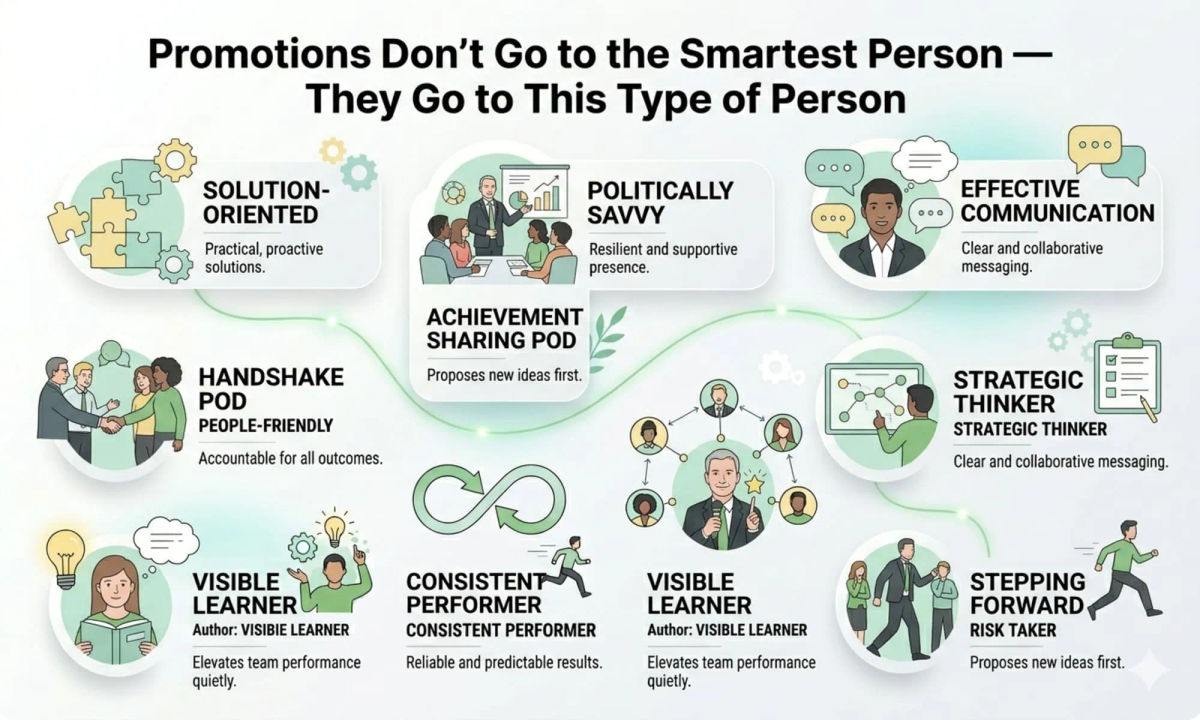
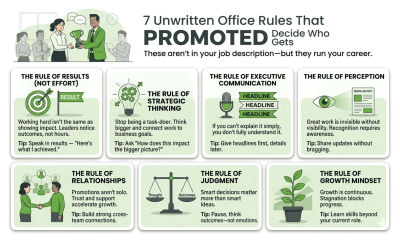
The common misconception is that promotions hinge solely on intelligence or technical prowess. However, relationships and recognition are equally crucial. In today's corporate landscape, visibility and influence are critical for career advancement; simply possessing superior skills does not guarantee a path to higher positions.
Actively participating in cross-departmental projects and speaking up at meetings can significantly enhance one’s visibility. The workplace operates as both a performance and social system where interpersonal dynamics are just as important as technical competencies. According to a recent LinkedIn survey, nearly 70% of managers cited teamwork skills as essential for career progression. Consistently moving up requires a blend of strategic visibility and interpersonal acumen.
🧠 The Politically Savvy
In the world of professional politics, being savvy means knowing how decisions are made and who holds power. Excelling requires presenting ideas at the right time and place without seeming pushy or arrogant. For instance, a mid-level tech manager noticed key stakeholders preferred informal meetings over formal ones. By pitching her new project during casual gatherings, she secured support from decision-makers hard to reach in structured settings. This highlights the importance of understanding organizational culture and dynamics. Awareness includes knowing when and how to advocate for yourself without overstepping boundaries.
A study found professionals who subtly highlight their achievements within their team are 30% more likely to receive promotions than those unaware of these nuances. This statistic underscores the tangible benefits of being politically savvy.
“The most effective way to get ahead isn’t always by working harder; it’s often about understanding the political landscape and positioning yourself strategically.”
Sometimes, a nuanced perspective can be counterintuitive. In some cultures, direct self-promotion is seen as aggressive and unprofessional. Understated contributions noticed by influential colleagues might pave a smoother path to recognition than loud declarations of one's own success.
⚡ The Risk Taker
Promotions often go to those who are willing to step into uncertainty, embracing the unpredictability that comes with new challenges. These individuals don’t wait for perfect conditions; instead, they take on challenging projects and volunteer for difficult assignments, proving their mettle in situations where outcomes aren’t guaranteed.
By stepping out of their comfort zones, risk takers create visibility within their organizations. Their willingness to tackle tough tasks demonstrates leadership potential, showcasing qualities like resilience, adaptability, and strategic thinking. For instance, a mid-level manager who volunteers for a high-stakes international project not only gains invaluable experience but also earns recognition from upper management.
Playing it safe may seem like the logical choice, offering protection from failure. However, this cautious approach can severely limit personal and professional growth. According to a recent study, employees who take calculated risks are 30% more likely to receive promotions within their first five years of employment compared to those who avoid risk.
🤝 The People-Friendly Professional
Work is rarely a solo effort; it thrives when individuals forge strong relationships across various teams and departments. Those who build such networks naturally attract more visibility, trust, and influence in their professional circles. By collaborating effectively and communicating clearly, these professionals create an environment where teamwork flourishes effortlessly.
People recall how interactions make them feel as much as the outcomes of a project. A warm greeting or a genuine conversation can leave a lasting impression that enhances your reputation within the organization. For instance, Sarah, a marketing executive, noticed that her colleagues were more willing to help when she made an effort to understand their challenges and celebrate their successes publicly.
While delivering results is crucial, it's equally important to consider how you achieve those results and the impact of your approach on others. A nuanced perspective suggests that sometimes stepping back to listen and support rather than always taking charge can lead to greater long-term success. By fostering a supportive atmosphere, professionals not only gain allies but also ensure smoother project execution.
📢 The Strategic Self-Promoter
The line between bragging and effectively communicating your impact is thin but crucial for career advancement. High performers focus on outcomes that matter to stakeholders, not just effort. Instead of stating long hours worked, highlight key results and their impact on the company's bottom line. This ensures recognition by decision-makers.
The Importance of Visibility
In most professional settings, being visible is crucial; invisibility can hinder career progression. Leaders might miss recognizing someone’s value if they don’t communicate results effectively.
"Visibility means ensuring significant contributions are known."
Strategic self-promotion isn't just about personal gain; it advances your career by aligning with the organization's broader objectives. Consistently sharing impactful wins in meetings and emails makes you more likely to be considered for promotions or new opportunities.
🔁 The Consistent Performer
Consistency builds trust within teams and among leaders. Those who consistently deliver quality work, meet deadlines, and uphold standards are the bedrock of any successful team. For instance, a software developer at a tech startup who consistently delivers bug-free code ahead of schedule is not only valued but also becomes an invaluable asset to the company’s growth.
Leaders often prefer reliable performers over those with occasional bursts of brilliance because consistent excellence fosters predictability and stability in project outcomes. This reliability can lead to increased responsibilities and opportunities for advancement, as seen with Sarah, a marketing specialist who consistently exceeded KPIs quarter after quarter, eventually landing the role of Head of Marketing at her company.
Over time, this trust translates into greater responsibility and opportunities, often leading to significant career milestones. However, it's worth noting that while consistency is crucial, leaders also recognize the value in moments of high performance during critical periods, balancing reliability with the ability to excel under pressure.
💡 The Solution-Oriented Thinker
Bringing problems to the table is easy; however, bringing solutions is what truly sets you apart as a professional. This proactive approach distinguishes those who merely identify issues from those who take charge in finding resolutions.
Solution-oriented thinkers are known for their ability to anticipate challenges and propose actionable ideas that drive progress. For instance, when faced with declining sales figures, a solution-focused individual would not just highlight the problem but also suggest innovative marketing strategies or product improvements to reverse this trend. Such an approach is essential in demonstrating leadership potential.
Leadership readiness is often assessed by one's capacity to solve problems rather than merely reporting them. According to a study published in Harvard Business Review, companies that foster solution-oriented thinking among their employees see a 35% increase in productivity within two years. This underscores the importance of developing this mindset not just for personal growth but also for organizational success.
📚 The Visible Learner
The concept of continuous learning is essential in today’s fast-paced world, but it's the visibility of this process that truly amplifies its impact. When professionals not only commit to personal growth but also make their development journey public, they create a ripple effect within their communities.
Visible learners often introduce new tools or methodologies, sharing insights through workshops or casual conversations. By doing so, these individuals foster an environment where knowledge isn't just consumed in isolation; it is exchanged and built upon collaboratively. For instance, when Sarah started using Git for version control in her software development team, she didn’t stop there—she also organized lunch-and-learn sessions to teach others how to leverage this tool effectively.
Organizations recognize the value of such individuals who not only evolve themselves but also contribute to the collective growth of their teams. A study by LinkedIn found that professionals who actively engage in peer learning and knowledge sharing are more likely to receive promotions within two years than those who do not. This statistic underscores how visibility in one’s personal development journey can translate into tangible career benefits.
🧑🏫 The Mentor
Mentoring nurtures growth and success within teams, positioning leaders as believers in others' potential. For example, guiding a struggling new team member led to long-term success and personal development. Leadership empowers meaningful contribution, not just holding power: companies investing in mentorship see 25% higher employee retention.
Empowering others builds trust and confidence through consistent support, contrary to the idea of hoarding knowledge. Sharing skills fosters stronger teams better equipped for challenges, benefiting individuals and driving organizational success overlooked by conventional leadership.
🧭 The Strategic Thinker
The ability to execute tasks efficiently is crucial, but true leadership emerges from the capacity to think strategically. Strategic thinkers are adept at seeing how their daily work aligns with an organization’s overarching objectives and priorities.
By prioritizing effectively and anticipating potential challenges, strategic individuals ensure that their efforts contribute not just in the short term but also towards long-term success. For instance, a mid-level manager who reallocates resources to support upcoming technological advancements, even before they become urgent issues, demonstrates foresight and strategic acumen.
Such insights and actions signal an individual’s preparedness for taking on more significant leadership responsibilities within their organization. Consider the case of Jane Doe, who, by identifying a gap in market trends early on, secured her company's position as a frontrunner in innovation—this is just one example of how strategic thinking can translate into tangible business success.
🧠 The Bigger Truth
Promotions hinge on applying knowledge practically. Sarah, a data analyst, struggled despite her skills until she engaged broadly, fostering relationships and showcasing strategic foresight through timely deliverables. This enhanced her visibility and earned respect. Active engagement and strategic foresight are crucial for advancement. Analyzing team dynamics provides insights not immediately apparent in daily work.
During a project review meeting, Sarah noticed John taking on extra responsibilities without credit to support deadlines. This allowed her to appreciate others' unspoken efforts and foster mutual respect. Balancing visibility with understanding team dynamics leads to sustainable growth. A recent LinkedIn study shows professionals who excel and navigate organizational cultures are 35% more likely to receive promotions within the first year compared to those focusing solely on individual performance.
💡 Final Thought
To advance in your career, strategically position yourself for recognition beyond just performance metrics. Promotions require demonstrated readiness for leadership roles. An analyst I worked with missed several promotions despite stellar reviews because she did not seek visibility within the team. LinkedIn reports that 63% of hiring managers value soft skills like communication and leadership equally to technical proficiency when considering candidates for promotion. While stepping out of your comfort zone can be risky, finding a balance is key. Abraham Lincoln said,
“The best way to predict the future is to create it.”
In career development, proactive steps such as seeking mentorship, volunteering for high-visibility projects, and networking significantly boost visibility within an organization. Aligning with influential figures and showcasing leadership through collaborative efforts positions you as a future leader worthy of promotion.