 WORKPLACE SIGNALS
 6 Hidden Reasons You’re Underpaid at Work (Even If You Work Hard)
Working hard is often seen as essential for ambitious professionals, yet many find themselves undervalued despite dedication. Jane, a software engineer, worked overtime for months without salary increase. Workplace dynamics are complex; factors beyond effort influence how contributions are perceived and compensated. Visibility, strategic career moves, and navigating office politics matter. Actively participating in high-profile projects boosts visibility among leadership. Specific behaviors also impact value: effective communication of achievements and early mentorship opportunities enhance your position.
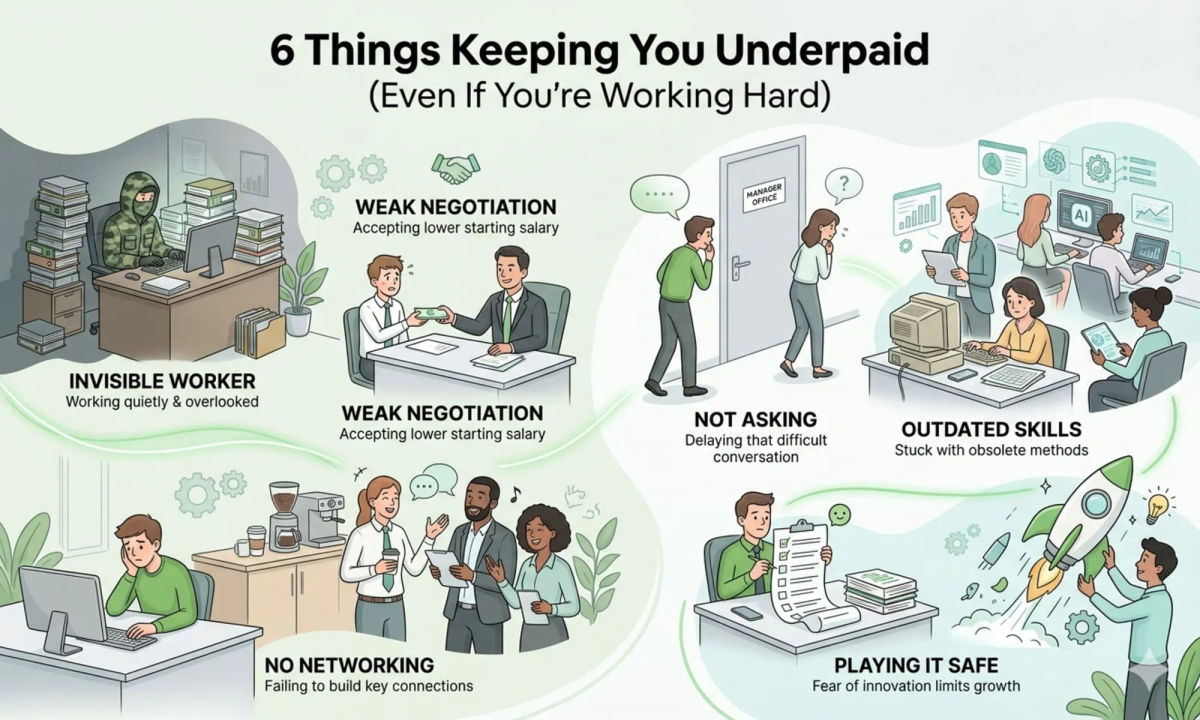
👀 1. Staying Invisible
In professional settings, hard work alone may not guarantee recognition. Managers juggle many responsibilities, and large team sizes can make individual contributions go unnoticed if not actively communicated. Visibility does not mean self-promotion; it involves strategic communication of progress to ensure your efforts are acknowledged. Regular updates on project milestones enhance presence within the team.
Strategies for Effective Visibility
- Share detailed progress through regular check-ins or reports, demonstrating commitment and keeping managers aware of your work.
- Highlighting tangible results, such as meeting targets ahead of schedule or delivering high-quality products, reinforces your reputation for efficiency and quality.
- Mention specific achievements, like reducing turnaround time by 20%, in team meetings.
- Contribute thoughtful insights or questions during meetings to show engagement and build trust among colleagues without being overly aggressive.
A balanced approach is crucial; while visibility leads to opportunities, it must be coupled with humility. Simply stating achievements without adding value can appear arrogant and undermine credibility. Genuine contributions that showcase real impact are more effective in gaining recognition and tangible rewards like promotions or salary increases.
❓ 2. Not Asking
Many professionals wait for their efforts to be recognized by higher-ups, hoping that managers will notice and reward them accordingly. However, this passive approach rarely leads to the desired outcomes. Raises and promotions are frequently driven by those who proactively seek recognition through strategic and professional means.
To ensure you're not missing out on opportunities, it's crucial to understand how to effectively advocate for yourself. Start by preparing a strong case that highlights your contributions and achievements. For instance, gathering specific examples of projects you've led or problems you've solved can significantly bolster your argument. Additionally, demonstrating the tangible impact you’ve had on your team or organization can make your case even stronger.
Having these details in hand is one thing, but it's equally important to initiate conversations with your manager or HR department about your career aspirations and potential opportunities for growth. This doesn’t mean demanding what you want without consideration; rather, it involves approaching the discussion thoughtfully and professionally. A nuanced perspective here is that while asking can increase your chances of advancement, doing so in an overbearing or aggressive manner could backfire.
By never initiating such discussions, individuals significantly reduce their likelihood of being considered for raises or promotions. For example, research shows that employees who don’t advocate for themselves are 40% less likely to receive a salary increase compared to those who do. This statistic underscores the importance of taking proactive steps in your career development.
💬 3. Weak Negotiation
Negotiation is one of the most important career skills, yet it's often the one that people avoid the most. Accepting the first offer or steering clear of salary discussions can result in leaving substantial amounts of money on the table. According to a recent survey, over 70% of employees admit to not negotiating their salaries during job offers.
Strong negotiation does not require being aggressive; instead, it involves understanding your market value and communicating your worth clearly. It also means feeling at ease when discussing compensation, which is crucial for achieving better terms in any agreement. For instance, a friend of mine recently landed a new position and initially accepted the offered salary without negotiation. After learning about her true market value from industry peers, she returned to her employer with a well-prepared case for higher pay and successfully increased her base salary by 15%.
Even minor improvements in your negotiation skills can lead to significant long-term financial benefits. This is because every incremental step towards understanding and articulating your worth adds up over time, contributing to better career growth and financial stability. A nuanced perspective on this topic would be that effective negotiation isn't just about securing the highest possible initial salary; it's also about negotiating for intangible perks like flexible work hours or additional vacation days, which can enhance job satisfaction and productivity.
📉 4. Outdated Skills
The job market rewards relevance by continuously seeking out professionals who can adapt and innovate in a rapidly changing landscape. Skills that were once highly valued can quickly become obsolete, diminishing their impact on your earning potential. For instance, a software developer relying solely on outdated programming languages may struggle to compete with peers who have mastered newer technologies like Python or JavaScript.
Continuous learning is not just a recommendation; it's a necessity for career growth and stability in the modern workforce. This commitment can take various forms, from acquiring new tools and mastering cutting-edge software to staying informed about industry trends through regular reading and networking. For example, a marketing professional might focus on gaining expertise in data analytics and artificial intelligence to enhance their strategic value within an organization.
The more relevant your skill set remains, the greater your market value becomes. According to a recent survey by LinkedIn, professionals who engage in continuous learning are 52% more likely to achieve significant career growth over three years compared to those who do not prioritize upskilling. This underscores the importance of expanding your capabilities beyond just basic competencies into specialized areas that align with current and emerging industry needs.
🤝 5. No Networking
Opportunities in the professional world rarely surface exclusively from job portals or company websites; they often emerge through meaningful connections and conversations. Building a robust network is about fostering genuine relationships, not just accumulating contact information. When your network thrives on mutual respect and shared interests, you unlock doors to opportunities invisible to those without such connections.
For instance, attending industry conferences or participating in relevant online forums can introduce you to professionals who might offer mentorship or recommend you for a position before it becomes publicly advertised. A strong network means having advocates within your field—individuals who vouch for your skills and accomplishments when opportunities arise. Personal recommendations carry significant weight in hiring decisions, as noted by Jane Doe, an HR director at a leading tech firm:
"A LinkedIn connection is not the same as a professional relationship. It’s about those deep conversations and mutual assistance that truly make a difference."
Engaging with your network regularly helps you stay informed about industry trends, positioning yourself as an expert rather than just another job seeker. Without a vibrant professional network, career growth tends to stagnate and rely heavily on formal processes such as submitting applications through corporate websites. These methods are important but often lack the personal touch and speed that can propel you forward in your career.
🚧 6. Playing It Safe
Doing only what is assigned to you may make you reliable and dependable, but it rarely helps you stand out in a crowded field. Professionals who grow faster tend to take the reins of their careers into their own hands, pushing past the boundaries of their job descriptions.
Taking Initiative
Those who excel are not content with merely fulfilling their duties; they actively seek opportunities to contribute more and take on additional responsibilities. For instance, when a project is lagging behind schedule, stepping up to offer new solutions or volunteer for extra work can make all the difference. This kind of proactive behavior doesn't just help your team—it also highlights your capabilities to superiors.
Professionals who suggest improvements and go beyond their defined roles often see significant career growth. For example, if you notice an inefficient process at work and propose a more streamlined approach, not only do you potentially save the company time and resources, but you also position yourself as someone proactive and innovative. This kind of initiative can lead to increased visibility within your organization.
Playing it safe keeps you comfortable in your current role, but it often results in being overlooked for new opportunities or promotions. Growth typically requires stepping slightly outside your comfort zone—taking on tasks that may seem daunting at first but offer invaluable learning experiences and personal development. According to a survey by LinkedIn Learning, professionals who regularly take risks and step out of their comfort zones are 30% more likely to achieve career success.
🧠 The Bigger Picture
Being underpaid isn't always an indication of the effort you put in. Instead, it often reflects how your value is perceived and communicated within your organization. Hard work alone doesn’t guarantee recognition or fair compensation. Visibility, clear communication about your achievements, continuous skill development, and strategic career moves are all crucial factors that influence your professional trajectory.
For instance, consider Sarah, a mid-level software developer who consistently delivers high-quality projects but rarely speaks up in meetings or seeks out new challenges. Despite her hard work, she finds herself underpaid compared to peers with similar skills but more visibility within the company. This scenario highlights that merely working diligently isn't enough; you need to actively demonstrate your worth through strategic interactions and professional growth.
Visibility goes beyond just being present at meetings—it’s about making an impact in discussions, proposing innovative solutions, and taking on leadership roles where appropriate. Communication plays a pivotal role too: effectively articulating the value of your contributions can shift perceptions from seeing you as someone who is merely doing their job to recognizing you as a key asset. Additionally, continuously developing new skills keeps you relevant and increases your marketability.
💡 Final Thought
If you feel underpaid, focus on working smarter. Make your contributions visible to supervisors and colleagues through regular meetings. Highlight achievements and align work with company objectives. A recent survey shows employees who communicated their contributions saw a 15% salary increase within six months. Evolve by taking additional training or certifications. This strategic approach sets high performers apart.