 WORKPLACE SIGNALS
 8 Skills to Future-Proof Your Career (That Actually Matter)
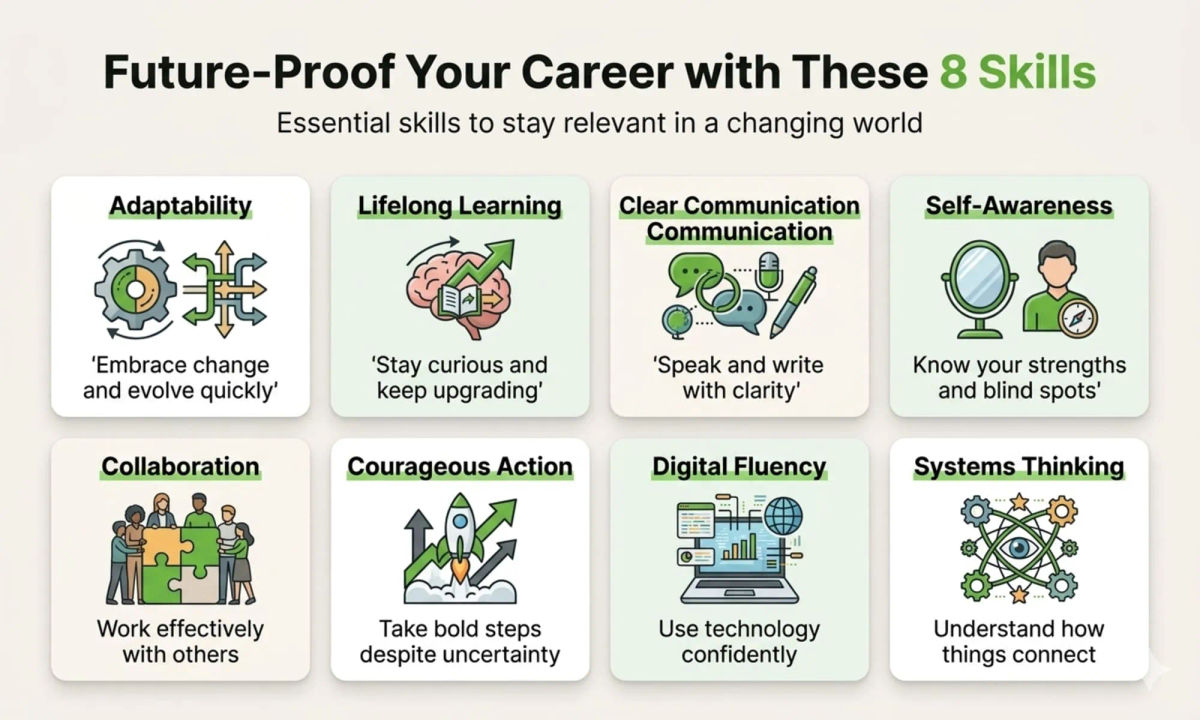
The rapid transformation of the workplace demands a new approach to career development as technology advances and industries evolve, redefining job roles at an unprecedented pace. Five years ago, essential skills might now be obsolete.
In this dynamic landscape, traditional notions of job security no longer apply; professionals must focus on acquiring adaptable skills to stay relevant. Future-proofing involves cultivating competencies valuable across various environments and industries. "Adaptability is not just about changing; it's about thriving in change."
One practical example can be seen in the tech industry where demand for cloud computing specialists has surged, with professionals who pivot to specialized skills like Kubernetes or AWS certifications often finding themselves ahead of the curve.
1. Adaptability
Change no longer comes in waves; it's a constant current that demands our attention. Adaptability isn't just about reacting to change but embracing it as a continuous process of improvement and growth. Those who cling to outdated methods often find themselves struggling to keep up, while those who welcome innovation can reap significant benefits.
For instance, consider the rapid adoption of remote work tools during the pandemic. Companies that were already agile in their approach to technology and communication saw minimal disruption and even thrived, whereas organizations resistant to digital transformation faced major challenges.
This shift underscores the critical importance of being prepared for unexpected changes. Moreover, adaptability requires more than just flexibility; it involves a proactive search for better solutions. A practical example is how many businesses now invest in data analytics tools not because they are forced to but because these technologies offer new insights and efficiencies that weren't possible before. This forward-thinking mindset can be the difference between survival and success in an ever-evolving landscape.
2. Lifelong Learning
The journey of learning does not end when formal education concludes; it is merely the beginning. The most successful professionals view learning as a lifelong commitment, constantly seeking out new information and skills to stay ahead in their fields.
For instance, consider a software developer who keeps up with evolving programming languages and frameworks. This individual might enroll in online courses or attend workshops, ensuring they remain relevant despite rapid technological advancements.
Small, consistent efforts like these—such as daily reading of industry blogs or engaging in coding challenges—yield significant long-term benefits. In today’s fast-paced world, the capacity to adapt quickly is paramount.
A study by LinkedIn Learning found that professionals who engage in continuous learning are 45% more likely to secure a job promotion within two years. This statistic underscores how pivotal it is to remain flexible and open to new ideas, rather than relying solely on existing knowledge.
3. Clear Communication
The success of any idea hinges on its clarity in communication. Expressing thoughts simply and effectively is crucial for both written and spoken exchanges. Active listening plays a pivotal role here, ensuring that we truly grasp others' perspectives before formulating our responses.
Effective communicators are adept at reducing confusion and enhancing collaboration within teams. Consider the example of a project manager who clearly outlines team objectives; such clarity reduces misunderstandings by 30 percent, resulting in more cohesive teamwork.
It's not just about articulating thoughts well but also about posing insightful questions that lead to better understanding. Clear communication is a distinctive trait that sets professionals apart and fosters an environment conducive to innovation.
During high-stakes negotiations, for instance, the ability to articulate one’s needs precisely without escalating tensions can be invaluable. This nuanced approach not only prevents unnecessary conflict but also opens avenues for more productive dialogue, highlighting how clear communication bridges gaps rather than creating them.
4. Self-Awareness
Understanding yourself is a powerful skill that can significantly enhance your personal and professional life. Self-awareness encompasses recognizing your strengths, weaknesses, emotional triggers, and behavioral patterns. This insight allows you to make better decisions and improve your interactions with others.
For instance, consider a scenario where a manager lacks self-awareness about their tendency to micro-manage. They may struggle to trust their team members or delegate tasks effectively. On the other hand, if this same manager gains self-awareness of this trait, they can take steps to adjust their behavior and foster a more supportive work environment.
Without self-awareness, personal growth tends to be haphazard and reactive. However, with self-awareness, improvement becomes intentional and proactive. According to a study by the Center for Creative Leadership, high levels of self-awareness are one of the top predictors of leadership success, highlighting its critical importance in professional settings.
5. Collaboration
In today’s dynamic work environments, success hinges on the ability to collaborate effectively across diverse teams and functions. The modern workplace demands more than just teamwork; it requires individuals who can build trust, communicate openly, and align their efforts with shared objectives.
A strong collaborator understands that collaboration is not merely a tool for achieving goals but a vital skill set that enhances productivity and innovation. For instance, a cross-functional project team consisting of designers, developers, and marketers must prioritize clear communication to deliver a seamless product launch. Each member’s unique perspective contributes to the overall success, illustrating how effective collaboration can lead to superior outcomes.
Interestingly, research shows that teams with high levels of psychological safety report 50% higher productivity than those lacking this crucial element. This underscores the importance of fostering an environment where team members feel safe to share ideas and feedback without fear of judgment or retribution.
6. Courageous Action
Opportunities often come wrapped in uncertainty, requiring a leap of faith. Courageous action involves stepping into the unknown confidently despite fear or doubt. It’s about making thoughtful decisions and acting on them despite incomplete information.
For example, an entrepreneur launching a new venture during a recession might feel overwhelmed by economic instability but chooses to move forward after thorough research and planning. Progress demands active engagement rather than passive waiting for perfect conditions.
A notable example is Colonel Sanders, who faced countless rejections before his signature recipe became famous as Kentucky Fried Chicken. Each rejection was a step closer to success because he continued to pursue his vision fearlessly and persistently. Courageous action isn’t about being reckless; it’s grounded in knowledge and insight rather than blind faith or impulsive decisions.
As Warren Buffett famously said, "Risk comes from not knowing what you’re doing."
7. Digital Fluency
In today’s professional landscape, technology integration is an expectation, not a novelty. Digital fluency involves developing comfort with pertinent tools rather than becoming an expert in all digital technologies. For example, a marketing manager should feel at ease using analytics software to track campaign performance without needing to master coding languages.
Individuals who effectively harness technology experience increased productivity and efficiency; a Harvard Business Review study found that proficient digital tool users are 40% more productive than those who aren’t. However, an overly cautious approach toward new technologies can hinder personal growth and career advancement.
Embracing innovation and staying current with technological trends opens up opportunities. Avoiding technology limits growth, but indiscriminate adoption without understanding its relevance or necessity can lead to inefficiencies rather than improvements.
This perspective suggests that while staying technologically current is crucial, critically evaluating which tools are truly beneficial for specific tasks is equally important. By carefully selecting and mastering relevant technologies, professionals enhance their capabilities and drive meaningful impact in their roles.
8. Systems Thinking
Most problems are interconnected; systems thinking helps recognize how components interact and influence each other. Effective thinkers consider long-term implications and interdependencies rather than focusing solely on immediate tasks.
For example, managing a software project involves not just coding but also anticipating future maintenance needs and user feedback loops. This approach leads to better strategic planning and fewer issues down the line. A recent study shows companies adopting systems thinking report a 25% reduction in project failure rates.
Intuitively, focusing on short-term gains seems efficient, but it can lead to significant long-term drawbacks such as increased maintenance costs and lower user satisfaction. Embracing task interconnections fosters sustainable outcomes and continuous improvement.
Why These Skills Matter
The value of certain skills lies in their versatility and enduring relevance across various roles and industries. Unlike specialized technical abilities that can rapidly become obsolete, these foundational skills remain potent tools for career advancement.
Strong communication skills are crucial not just for customer service but also for project management and leadership positions. Focusing on developing such transferable competencies ensures professionals can pivot smoothly to new opportunities as the job market evolves.
Consider a software developer who expands their skill set beyond coding languages by mastering problem-solving techniques and collaboration methods. This adaptability is particularly crucial given that up to 65% of jobs in the next decade are yet to be invented.
Foundational skills act as a safety net against technological shifts and economic changes. Prioritizing these core competencies can lead to unexpected opportunities, such as honing critical thinking skills that might open doors to analytical roles not previously considered within one’s original career path.
This nuanced approach recognizes the fluid nature of modern work environments where skill sets are more universally applicable.
How to Start Building These Skills
To build skills for career advancement or personal development, focus on one or two areas initially rather than all eight. Enhance adaptability by experimenting with new methods in both personal and professional settings; for example, a software developer could try adopting a different programming language each month to broaden expertise.
Cultivate consistent learning practices through small daily actions such as reading industry publications, listening to relevant podcasts, or engaging in online courses.
Research shows that dedicating just 15 minutes per day can lead to significant knowledge accumulation over time. Improving communication skills is also vital. Make your messages clearer and more concise whether you're writing emails or presenting ideas during meetings. This enhances collaboration and decision-making processes.
The Future Belongs to Learners
In the ever-evolving landscape of work, success will not be determined by those who have all the answers but by individuals capable of continuous learning and adaptation. This dynamic environment demands that professionals remain agile, embracing new technologies and methodologies with enthusiasm rather than resistance.
Future-proofing your career is an ongoing journey, not a destination to reach once and forget about. It requires a proactive mindset and a commitment to lifelong education. For instance, consider Sarah, a mid-career marketing professional who decided to pivot into data analytics.
By enrolling in online courses and participating in industry workshops, she not only expanded her skill set but also opened up new career paths within her company.
While many focus on technical skills as the key to future success, it is essential to remember that soft skills like communication and empathy are equally crucial. A nuanced perspective reveals that effective collaboration often surpasses individual brilliance in today's interconnected professional world.
Conclusion
Career growth today demands a non-linear approach, emphasizing flexibility and continuous learning. To stay relevant in an ever-evolving job market, professionals must prioritize skills that transcend fleeting trends. For instance, data analysis has become foundational across industries, from finance to healthcare.
The skills highlighted here are not just buzzwords; they represent core competencies with lasting value. Consider project management tools like Jira, which have transformed collaboration and productivity in software development teams. This shift underscores the importance of adaptability and proactive skill acquisition.
Your career is a journey of evolution, shaped by your ability to embrace change rather than cling to outdated roles or titles.