 WORKPLACE SIGNALS
 12 Career Advice Principles That Actually Work in the Real World
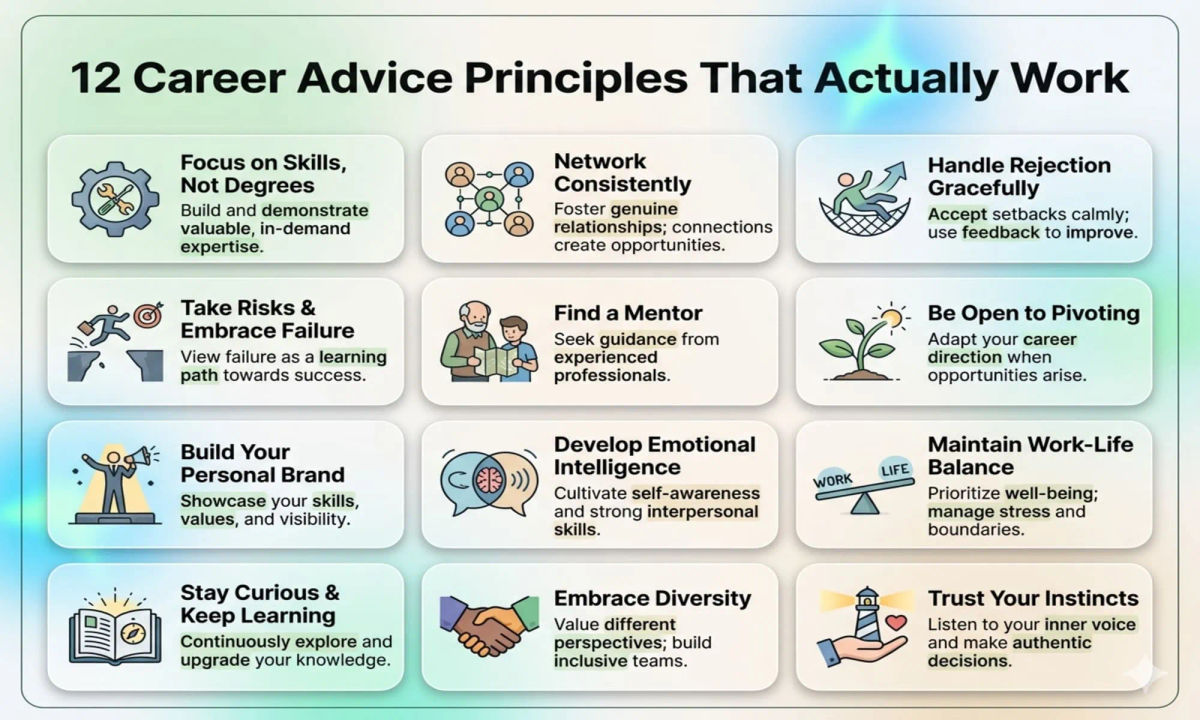
Building a successful career involves making consistent decisions aligned with personal and professional goals. Amidst overwhelming advice, it's crucial to focus on foundational principles that drive long-term success. While networking can provide immediate connections, lasting achievements require sustained effort in building genuine relationships.
High performers emphasize continuous learning over shortcuts. For example, a software developer who dedicates time weekly to study emerging languages like Rust or Kotlin can stay ahead of peers focused only on existing skills.
🎯 1. Focus on Skills, Not Degrees
Degrees open initial job opportunities, but skills keep doors open and lead to advanced positions. In today's rapidly evolving industries, continuous learning is essential. A recent coding graduate can quickly become outdated without updating their knowledge with emerging technologies like blockchain or machine learning.
By honing problem-solving and communication skills through self-study of new software frameworks or mentorship programs, you position yourself as a proactive learner. Prioritizing practical skills ensures your relevance in the job market amid industry shifts. For example, staying current with programming languages secures your position and opens doors to leadership roles or entrepreneurial ventures.
According to the World Economic Forum, 80% of jobs in 2030 are currently undefined, emphasizing adaptability.
Adaptability means acquiring new skills and understanding how and when to apply them effectively across various contexts, even those unimaginable during your college years. This nuanced perspective is a career-defining asset in an era of constant technological change.
🤝 2. Network, Network, Network
Your professional network is far more than a mere list of contacts; it's an intricate ecosystem teeming with potential opportunities that can transform your career trajectory. Surprisingly, many pivotal career advancements occur through informal conversations and recommendations rather than traditional job applications on online platforms.
Building a robust network involves cultivating genuine connections rooted in mutual respect and trust. When you actively listen to others' needs, share valuable insights, and maintain regular contact, you create an environment where opportunities naturally arise without needing to explicitly ask for favors. For instance, attending industry conferences or participating in relevant online forums can open doors to unexpected collaborations.
Trust is a critical factor when it comes to hiring decisions. Employers often prefer candidates they know personally or have heard positive recommendations about over those with merely impressive qualifications but no personal endorsement. This underscores the importance of nurturing relationships that go beyond mere professional acquaintance.
"People don't just hire skills; they hire people they trust."
💪 3. Learn to Handle Rejection Gracefully
In any successful career, rejection is inevitable—whether it’s a missed promotion or an unreturned job application. Instead of seeing these rejections as dead ends, view them as opportunities for growth and improvement. When facing rejection, avoid taking it personally; instead, approach it professionally and seek constructive feedback.
For example, after being turned down for an interview, send a polite follow-up email requesting insightful comments that can help you improve. Resilience is crucial in any professional setting, according to the American Psychological Association, as resilient individuals are better equipped to recover from setbacks and continue pursuing their goals.
This resilience often distinguishes those who achieve success from those who give up after initial adversity. Improving after rejection requires a proactive mindset: create an action plan based on feedback or self-realization to address weaknesses, such as additional training, networking more effectively, or refining interview techniques.
🚀 4. Take Risks and Embrace Failure
Playing safe feels comfortable but often leads to stagnation. Growth happens when you embrace new challenges, accept that failure is part of the journey, and learn from every experience. For instance, stepping into an unfamiliar role can be daunting yet rewarding, teaching resilience and adaptability. When taking risks, balance boldness with prudence.
This means being willing to try new roles, develop new skills, and share unconventional ideas despite potential controversy. A seasoned software developer might take on a leadership role despite limited management experience, offering invaluable insights into business operations. Failure, approached correctly, is an essential feedback mechanism guiding future successes.
In the tech industry, startups often pivot their models several times before finding success. Studies show that 90% of startups fail due to various reasons, but survivors learn and adapt quickly from each failure. Embracing this mindset transforms your perspective from fearing failure to viewing it as a necessary step towards achieving bigger goals.
🎓 5. Find a Mentor
A mentor can significantly speed up your professional growth by offering personalized guidance based on real-world experiences. They help you navigate complex challenges more effectively, saving you time through their insights. For example, a mentor’s firsthand experience can prevent common pitfalls such as poor time management or ineffective communication skills, and reveal blind spots in your thinking.
“Having a mentor is like having a personal coach who knows the rules of the game inside out,”
highlighting the value of this relationship. Formal mentorship programs are not the only way to gain guidance; you can also find someone you admire through casual interactions such as coffee meetings or networking events, and engage them in regular conversations about your challenges and aspirations.
🔄 6. Don’t Be Afraid to Pivot
Career paths are no longer linear but resemble a winding road filled with twists and turns. Changing directions, exploring new fields, or redefining your goals is normal as you grow professionally. Staying in a stagnant role can hinder personal and professional development. Adaptability is crucial in today’s dynamic job market; embracing change allows you to align with emerging trends and technologies, positioning yourself as forward-thinking.
For example, a finance professional might pivot into data analytics roles that leverage both skill sets. Consider Sarah Johnson, a software developer who shifted from enterprise systems to mobile app development after discovering her passion for user experience design. This pivot invigorated her career and opened new opportunities in emerging tech sectors like augmented reality and voice-activated devices.
However, it’s important to approach a career pivot with purpose rather than impulsiveness. Conduct thorough research and consider long-term implications. A well-planned pivot can enhance your career trajectory; professionals who successfully moved into emerging tech fields saw an average salary increase of 35% within two years.
🌐 7. Invest in Your Personal Brand
Your personal brand is a crucial asset that influences how others perceive you both professionally and personally. A strong personal brand enhances career prospects by building industry credibility, increasing visibility among peers and potential clients, and attracting opportunities such as job offers and collaborations. It's essential to approach personal branding with authenticity.
Demonstrating value through meaningful contributions, like sharing insights on LinkedIn or writing for industry publications, can build a genuine reputation over time without feeling overtly promotional. In today’s digital age, maintaining strong professional relationships in person is also vital. Engaging with your network at conferences and workshops adds depth to your brand beyond what can be achieved online.
🧠 8. Develop Emotional Intelligence
Technical skills might land you a job, but emotional intelligence often dictates your career trajectory. Mastering the ability to understand and manage emotions is crucial in today's workplace, regardless of your role or industry.
Emotional intelligence helps you navigate complex social dynamics with ease. For instance, during a heated team meeting disagreement, it enables you to de-escalate tensions and find common ground, turning conflict into collaboration. This skill builds trust within the team over time.
- Foster understanding and compromise in conflicts
- Build relationships through empathy and active listening
- Earn respect as a leader with vision and genuine connection to your team
A TalentSmart study found that 90% of top performers have high emotional intelligence. This highlights the importance of these skills for professional success, often outweighing raw technical abilities. Emotional intelligence is not just about knowing your stuff; it’s about connecting with others and managing interpersonal challenges effectively.
⚖️ 9. Balance Work and Personal Life
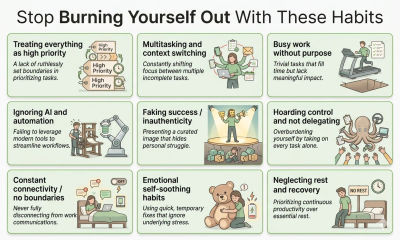
Success at the cost of burnout is unsustainable. A healthy career requires prioritizing rest, relationships, and well-being. For example, Sarah, a project manager, saw her productivity drop after months of long hours without breaks. By taking lunchtime walks and setting boundaries with colleagues, she experienced improved energy levels and job satisfaction.
Work-life balance is about enhancing quality engagement in both professional and personal spheres, not just reducing workload or working fewer hours. Managing your energy can boost productivity and creativity. Instead of squeezing in an extra meeting before leaving work, take a mental break or exercise briefly for better results.
Sustainability is key to long-term success. Employees with balanced lifestyles are more likely to stay with their companies, fostering stable team dynamics and continuous improvement. Regular vacations, flexible hours, and mindfulness practices can positively impact career progression and personal happiness.
Stepping away from work isn't about avoiding responsibilities; it's a smart strategy for maintaining peak performance over the long term. Each break you take is an investment in your future success.
📚 10. Stay Curious and Keep Learning
The most successful professionals embrace lifelong learning, expanding their skill sets and staying curious. For instance, John Doe, an IT specialist, evolved from coding in COBOL to mastering Python, JavaScript, and machine learning through constant self-improvement.
Learning isn't limited to traditional settings; it can happen anywhere at any time. Engaging with books, articles, and industry blogs keeps you informed about the latest trends. Observing colleagues who excel provides insights into different approaches, while experimenting with new tools drives innovation.
Curiosity helps you adapt and stay ahead of the curve by seeking out opportunities for improvement and exploration.
The world is dynamic, and industries evolve rapidly. Staying curious means being open to learning daily—whether through reading about emerging technologies or attending webinars on industry developments. For example, Sarah Lee, a marketing executive, attributes her success to constantly engaging with new information, such as taking online courses in SEO optimization.
🌍 11. Embrace Diversity and Different Perspectives
Diversity in the workplace is a strategic asset that enhances creativity and problem-solving by challenging preconceived notions. A tech startup with developers from various cultural backgrounds might approach coding challenges differently, leading to innovative solutions.
Research shows diverse teams outperform homogeneous ones in productivity and profitability. Intel’s commitment to diversity improved its corporate culture and decision-making processes, resulting in a 30% increase in market share over five years.
Embracing different viewpoints involves actively seeking and valuing insights from varied life experiences, enhancing empathy and effective collaboration. Project teams with members who have lived in multiple countries bring valuable knowledge about different markets crucial for successful international expansion.
"Diversity is not just a feel-good concept; it’s essential for any organization aiming to stay ahead in today's globalized world."
Embracing diversity also means acknowledging that disagreements and conflicts can arise. These challenges should be seen as opportunities for growth, often leading to more robust outcomes.
🧭 12. Trust Your Gut Instincts
In decision-making, balancing hard data and expert advice with intuition is crucial. Gut feelings often derive from subconscious experiences that offer valuable insights. For instance, an opportunity might appear ideal on paper but feel off due to underlying issues.
Listen to your instincts without ignoring red flags to prevent future problems or missed opportunities. Acknowledge these cues, then proceed confidently after reviewing the facts.
- Note potential risks early, such as unusual behavior from collaborators.
- Maintain confidence when your instincts align with logical analysis.
Combining logic and intuition improves decision quality and reduces regret. Cornell University research shows that integrating gut feelings with data-driven insights leads to better long-term outcomes 70% of the time compared to relying solely on quantitative measures.
However, biases or past traumas might distort your instincts. Integrating emotional intelligence with rational analysis is essential for a balanced approach.
💡 Final Thoughts
A strong career develops over time through consistent effort and growth. Start by integrating one or two practices into your routine, such as setting aside time for professional development each week. As you build momentum, expand to include more habits like regular networking and reflective journaling. Over months and years, these efforts will transform not only your career but also your approach to work and life.
"Success isn’t just about achievements; it’s about the person you become."
Each step towards mastering these principles contributes to personal development, fostering resilience, wisdom, and purpose essential for both professional success and overall well-being.