The 5 Levels of Leadership Explained: How Influence Is Built Over Time
When it comes to leadership, many people mistakenly believe that having a title is enough. They think that once they're promoted into a managerial role, they've automatically become leaders. But the truth is, leadership isn't just about holding a position of authority - it's about having a profound impact on those around you. Real leaders don't rely on their titles or positions to get things done; they inspire and motivate others to work towards a common goal.
The concept of the 5 levels of leadership offers a powerful framework for understanding how true leaders grow and evolve over time. It's not just about learning new skills or adapting to changing circumstances - it's about developing a deeper sense of influence and connection with your team. And that's what sets great leaders apart from those who are simply content with their titles.
At its core, leadership growth is a journey that requires patience, self-awareness, and a willingness to learn and adapt. It starts with authority, but it's only when you're able to earn respect, build trust, and create a lasting legacy that you've truly become the leader you were meant to be. And that's what makes this journey so rewarding - not just for yourself, but for your team, your organization, and the people who benefit from your leadership.
Level 1: Position – Leadership Based on Rights
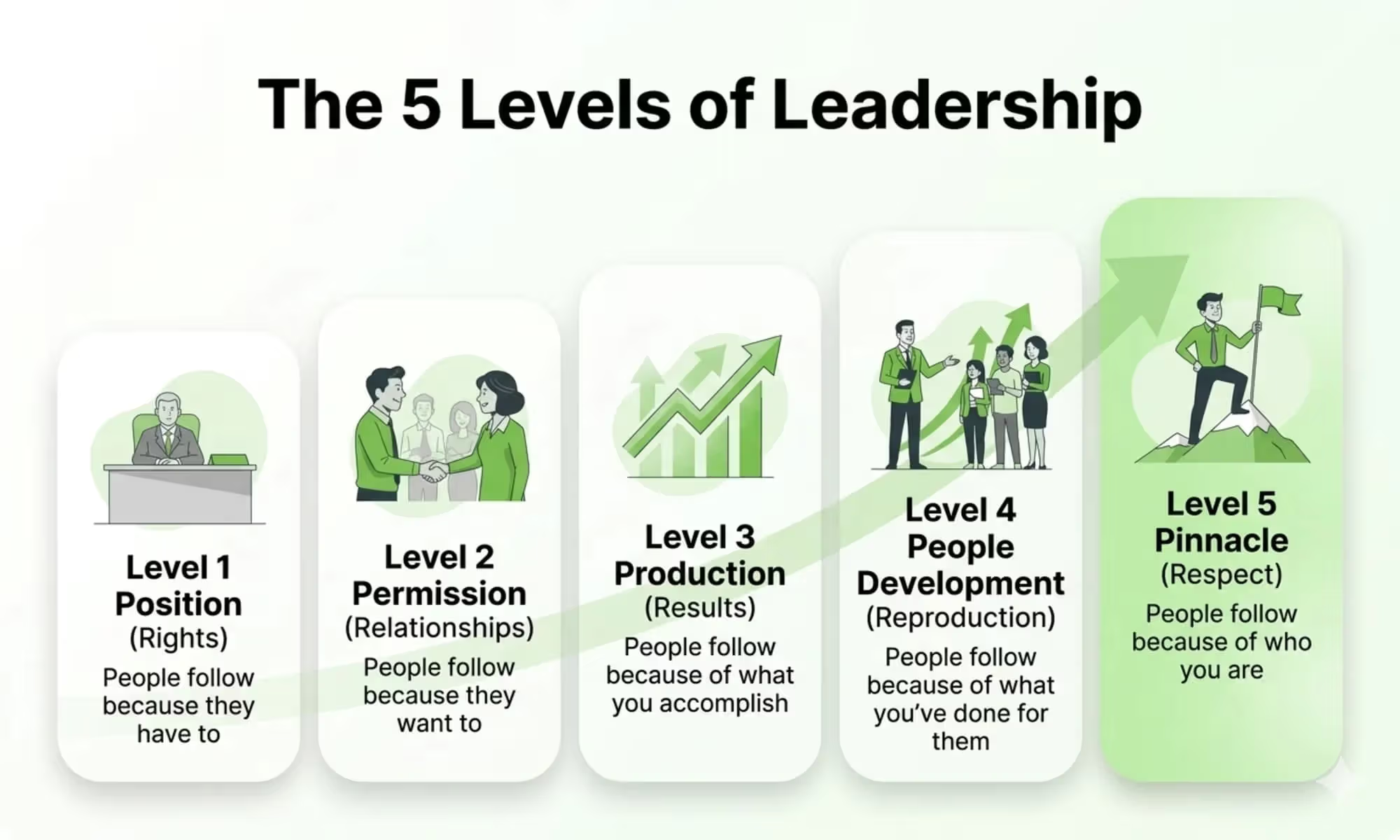
The first level of leadership is often characterized by a sense of authority, stemming from one's title, role, or position within an organization. At this stage, people tend to follow you because they have to, rather than because they want to. This limited approach relies heavily on positional power, where your authority comes from the letterhead on your business card.
A common misconception at this level is that compliance equals respect. However, genuine influence requires more than just a title or a role. When people follow you only because of your position, they are doing the minimum required, not necessarily their best work. This can lead to superficial results and a lack of engagement from team members.
Positional leaders often rely on control, rules, and hierarchy to get things done. While this approach may produce short-term gains, it rarely fosters trust or long-term commitment. Teams under positional leadership may struggle with motivation, creativity, and a sense of ownership. To break free from this limited perspective, leaders must recognize that authority alone is not enough.
Level 2: Permission – Leadership Based on Relationships
The concept of permission-based leadership is rooted in the understanding that people are more likely to follow a leader who has built strong, meaningful relationships with them. As you transition from an authority-driven approach to a connection-oriented one, your team begins to see you as a guide, mentor, or even friend, rather than just someone with a title or position of power. This paradigm shift is crucial for effective leadership, as it allows you to tap into the collective wisdom and potential of your team members.
A key aspect of permission-based leadership is investing time and effort in getting to know each individual on your team. This involves learning about their unique strengths, weaknesses, motivations, and aspirations, which enables you to tailor your approach to meet their specific needs. By doing so, you build trust by being approachable, transparent, and dependable – essential qualities for fostering a positive work environment that encourages collaboration, open communication, and a sense of ownership among team members.
While building strong relationships is vital for permission-based leadership, it's not the only factor at play. To truly grow as a leader, you must also focus on tangible results and performance. Without concrete achievements, your relationships may remain stagnant, leading to a comfortable but unproductive environment where people are satisfied with the status quo rather than striving for excellence. By striking a balance between relational efforts and performance metrics, you can create a dynamic and innovative work culture that drives progress, motivation, and collective success.
Level 3: Production – Leadership Based on Results
As leaders reach the third level, they've established a foundation of trust and credibility. People follow them because of what they've accomplished, and this is where momentum builds. Effective leaders demonstrate their ability to deliver outcomes and drive performance, earning respect and admiration from their teams.
At this stage, leaders excel at setting clear goals, maintaining accountability, and focusing on execution. They lead by example, showcasing that they're not only skilled at building relationships but also adept at achieving meaningful results. This dual capability fosters a sense of confidence within the team, as members begin to trust their leader's vision and expertise.
Results-driven leadership has a profound impact on teams, energizing them with a sense of progress and momentum. When success is tangible, it creates an unstoppable force, driving teams forward and reinforcing trust. Leaders at this level empower others by demonstrating that they're committed to their team members' growth and success, rather than just relying on their own personal output.
Level 4: People Development – Leadership Based on Reproduction
The fourth level of leadership represents a profound transformation, marked by a genuine desire to help others grow and thrive. Gone are the days when leaders focused solely on their own success; instead, they're committed to developing others through investment in their growth, mentorship, and opportunities for success. This shift is characterized by a willingness to put the needs of others before one's own, fostering a culture of collaboration, trust, and mutual respect.
At this level, people follow leaders not because of what they've done for themselves, but because of what they've done for others. Leaders who prioritize people development create opportunities for growth, provide guidance and support, and empower their team members to succeed. As a result, their influence multiplies through the people they develop, leading to stronger, more capable teams that can operate independently and effectively. It's not uncommon for leaders at this level to see their teams become autonomous – a testament to the power of effective leadership.
By prioritizing people development, leaders at this level build strong, capable teams that create future leaders, rather than just followers. This enhances team performance and strengthens the organization as a whole. By focusing on developing others, these leaders foster a culture of growth, innovation, and continuous improvement – essential traits for long-term success. As a result, organizations led by people-focused leaders are better equipped to adapt to changing circumstances, respond to new challenges, and drive progress.
Level 5: Pinnacle – Leadership Based on Respect
The pinnacle of leadership is a coveted state where exceptional individuals are revered for their character and achievements. It's not just about the title or position, but about who you are and what you stand for, earning respect from others that transcends organizational boundaries. This rarefied realm requires a tremendous amount of effort, dedication, and perseverance to attain.
Achieving the pinnacle of leadership is built upon a foundation of consistent actions, strong values, and a lasting impact on others. These leaders have earned widespread respect for their unwavering commitment to excellence, inspiring and motivating others to strive for greatness. They are unshakeable in their integrity, leading by example with unrelenting passion and enthusiasm. Their influence extends beyond their organization, permeating teams, industries, and even generations, leaving a lasting legacy that outlives them.
Pinnacle leadership is not about wielding power or manipulating others; it's about creating a lasting impact that outshines one's own ego. It's a testament to a lifetime of growth, contribution, and the capacity to inspire others at the highest level. To reach this pinnacle, leaders must master all previous stages, including having a clear vision, setting goals, leading by example, and empowering others. Reaching the pinnacle requires intentional effort, learning, and leadership over years – it cannot be rushed or achieved through shortcuts.
Key Takeaways
Leadership is often misunderstood as a fixed state, but in reality, it's a continuous progression that demands intentional effort at every stage. Each level of leadership builds upon the previous one, requiring growth and development as leaders navigate their journey. This misconception can lead to stagnation and complacency, making it crucial to recognize that leadership is not just about achieving a certain title or position but rather about developing the skills and expertise necessary to drive results.
A key indicator of effective leadership is the ability to foster strong relationships with team members, drive meaningful results, prioritize personal development, and earn respect through consistent performance. As leaders ascend to higher levels, they must shift their focus from relying on authority alone to cultivating influence and impact that inspires trust and admiration. The most successful leaders understand that true authority stems from earning the respect of those around them.
So, where do you stand in your leadership journey? Recognizing your current level is essential for identifying areas for improvement and setting goals for future growth. It's easy to get stuck in a comfort zone, but it's only by acknowledging the need for change and committing to ongoing development that leaders can achieve the respect and influence that come with true leadership. By focusing on personal growth, building strong relationships, and driving results, you'll be well on your way to achieving the recognition and admiration that comes with being a respected leader.
Conclusion
The pursuit of greatness often gets misunderstood as a relentless climb up the corporate ladder, defined by job titles and promotions. But the truth is, it's not about being in charge; it's about making a lasting impact on others. When we focus solely on personal success, we risk neglecting the very people who make our achievements possible. True leaders understand that their influence extends far beyond the confines of their role or position.
To become an authentic leader, you need to prioritize building trust with your colleagues, delivering tangible results, developing the skills of those around you, and committing to lifelong learning. By doing so, you'll not only excel as a manager but also earn the respect and admiration of your peers. You'll create a ripple effect that transcends job titles and roles, making a lasting impression on everyone who interacts with you.
The key is to shift your focus from where you are today to whether you're actively working towards a better tomorrow. True leaders don't just sit back and enjoy the fruits of their labor; they continuously strive to improve themselves, seeking out new challenges and opportunities for growth. By adopting this mindset, you'll not only rise through the ranks but also leave a lasting legacy that extends far beyond your own career trajectory. You'll become the kind of leader who inspires others to follow in your footsteps, leaving behind a trail of positive change that will be remembered long after you're gone.