 WORKPLACE SIGNALS
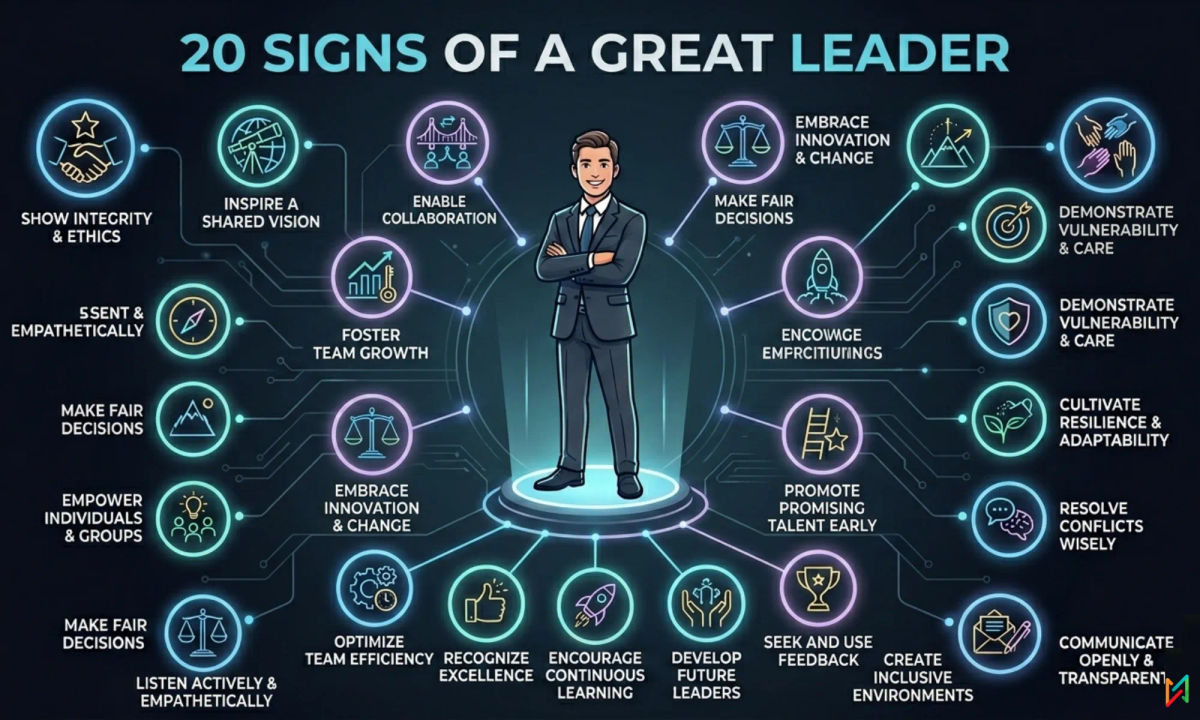
 20 Signs of a Great Leader and What Truly Sets Them Apart
Great Leadership Is Built Through Consistent Behavior
Gone are the days when leadership was solely defined by a title or position. Today, it's the cumulative effect of consistent actions, small decisions, and unwavering commitment that sets apart average leaders from those who truly inspire and motivate their teams. Great leadership is not about grand gestures or occasional flashes of brilliance; rather, it's the intentional cultivation of habits that build trust, clarity, and respect over time.
When we think about great leaders, we often focus on their impressive skills, charisma, or vision. However, these qualities are merely the surface-level manifestations of a deeper commitment to consistent behavior. Leaders who create real impact don't rely solely on authority or charm; they focus on fostering strong relationships with their teams, communicating effectively, and driving continuous improvement through deliberate actions.
So, what does this mean for you as a leader? It means recognizing that the foundation of great leadership lies not in grandiose declarations or dramatic gestures but in the everyday choices you make. By prioritizing consistency, transparency, and people-centricity, you can build trust, credibility, and loyalty with your team members. As you cultivate these habits over time, you'll find that the fruits of your labor will be a more cohesive, motivated, and resilient organization that's better equipped to tackle even the most pressing challenges.
They Create Space for Open Communication
Effective leaders recognize the value of open communication, going beyond mere verbal encouragement to create a culture where team members feel empowered to share their thoughts and opinions. This involves more than just scheduling regular one-on-one meetings; it's about fostering an environment where people feel comfortable sharing their genuine feelings, without fear of reprisal or judgment. By doing so, leaders can gain valuable insights into the minds of their team members, addressing challenges before they escalate and building stronger relationships in the process.
One way great leaders facilitate open communication is by actively listening to their team members. This means more than just nodding along or interjecting with a quick response; it's about fully engaging with what the other person is saying, asking clarifying questions, and summarizing key points to ensure understanding. When people feel heard and valued, they're more likely to open up and share their thoughts, leading to a deeper level of trust and collaboration.
As leaders prioritize open communication, they create space for meaningful conversations that drive growth and improvement. By creating an environment where team members feel comfortable sharing their ideas and concerns, leaders can identify areas for development, address potential roadblocks, and make data-driven decisions that benefit the organization as a whole. Ultimately, it's this kind of intentional communication that sets apart truly effective leaders from those who simply go through the motions.
They Recognize, Support, and Develop Their Team
Acknowledging achievements, no matter how minor, has a profound impact on motivation. Effective leaders consistently recognize individual contributions and provide constructive feedback that is both specific and kind. This delicate balance enables team members to improve without feeling discouraged or demotivated.
Great leaders also invest in their team's growth by providing opportunities for professional development, mentorship, and skill-building exercises. By focusing on building capability rather than dependency, they empower team members to take ownership of their work and make informed decisions. This approach not only boosts morale but also fosters a sense of responsibility and accountability.
Moreover, recognizing and supporting one's team is an ongoing process that requires consistent effort and attention. It's not just about throwing praise or resources at individuals; it's about genuinely understanding their strengths, weaknesses, and aspirations. By taking the time to get to know each team member on a personal level, leaders can tailor their support and recognition strategies to meet individual needs, leading to more effective teamwork and better outcomes.
They Handle Challenges with Clarity and Responsibility
When conflict arises in any team, great leaders spring into action to address the issue early on. They don't let problems simmer beneath the surface, instead opting for a proactive approach that fosters open communication and constructive problem-solving. By doing so, they establish a culture of transparency and accountability, where everyone feels comfortable sharing their thoughts and ideas.
One hallmark of exceptional leaders is their willingness to take ownership of mistakes. Rather than deflecting blame or pointing fingers, they acknowledge what went wrong, learn from the experience, and set an example for accountability throughout the organization. This not only promotes a sense of responsibility among team members but also encourages them to be more thoughtful and deliberate in their decision-making processes.
By handling challenges with clarity and responsibility, leaders can transform tense situations into opportunities for growth and learning. They demonstrate a commitment to continuous improvement, which resonates deeply with team members and helps build trust within the organization. As a result, teams become more cohesive, productive, and resilient in the face of adversity – ultimately driving better outcomes and achieving their goals.
They Empower Rather Than Control
The hallmark of exceptional leadership is not control, but empowerment. Great leaders recognize that their teams are capable of achieving great things when given the autonomy to make decisions and take ownership of their work. This approach fosters a sense of responsibility and boosts confidence across the team, leading to improved performance and increased job satisfaction.
A prime example of this empowering leadership style is a scenario where a manager asks an open-ended question during a meeting: "What do you think we should do to improve our project timeline?" By inviting input from their team members, they not only demonstrate trust but also encourage creative problem-solving. This collaborative approach helps the team develop a sense of ownership and motivation, leading to better outcomes.
Empowering leaders understand that leadership is not about having all the answers; it's about enabling others to find them. By doing so, they unlock creativity, improve overall performance, and build stronger relationships with their team members. This shift in perspective from control to empowerment can have a profound impact on organizational culture, leading to increased collaboration, innovation, and success.
They Bring Structure, Balance, and Inclusivity
Effective leaders excel at bringing structure, balance, and inclusivity to their teams. A key strength of great leadership is clarity – setting clear expectations so everyone understands their role and priorities. This transparency ensures alignment across the team, fostering a sense of unity and direction. By communicating updates openly and honestly, leaders avoid confusion and maintain trust.
However, effective leaders also recognize the importance of being approachable and adaptable. They tailor their communication style to suit individual needs, making interactions more effective and inclusive. This means valuing diversity, encouraging collaboration, and creating an environment where different perspectives are respected and valued. By embracing diverse viewpoints, teams can leverage unique strengths and insights, ultimately driving better decision-making.
Moreover, great leaders understand the critical importance of balance in both personal and professional spheres. Promoting work-life balance is not just a policy but a practice that helps sustain long-term productivity and well-being. By prioritizing self-care and setting healthy boundaries, leaders model behavior that benefits their teams and organizations as a whole. When leaders prioritize balance, they empower themselves and others to thrive in a dynamic, ever-changing environment.
They Lead with Consistency and Care
The hallmark of exceptional leadership is not just about achieving goals or making tough decisions – it's about establishing trust through consistent actions. When leaders prioritize their team members' needs, protect their time, and ensure their voices are represented, they build a foundation for long-term success. This thoughtful approach helps cultivate a culture of mutual respect, where individuals feel valued and motivated to perform at their best.
One way leaders demonstrate this consistency is through mentorship. By sharing knowledge, offering guidance, and providing support, they empower team members to grow beyond immediate tasks. This investment in people pays dividends in the form of increased job satisfaction, improved performance, and a more engaged workforce. When leaders prioritize development over just getting the job done, they foster a sense of community and shared purpose.
As these consistent actions accumulate over time, they shape a strong, positive team culture that is resilient to challenges and adaptable to change. By leading with care and compassion, exceptional leaders create an environment where individuals feel comfortable taking calculated risks, sharing innovative ideas, and collaborating seamlessly. This, in turn, drives innovation, boosts morale, and sets the stage for sustained growth and success.
Final Thought
The hallmark of exceptional leaders lies not in grand, show-stopping achievements, but rather in the countless small actions they take consistently. These subtle yet significant decisions have a profound impact on their teams and organizations as a whole. By focusing on the minutiae, leaders cultivate an environment where people feel valued, supported, and motivated to produce their best work.
One of the most powerful ways leaders foster this atmosphere is by actively listening to their team members. When they take the time to genuinely understand concerns, ideas, and aspirations, it sends a clear message that everyone's input matters. This approach not only boosts morale but also encourages collaboration, creativity, and a sense of ownership among team members.
While it may seem daunting to master every leadership skill at once, the key is to start small and focus on incremental improvement. By committing to daily habits and practices, leaders can build their skills gradually, just like a craftsman hones their craft over time. Remember, effective leadership is not born in moments of pressure or crisis management; it's developed through consistent, everyday behaviors that set the tone for long-term success.