 WORKPLACE SIGNALS
 What Makes a Good Mentor? (4 Traits That Truly Matter)
Mentorship Is About Impact, Not Just Advice
A good mentor does more than share knowledge; they shape thinking, guide decisions, and help someone grow beyond their current limits. The value of mentorship is not in how much information is given, but in how effectively it transforms the person receiving it. This transformative power comes from the mentor's ability to identify areas where their mentee can improve and provide targeted guidance. By doing so, mentors empower individuals to break through limitations and achieve new heights.
Great mentors don't try to control outcomes; instead, they provide the right balance of support, challenge, and direction. Their influence is subtle but powerful, and it stays with you long after the conversation ends. For instance, a mentor might encourage a mentee to take calculated risks, share their own experiences, or offer constructive feedback that helps them develop new skills. By fostering a culture of experimentation and continuous learning, mentors help their mentees build resilience and adaptability.
When it comes to mentorship, impact is often more valuable than advice. A mentor who can demonstrate this impact will be remembered long after the formal mentoring relationship has ended. As you seek out your own mentors or look to develop your own mentorship skills, remember that the goal is not just to share knowledge but to inspire growth, foster empowerment, and create lasting change. By focusing on the impact you want to make, you'll be well on your way to building meaningful relationships that benefit everyone involved.
Honesty Builds the Foundation of Trust
A good mentor's foundation is built upon honesty, which is essential for fostering real growth. Honesty is not just about being truthful, but also about providing constructive feedback that challenges individuals to improve. When mentors offer clear and honest guidance, it helps mentees develop a deeper understanding of themselves and their abilities.
For instance, consider a situation where a mentor provides feedback on a mentee's performance. Instead of simply saying "good job," the mentor might point out areas for improvement and offer specific suggestions for growth. This kind of honesty can be uncomfortable at first, but it ultimately helps build trust between the two parties. Over time, this creates an environment where constructive criticism is valued rather than feared.
The key to effective honesty is striking a balance between candor and kindness. A mentor who is too harsh or critical will only create defensiveness and resistance, while one who is too soft or uncritical will fail to provide meaningful guidance. By finding this delicate balance, mentors can build strong relationships with their mentees, based on mutual trust, respect, and a shared commitment to growth.
Consistency Creates Reliability
When it comes to mentoring, consistency is key to building trust and fostering growth. This means showing up with the same intent and message every time, being dependable in guidance, behavior, and expectations. Consistency provides a sense of stability and reliability, which is essential for a mentee to feel secure and confident in their relationship with the mentor.
A consistent mentor is one who consistently delivers on their promises, follows through on commitments, and demonstrates unwavering dedication to their mentees' success. This predictability allows mentees to anticipate and prepare for future interactions, knowing what to expect and what they can rely on. As a result, mentees are better equipped to focus on growth, learning, and personal development.
On the other hand, inconsistent mentoring can have detrimental effects. When mentors' words and actions don't align or their expectations change without notice, it creates confusion, frustration, and mistrust. Mentees may feel uncertain about what they need to do to succeed or struggle to understand what's expected of them. In such cases, progress is hindered, and the relationship suffers.
Clarity Drives Direction and Growth
When good mentors step in, they offer clarity where others may feel uncertain. By defining clear goals, setting realistic expectations, and establishing boundaries that guide progress, they empower individuals to move forward with confidence. This clarity is crucial because it helps mentees understand not just what steps to take but also why those actions matter. Without it, efforts can become scattered, and growth stalls.
Clarity is the antidote to ambiguity. When goals are well-defined and expectations are clear, the mentee can focus their energy on making meaningful progress. With a sense of direction, every action becomes more intentional, and the journey to success becomes less haphazard. By providing this clarity, mentors enable their protégés to learn from their mistakes, adapt to changing circumstances, and capitalize on opportunities.
Ultimately, clarity drives direction and growth because it allows individuals to make informed decisions that align with their values and aspirations. When goals are clear and expectations are realistic, the mentee can prioritize their time and resources more effectively, ensuring they invest in pursuits that truly matter. By cultivating this kind of clarity, mentors help their mentees build momentum, overcome obstacles, and achieve a sense of fulfillment.
Encouragement Unlocks Potential
The power of encouragement lies in its ability to break down mental barriers and unlock a person's true potential. A good mentor doesn't just provide support; they challenge their mentee to grow, pushing them beyond their comfort zones. This type of encouragement isn't about constant praise or coddling; it's about fostering an environment where individuals feel empowered to take risks, learn from failures, and strive for excellence.
A great example of this is a talented artist who's struggling to complete a complex project. A supportive mentor doesn't just tell them they're doing great – they challenge them to try new techniques, offer constructive feedback on their work, and motivate them to keep pushing forward despite setbacks. This encouragement helps the artist develop confidence in their abilities and gain the resilience needed to overcome obstacles.
The impact of genuine encouragement can be profound. It creates a sense of purpose and direction, allowing individuals to navigate uncertainty with greater ease. By providing reassurance during difficult times and celebrating small victories along the way, mentors play a vital role in helping others discover their strengths and achieve their goals. As we strive for personal and professional growth, it's essential that we surround ourselves with people who believe in us and empower us to reach new heights.
Why These Traits Matter
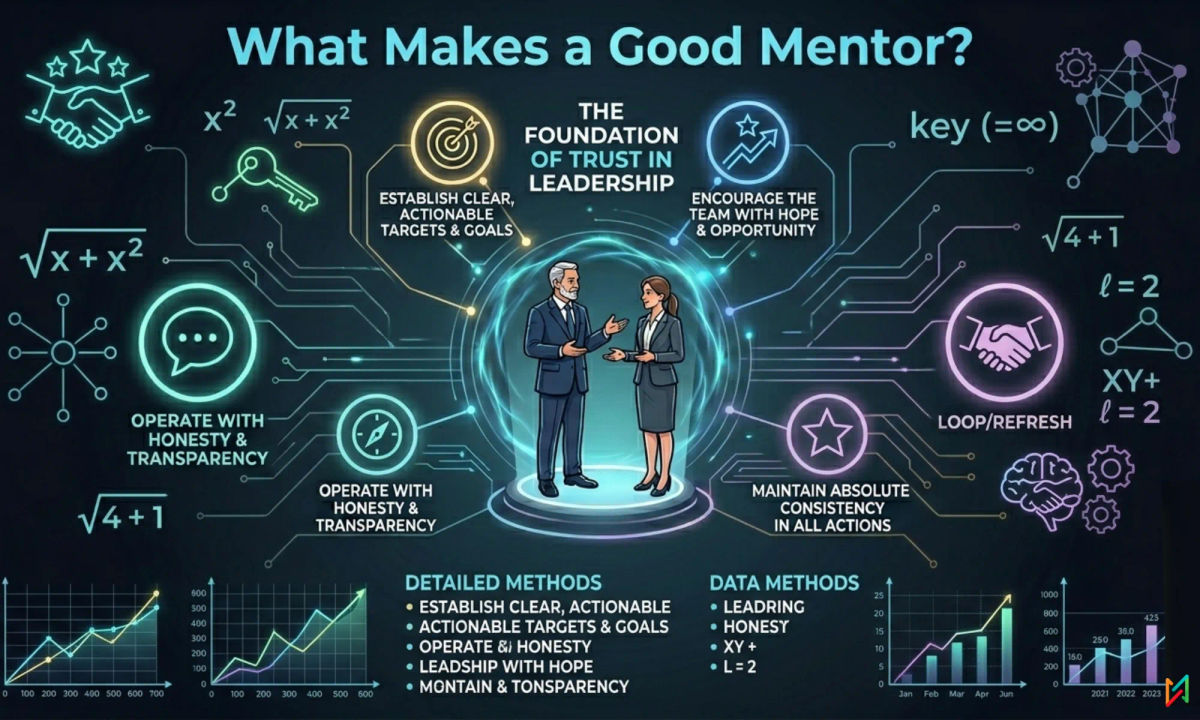
Mentorship is often the unsung hero of personal and professional development. When honesty, consistency, clarity, and encouragement come together, mentorship becomes a powerful catalyst for growth. These traits create a safe yet challenging environment where individuals can confront their strengths and weaknesses, pushing them to reach new heights. By providing a foundation of trust and open communication, mentors empower their mentees to take ownership of their learning journeys.
One of the most significant benefits of mentorship is its ability to foster independence rather than dependency. A good mentor doesn't simply solve problems or provide answers; they teach others how to think critically, make informed decisions, and grow organically. This approach not only accelerates personal growth but also equips individuals with the skills and confidence to tackle future challenges on their own.
In today's fast-paced, rapidly evolving world, mentorship is more crucial than ever. As we navigate complex professional landscapes and face unprecedented levels of competition, having a trusted guide can be the difference between success and stagnation. By embracing these essential traits – honesty, consistency, clarity, and encouragement – mentors can help their mentees build resilience, develop valuable skills, and unlock new possibilities.
Final Thought
Mentorship is often misunderstood as a role where the mentor holds all the power and knowledge. However, the truth lies in the opposite direction. Being a good mentor isn't about having all the answers; it's about being present with the right intent. It's about being willing to learn alongside your mentee, rather than trying to impart your expertise like a sage on a mountain top.
This mindset shift is crucial because it allows you to focus on empowering your mentee, rather than simply conveying information. For instance, imagine you're mentoring a young professional who wants to transition into a new industry. Rather than regurgitating generic advice or statistics about the industry, you could ask them questions that help them uncover their own strengths and interests. By doing so, you'd be helping them develop a personalized strategy for success.
The payoff of this approach is profound. When you're honest, consistent, clear, and encouraging as a mentor, you don't just guide someone – you help shape their future. And that's what makes mentorship truly meaningful. It's not about imparting knowledge or achieving a specific outcome; it's about creating a ripple effect that can have far-reaching consequences.