 WORKPLACE SIGNALS
 6 Mistakes People-First Leaders Avoid (And What to Do Instead)
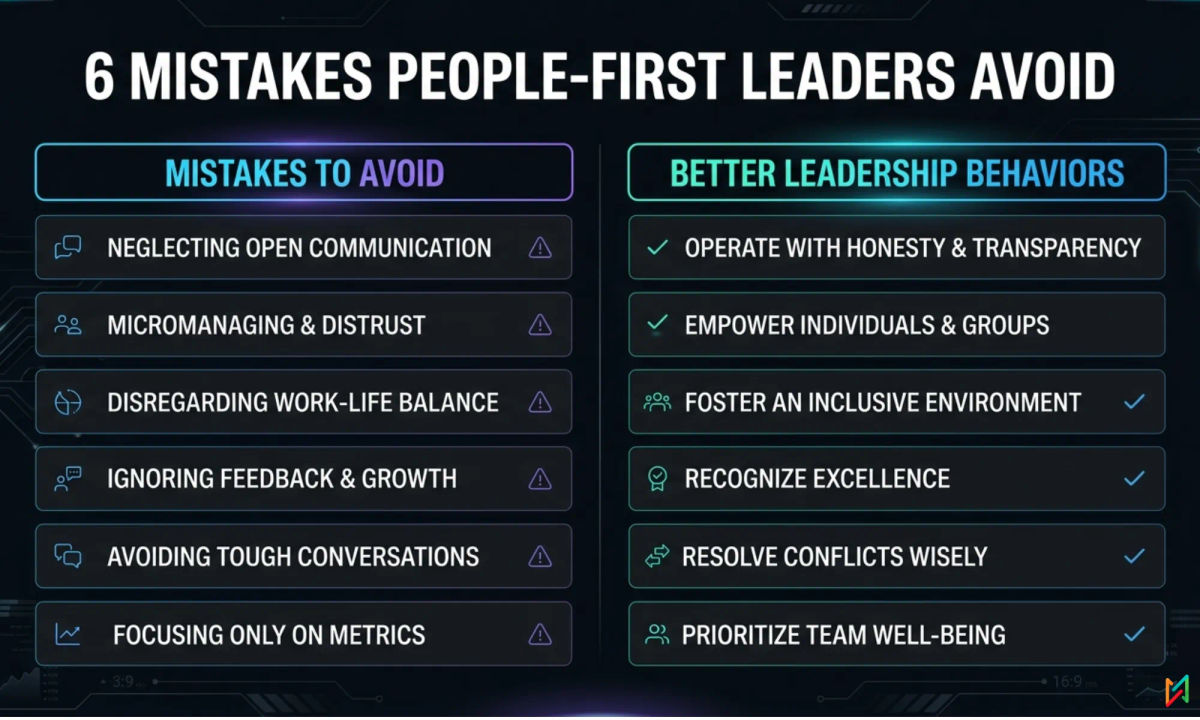
People-First Leadership Mistakes That Quietly Damage Teams
People-first leadership mistakes often don’t look dramatic on the surface, but their long-term impact on teams can be significant. Leaders who genuinely care about their people sometimes fall into patterns that unintentionally reduce trust, engagement, and performance. The challenge is that these mistakes are subtle. They often come from good intentions but lead to poor outcomes if left unaddressed.
Understanding people-first leadership mistakes is critical for anyone responsible for leading teams. When leaders recognize these patterns early, they can correct them before they affect morale or productivity. More importantly, they can replace them with behaviors that strengthen trust, improve communication, and create a healthier work environment.
The goal of people-first leadership is not just to be supportive. It is to create an environment where people can perform at their best while feeling valued and respected.
Neglecting Employee Well-Being in People-First Leadership
One of the most common people-first leadership mistakes is assuming that well-being will take care of itself. Leaders may focus heavily on deadlines, deliverables, and outcomes while unintentionally overlooking the mental and emotional health of their team.
In high-pressure environments, this can quickly lead to burnout. Employees may continue to perform for a while, but over time their energy declines, engagement drops, and mistakes increase. The cost of ignoring well-being is often invisible until it becomes too large to ignore.
Effective people-first leaders take a different approach. They actively monitor workload balance, encourage breaks, and create space for open conversations about stress and capacity. They understand that sustainable performance comes from healthy, supported individuals.
Prioritizing well-being is not a soft skill. It is a strategic decision that directly impacts productivity and retention.
Micromanaging Instead of Building Trust
When leaders micromanage, they often do so with the best intentions – to ensure quality and precision. However, this approach can have devastating consequences for team morale and productivity. The problem arises when leaders become overly involved in every aspect of their team's work, sending a clear signal that they don't trust their employees to handle tasks independently. This lack of faith can lead to a culture of dependency, where team members rely heavily on constant direction rather than thinking creatively and making decisions for themselves.
Take the example of a marketing manager who insists on reviewing every social media post before it goes live. While this approach may seem like a way to ensure brand consistency, it actually stifles creativity and innovation within the team. The team members may feel hesitant to share new ideas or take risks, fearing that their leader will disapprove or dictate changes. Over time, this micromanaging can lead to stagnation and a lack of progress in achieving marketing goals.
So, what's the alternative? People-first leaders understand that trust is built through empowerment, not control. They delegate thoughtfully, setting clear expectations and providing guidance when needed – but they avoid unnecessary interference. This balance allows individuals to take ownership of their work while still feeling supported and confident in their abilities. By trusting their team members, leaders can unlock new levels of creativity, innovation, and productivity, ultimately driving better outcomes for the organization.
Dismissing Feedback and Losing Valuable Insight
Sometimes, the most damaging leadership habits can be those that seem minor or insignificant. Dismissing team feedback falls squarely into this category. On the surface, it may appear as a harmless oversight, but its consequences can be far-reaching and detrimental to an organization's success.
A common scenario plays out when leaders are under pressure to meet deadlines or make decisions quickly. In their haste, they may unintentionally dismiss input from team members, often citing time constraints or the perceived lack of relevance as justification. This oversight can have a ripple effect, causing employees to become disengaged and hesitant to share their ideas in the future.
The irony is that by dismissing feedback, leaders are essentially closing themselves off from valuable insights that could help them make better decisions. When team members feel heard and valued, they are more likely to contribute innovative solutions and take ownership of their work. By prioritizing this people-first approach, leaders can create a culture of openness and collaboration, where everyone feels invested in the organization's success.
Showing Favoritism and Breaking Team Trust
Favoritism is a potent poison that can swiftly corrode the fabric of teamwork. The mere hint of unequal treatment can sow seeds of tension, eroding morale and creating an atmosphere of mistrust. It's a subtle yet insidious phenomenon that can emerge unintentionally, often driven by leaders' natural inclinations towards familiarity or past performance.
The consequences are far-reaching and devastating. When team members perceive favoritism at play, they may become disillusioned with the organization, leading to decreased motivation, reduced productivity, and a higher likelihood of turnover. In some cases, favored individuals might even feel guilty about their privileged status, potentially undermining their own performance and overall job satisfaction.
So, how can leaders avoid this trap? By adopting a people-first approach, prioritizing fairness, transparency, and consistency in all interactions with team members. This means actively seeking out diverse perspectives, recognizing individual contributions, and investing in everyone's growth and development. When leaders demonstrate a genuine commitment to these principles, they build trust – the essential foundation upon which high-performing teams are constructed.
Avoiding Difficult Conversations
When leaders shy away from having difficult conversations, they're often motivated by a desire to maintain harmony or avoid discomfort. This people-first approach may seem empathetic on the surface, but it can ultimately prove costly. By neglecting to address issues head-on, leaders inadvertently allow problems to fester and grow, leading to larger conflicts and performance issues that are harder to correct.
A classic example of this mistake plays out when a manager hesitates to address a team member's underperformance. The leader might worry about hurting the employee's feelings or damaging their morale, so they choose to overlook the issue altogether. However, this approach only serves to further exacerbate the problem, as the underperforming team member may become increasingly frustrated and disconnected from their work.
Savvy leaders, on the other hand, recognize that difficult conversations are an essential part of fostering open communication and driving results. They address challenges early on, communicate respectfully, and focus on finding solutions rather than assigning blame. By doing so, they create a culture where team members feel empowered to speak up and contribute to finding answers, ultimately leading to better outcomes and stronger working relationships.
Taking Credit Instead of Giving Recognition
When leaders prioritize their own success over that of their team members, they unknowingly create an environment where innovation and collaboration dwindle. One of the most damaging people-first leadership mistakes is taking credit for the work of others. This behavior not only damages relationships but also stifles creativity and reduces motivation. The consequences are far-reaching, affecting not just individual employees but also the organization as a whole.
Consider a scenario where an employee spends countless hours on a project, pouring their heart and soul into it. When the final product is launched, their leader takes credit for the success without acknowledging the employee's crucial contributions. The employee feels undervalued and unappreciated, leading to decreased job satisfaction and eventually, disengagement. In reality, employees want to feel that their work matters and is recognized by others. When this doesn't happen, engagement drops, and over time, it can lead to turnover.
People-first leaders understand the importance of recognition in driving employee motivation and retention. They prioritize acknowledging individual and team contributions, celebrating wins, and ensuring credit is given where it is due. By doing so, they reinforce the value of their employees' work, build a positive culture, and foster an environment where collaboration and innovation thrive.
Why Avoiding These People-First Leadership Mistakes Matters
Avoiding people-first leadership mistakes may seem like a no-brainer, but it's crucial to understand that these errors have far-reaching consequences. Not only do they negatively impact team morale and motivation, but they also directly affect an organization's overall performance and success.
When leaders prioritize the well-being, trust, communication, fairness, accountability, and recognition of their team members, a positive ripple effect is created. This leads to higher engagement, better collaboration, and ultimately, stronger results. For instance, when employees feel valued and heard, they are more likely to go above and beyond, driving innovation and creativity within the organization.
Conversely, ignoring these people-first principles can lead to a toxic work environment, characterized by low morale, high turnover rates, and decreased productivity. Even if teams manage to muddle through, they will never truly reach their full potential. This is why it's essential for leaders to recognize the interconnectedness of their actions and their team members' experiences.
How to Improve People-First Leadership Skills
Effective people-first leadership is rooted in self-awareness and a willingness to adapt. The first step toward improvement is acknowledging the pitfalls that can hinder this approach. Recognizing biases, emotions, and assumptions can help leaders make more informed decisions that prioritize their team's well-being.
From awareness comes intentional action. People-first leaders regularly check-in with their team members, fostering open communication and trust. They also ensure fair decision-making processes, consistently recognizing and rewarding individual and collective achievements. By taking these deliberate steps, leaders can create a positive work environment that drives engagement and motivation.
A critical component of people-first leadership is seeking feedback from others. Leaders who remain open to learning and adjusting their approach are better equipped to build strong, resilient teams. This growth-oriented mindset enables them to navigate challenges and capitalize on opportunities, ultimately driving success for both the organization and its employees.
Final Thoughts on People-First Leadership Mistakes
In today's fast-paced business environment, people-first leadership mistakes can be easily overlooked or dismissed as minor blips on the radar. However, it's essential to recognize that these errors can have a significant impact on team morale and overall performance. By identifying and correcting these mistakes early on, leaders can create a more positive and productive work culture.
A classic example of people-first leadership mistakes is when a manager focuses solely on meeting targets and deadlines, often at the expense of their team's well-being. For instance, a project leader might consistently push their team to meet an unrealistic deadline, leading to burnout and decreased job satisfaction. In this scenario, the leader prioritizes short-term goals over long-term success, which can result in high turnover rates and decreased employee engagement.
The good news is that people-first leadership mistakes are not insurmountable. By adopting a more compassionate and empathetic approach, leaders can create an environment where their team feels valued, supported, and empowered to succeed. This might involve actively listening to concerns, providing opportunities for growth and development, or simply showing genuine interest in employees' lives outside of work. When leaders prioritize people over process, they unlock the full potential of their teams, driving innovation, collaboration, and long-term success.