 WORKPLACE SIGNALS
 How to Think Like Successful People (10 Mindset Shifts That Change Everything)
The path to success isn't paved by actions alone; it begins in your mind. Long before you see tangible results, the seeds of your future are planted within your thoughts and beliefs.
A key realization is that success doesn’t happen randomly—it’s a direct reflection of your consistent mental habits and decisions. For instance, consider how entrepreneurs like Elon Musk stay resilient through countless setbacks; their mindset plays a crucial role in their recovery and growth.
While natural talent certainly helps, the real difference lies in thinking differently—seeing opportunities where others see obstacles, believing in yourself when self-doubt creeps in. This nuanced approach can transform your outlook on challenges.
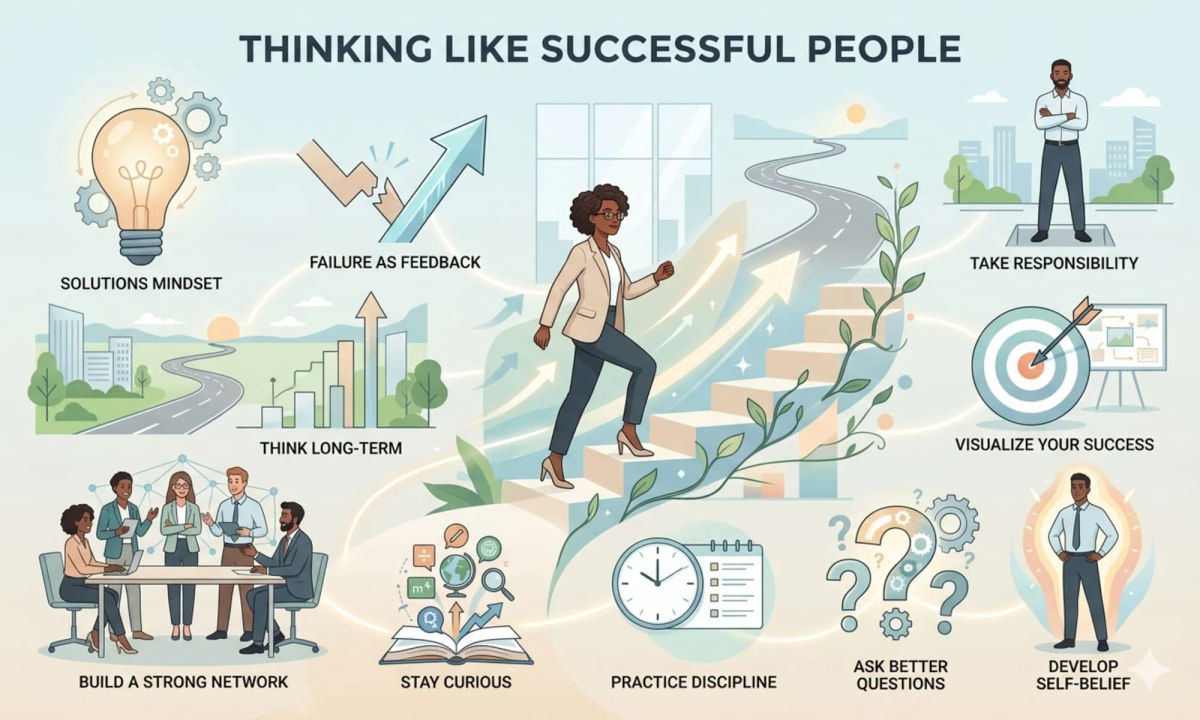
1. Focus on Solutions, Not Problems
Unsuccessful thinking often spirals into negativity, as seen in the question “Why is this happening to me?” This perspective can be a major roadblock to progress. In contrast, successful individuals immediately shift their mindset to ask, “How do I fix this?” Such a proactive approach empowers them to take control and seek resolutions.
Problems are an inevitable part of life, but the way we respond to them determines our success or failure. A study found that people who focus on solutions rather than problems recover from setbacks more quickly. This mindset enables them to train their mind to look for options, explore possibilities, and move forward with determination. For instance, when faced with a work crisis, a solution-oriented person might brainstorm alternative strategies, discuss potential solutions with colleagues, and implement changes without delay.
A solution-focused approach keeps your energy productive rather than draining it. Instead of getting bogged down by issues, you remain agile and resourceful, turning challenges into opportunities for growth and improvement.
2. See Failure as Feedback
Failure is not the antithesis of success; instead, it’s a critical component that paves the way for achievement. Successful individuals understand this paradox and leverage their setbacks to propel themselves forward. When faced with failure, they dissect what went wrong, meticulously identifying areas for improvement rather than dwelling on defeat.
For instance, consider an entrepreneur who launches a product that initially flops in the market. Instead of giving up, she takes the time to analyze customer feedback and adjust her strategy accordingly. By extracting valuable lessons from this failure, she refines her approach and successfully relaunches with a more tailored product, ultimately securing significant traction and success.
Instead of succumbing to self-doubt and saying “I failed,” successful people reframe their mindset to focus on the learning that has occurred. This shift in perspective can dramatically accelerate personal and professional growth. According to research, those who view failure as a stepping stone to improvement are more likely to bounce back stronger than before.
3. Think Long-Term
Most individuals prioritize immediate comfort and short-term rewards, often overlooking long-term implications. In contrast, successful people consider future impacts by asking reflective questions like “Will this decision enhance my prospects in the long run?” or “Is what I’m doing now contributing to where I want to be five years from now?” This proactive approach encourages personal and professional development.
Moreover, successful individuals are prepared to make sacrifices today for greater gains tomorrow. They might delay gratification or dedicate time to skill-building that may not yield immediate results. By making harder choices now, they secure better opportunities later on, firmly establishing themselves as players who see the long game.
4. Take Responsibility for Your Life
Blame is easy, but responsibility is powerful. Successful individuals focus on what they can control instead of blaming others. When facing challenges, successful people ask, "What can I control here?" This introspective approach helps them stay grounded and focused. By taking ownership of your life, you gain clarity about your goals and the power to make decisions that impact those goals.
For example, an entrepreneur who blames market conditions for failure shifts their mindset to focus on what they can control—like adapting marketing strategies or pivoting product lines—and finds new opportunities amidst adversity. Taking responsibility puts you back in the driver's seat of personal growth. A study by psychologist Martin Seligman found that individuals who embraced a sense of personal responsibility reported higher well-being and productivity, challenging the notion that external circumstances dictate success or failure.
5. Surround Yourself with the Right People
Your environment shapes your thinking; successful individuals curate their social circles wisely. They seek mentors and peers with proven track records and growth-oriented attitudes. For example, Sarah, a budding entrepreneur, found a mentor who had pivoted his start-up twice, offering invaluable advice on resilience and adaptability.
Successful people prioritize relationships that foster ambition and positivity, challenging each other’s perspectives and encouraging calculated risks. A supportive community significantly impacts one’s ability to stay optimistic and motivated during setbacks. According to a study by the University of California, Berkeley, individuals with strong social connections are 50% less likely to experience stress-related illnesses.
6. Stay Curious and Keep Learning
The pace of change means staying relevant requires constant learning. Successful individuals seek new information proactively, asking questions in meetings or personal projects. Curiosity drives exploration into uncharted territories, like a software developer learning blockchain technology, opening up career opportunities and adaptability.
This mindset keeps the mind flexible, adaptive, and future-ready. Google found employees engaging in unrelated personal development projects tend to perform better overall due to enhanced creativity and problem-solving skills.
7. Practice Discipline (Even Without Motivation)
Motivation is like a fickle friend; discipline is the unwavering partner who shows up day after day. Successful people know true progress isn't about constant inspiration—it's about showing up and doing the work even when enthusiasm wanes. Take an aspiring author who sets a goal to write every morning for 30 minutes, rain or shine. Despite initial excitement, days come when hitting snooze is tempting. Yet, those who stick with their routine end up publishing books while others remain in planning mode.
Consistent effort is crucial because it’s not occasional creativity but daily work that leads to a finished manuscript. Successful individuals also build habits that foster growth by creating systems and routines that make the right choices easier even when motivation is low, such as setting up a dedicated workspace or removing distractions. By focusing on these foundational elements, they set themselves up for success without relying solely on bursts of energy.
Results come from consistency, not bursts of motivation.
8. Visualize Success Clearly
Success often begins in the mind as a clear vision of goals. Successful people vividly imagine their achievements, building internal belief and driving progress. Visualization enhances confidence by mentally rehearsing success, reducing anxiety and fear in challenging situations. Athletes who visualize winning perform better under pressure due to psychological preparation.
This technique keeps individuals focused on their goals amidst distractions. Clear visualization transforms into a tangible roadmap guiding actions and decisions with purpose and direction. Studies show athletes who regularly visualize improve performance by up to 20%, highlighting the real-world impact of this practice.
9. Ask Better Questions
The quality of your life depends on the questions you ask. Instead of negative inquiries like "Why is this so hard?", reframe them to be constructive, such as asking “What’s the smartest approach to tackling this problem?” This shift dramatically alters how you perceive challenges.
Better questioning improves cognitive processes and leads to smarter decisions. For instance, at work, framing a tough decision as "How can I maximize my team's potential?" often results in innovative solutions. Research shows individuals who reframe questions positively are 28% more likely to find creative resolutions.
- Better thinking: Reframing enhances analytical skills.
- Better decisions: Constructive questions ensure consideration of all outcomes.
- Better outcomes: Improved questioning leads to smarter actions and results in personal and professional spheres.
10. Believe in Your Potential
The journey to success starts with believing in your potential for growth. Doubting yourself hinders progress toward goals. Successful individuals cultivate self-confidence, knowing each action moves them closer to objectives.
- They build self-trust, guided by instincts towards wise decisions.
- This belief system motivates them through challenges and setbacks.
Belief drives action; without it, efforts falter. For example, a business owner who believes in innovation introduces new products despite market uncertainties. This conviction leads to proactive steps that often yield positive outcomes.
Belief fuels action, creating tangible results. A tech startup CEO shared their belief in disrupting the industry with a novel app design led to an initial user base of over 100,000 within six months—demonstrating how conviction translates into rapid growth.
Faith must translate into daily actions and decisions for aspirations to become reality.
Final Thought
You don’t become successful by chance; success results from a deliberate process of mindset change. Sarah’s career pivot from job security to personal growth illustrates this point: she took calculated risks and within six months, was promoted to a leadership role. Start with one mindset shift today, apply it consciously, and observe the changes in your actions.