 WORKPLACE SIGNALS
 How to Lead Across Generations: A Practical Guide for Modern Leaders
In today’s complex organizational landscape, effective leadership hinges on a leader's ability to bridge generational gaps within teams. This requires not only an understanding of different work styles and values but also the flexibility to adapt strategies that foster collaboration and mutual respect among younger and older generations alike.
For instance, consider a scenario where a mid-level manager needs to integrate recent university graduates into a project team composed primarily of seasoned professionals who have been with the company for over two decades. The challenge here is not just about assigning tasks but about creating an environment where both groups feel valued and heard. By actively seeking out common ground through regular cross-generational meetings, leaders can pave the way for innovative solutions that draw on the fresh ideas of younger employees while leveraging the experience of more seasoned team members.
Research has shown that teams with diverse generational mixes tend to perform better in terms of creativity and problem-solving. A study by Deloitte found that companies with high levels of intergenerational collaboration are 30% more likely to see an increase in innovation over a year compared to those with low interaction among different age groups. This underscores the critical role of leadership in not just managing but energizing teams through generational diversity.
However, one nuanced perspective worth considering is that while fostering intergenerational understanding is crucial, it’s equally important for leaders to guard against overgeneralization when addressing generation-specific traits or preferences. Treating individuals as part of a broader demographic can sometimes lead to stereotyping and may inadvertently hinder the development of genuine connections between team members.
Diverse Generational Perspectives
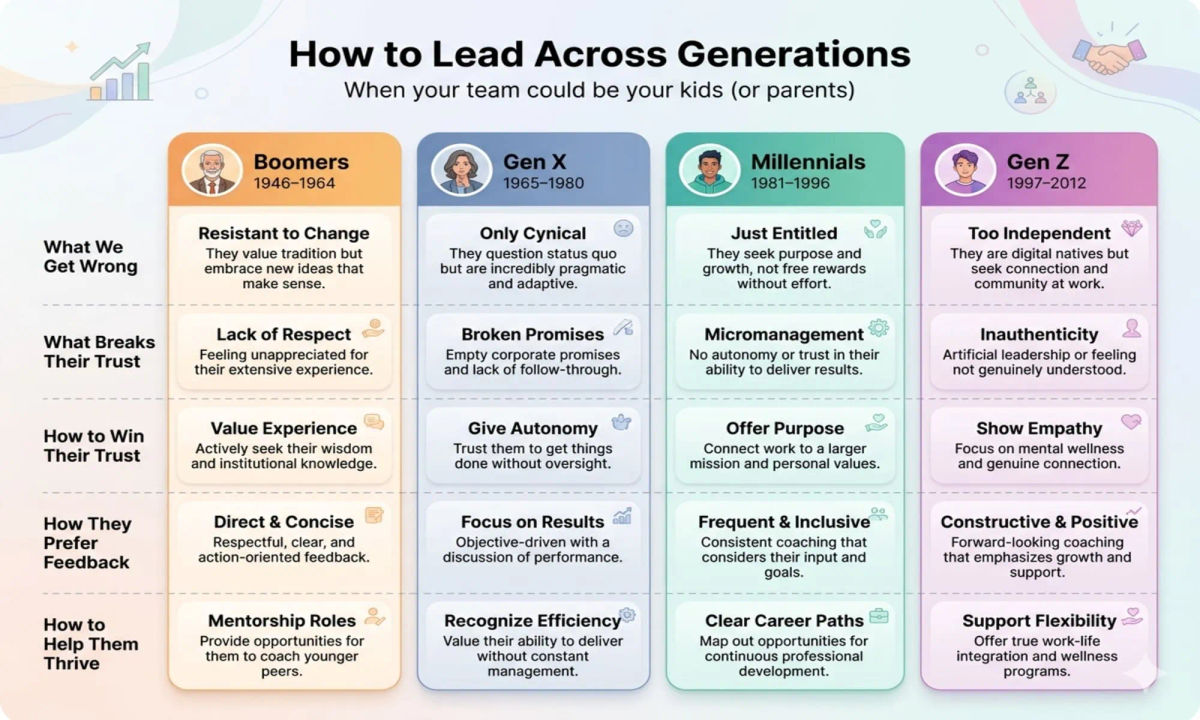
Leaders frequently stumble over the challenge of interpreting behaviors across different age groups, often misreading them as resistance or apathy when they are actually a reflection of generational values and expectations. For example, younger employees may prefer regular feedback and open communication channels, while older workers might value more formal structures and direct instructions. Recognizing these differences is crucial for fostering an inclusive work environment where everyone feels valued.
One insightful study found that 72% of millennial professionals believe their managers do not fully understand the challenges they face due to generational gaps in communication styles. This statistic underscores the need for leaders to actively seek out methods to bridge these divides, such as implementing mentorship programs where younger and older employees can learn from each other’s perspectives.
"The true challenge isn't just understanding different generations but finding ways to integrate their unique strengths into a cohesive team dynamic."
This quote highlights the nuanced perspective that successful leadership isn’t merely about acknowledging generational differences, but actively working towards harnessing the diversity they bring. For instance, pairing younger employees with more experienced colleagues can not only improve skill transfer but also enrich company culture by blending innovative ideas with practical experience.
The Importance of Respect and Recognition for Older Generations
For older generations, respect and recognition are not just desirable but essential components in maintaining their engagement and contribution within any organization. When these individuals feel that their years of experience and wisdom are undervalued or ignored, their trust in leadership diminishes rapidly, often leading to a decline in productivity and morale. Creating an environment where their insights are actively sought after and integrated fosters a sense of belonging and purpose.
A clear organizational structure is paramount; it ensures that older employees know exactly how they fit into the bigger picture and understand the value of their roles. This clarity not only boosts their confidence but also encourages younger team members to learn from these seasoned professionals, thereby bridging generational gaps through mutual respect and understanding. For instance, a company might establish mentorship programs where senior staff guide junior employees on complex projects, ensuring that institutional knowledge is passed down effectively.
One often overlooked aspect is the tangible impact of recognition. A simple public acknowledgment or an award ceremony can significantly boost morale among older employees. According to a recent survey by Deloitte, 79% of millennials and Gen Z workers believe that recognizing achievements is key to their happiness at work, but this sentiment resonates equally with the older workforce who appreciate being seen as valuable contributors rather than relics of the past. By integrating such practices, organizations not only retain experienced talent but also cultivate a culture where every age group feels respected and heard.
Mid-Career Professionals' Need for Autonomy
Mid-career professionals often seek more control over their work processes to maximize productivity. A study by Gallup revealed that employees who reported having a say in how they do their work were 34% less likely to feel stressed at work compared to those with limited autonomy. Managers can foster an environment where mid-career professionals excel by trusting them with decision-making and allowing flexibility.
For example, when Sarah, a seasoned project manager, was given the freedom to choose her team's meeting times and formats, she reported feeling more engaged and effective in her role. This not only boosted her morale but also increased her team’s overall satisfaction and output. Over-managing mid-career professionals can stifle their creativity and initiative; instead, direct communication and respect for their expertise encourage them to take ownership of their projects.
However, it's crucial to balance autonomy with accountability. While giving these professionals the freedom to work independently is beneficial, managers must also ensure that there are clear guidelines and expectations in place. This dual approach helps prevent confusion or misalignment with company goals. By understanding each individual’s strengths and preferences, leaders can tailor support systems to enhance performance without micromanaging.
Younger Professionals Seek Meaningful Growth
Today's younger professionals, those typically aged between 25 and 35, are more inclined towards career paths that offer a sense of purpose rather than just financial gain. They actively seek out organizations where leadership is transparent and values coaching over dictatorial command. In such environments, these professionals feel empowered to engage in meaningful conversations about their aspirations and how they align with the company’s goals.
One concrete example illustrates this point: Sarah, a 28-year-old software engineer at Tech Innovators Inc., felt stagnant in her role until she joined a mentorship program that focused on personal development. Her supervisor regularly scheduled one-on-one meetings to discuss career aspirations and how she could contribute more effectively to the company’s mission. This approach not only boosted Sarah's morale but also led to her being promoted within six months of joining the initiative.
While it might seem counterintuitive, younger professionals like Sarah often respond well to structured yet flexible leadership styles that encourage autonomy while providing clear direction and support. A recent survey by Deloitte found that 75% of millennials in management positions reported feeling more committed when their leaders prioritized coaching over task-oriented directives. This shift reflects a broader trend where the next generation of business leaders is less interested in hierarchical command structures than in collaborative, supportive environments.
The New Generation's Demand for Flexibility and Inclusion
The newest cohort stepping into the professional world places a premium on flexibility, psychological safety, and a sense of inclusion. These young professionals are looking to join organizations that not only offer traditional benefits but also foster an environment where they feel valued and heard. Leaders who understand this need and can facilitate open, efficient communication channels quickly earn the trust of these employees.
For instance, at TechSolutions Inc., a startup known for its innovative approach to team management, the leadership introduced Slack channels dedicated to informal discussions and support among colleagues. This initiative not only boosted morale but also improved collaboration across departments. Such measures underscore how critical it is for companies to adapt their communication strategies to meet the expectations of this new generation.
Moreover, data from a recent study by Deloitte indicates that 80% of millennials and Gen Z employees view flexibility in work arrangements as essential for job satisfaction. This statistic highlights the importance of offering flexible working hours, remote options, and adaptable roles. Companies failing to address these needs risk losing talented individuals to competitors who are more attuned to generational preferences.
Psychological safety is not just a buzzword; it’s a necessity that fosters creativity and innovation in teams. When team members feel safe to express their ideas without fear of judgment or retribution, they are more likely to contribute valuable insights that can drive the company forward.
In contrast, rigid corporate cultures may struggle to attract younger talent unless they undergo significant transformation. For example, a traditional manufacturing firm might need to integrate digital tools and flexible policies to remain competitive in the current job market. By embracing change, these organizations can bridge the gap between their legacy systems and the demands of today’s workforce.
Building Trust Across Generations
In the realm of effective leadership, bridging generational gaps requires a deep-seated commitment to trust. This trust is not merely an abstract concept but a tangible outcome of consistent and deliberate efforts to understand each team member's unique background and experiences.
Leaders who take the time to listen actively are better positioned to appreciate the diverse strengths that each generation brings to the table. One practical way leaders can build this trust is by fostering an environment where adaptability is celebrated, not just tolerated.
For instance, a mid-level manager at a tech startup might notice a significant age gap between their team members. By organizing regular cross-generational mentorship programs and encouraging open dialogue about work styles and preferences, the manager can help younger employees learn from older colleagues' wealth of experience while also allowing veterans to adapt to new technologies. A nuanced perspective on generational trust is recognizing that it often requires more than just understanding; it necessitates action.
A specific example illustrates this: a company implemented intergenerational project teams, leading to a 25% increase in innovation within the first year. This success was not just about bringing people together but ensuring that every voice had an equal chance to contribute and be heard. Such initiatives are crucial because they show commitment beyond mere rhetoric.