 WORKPLACE SIGNALS
 Second-Order Thinking: How Smart Leaders Avoid Decisions That Create Bigger Problems
Why Smart Decisions Aren't Always Good Decisions
Imagine your manager announces a new policy designed to improve productivity.
Everyone must submit a detailed daily progress report.
At first, the results look promising. Managers gain more visibility, deadlines appear easier to track, and accountability seems to improve.
A month later, however, something unexpected happens.
Employees spend more time writing reports than solving problems. Collaboration declines because everyone focuses on individual metrics. Creativity suffers because people avoid experimenting with ideas that might temporarily reduce productivity. What looked like a smart decision has quietly created several new problems.
This happens more often than most organizations realize.
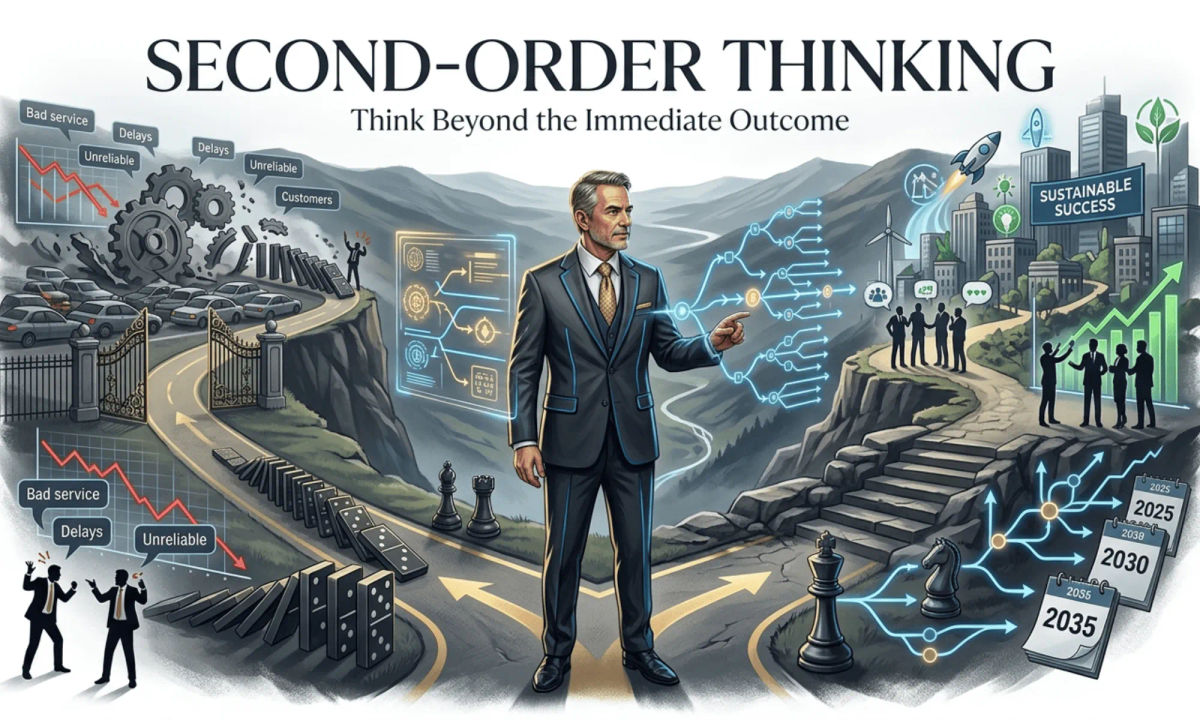
Many decisions succeed in the short term while creating unintended consequences over weeks, months, or even years. The challenge isn't making decisions—it's understanding what those decisions will trigger next.
That's where Second-Order Thinking becomes invaluable.
Instead of asking only, "What happens immediately?", Second-Order Thinking asks a deeper question:
"What happens after that?"
Great leaders, successful entrepreneurs, and experienced decision-makers constantly think several steps ahead. They consider not only the direct impact of a decision but also the ripple effects it creates across people, systems, customers, and future opportunities.
In this guide, you'll learn how Second-Order Thinking helps you avoid short-term fixes, anticipate unintended consequences, and make decisions that continue creating value long after the initial problem has been solved.
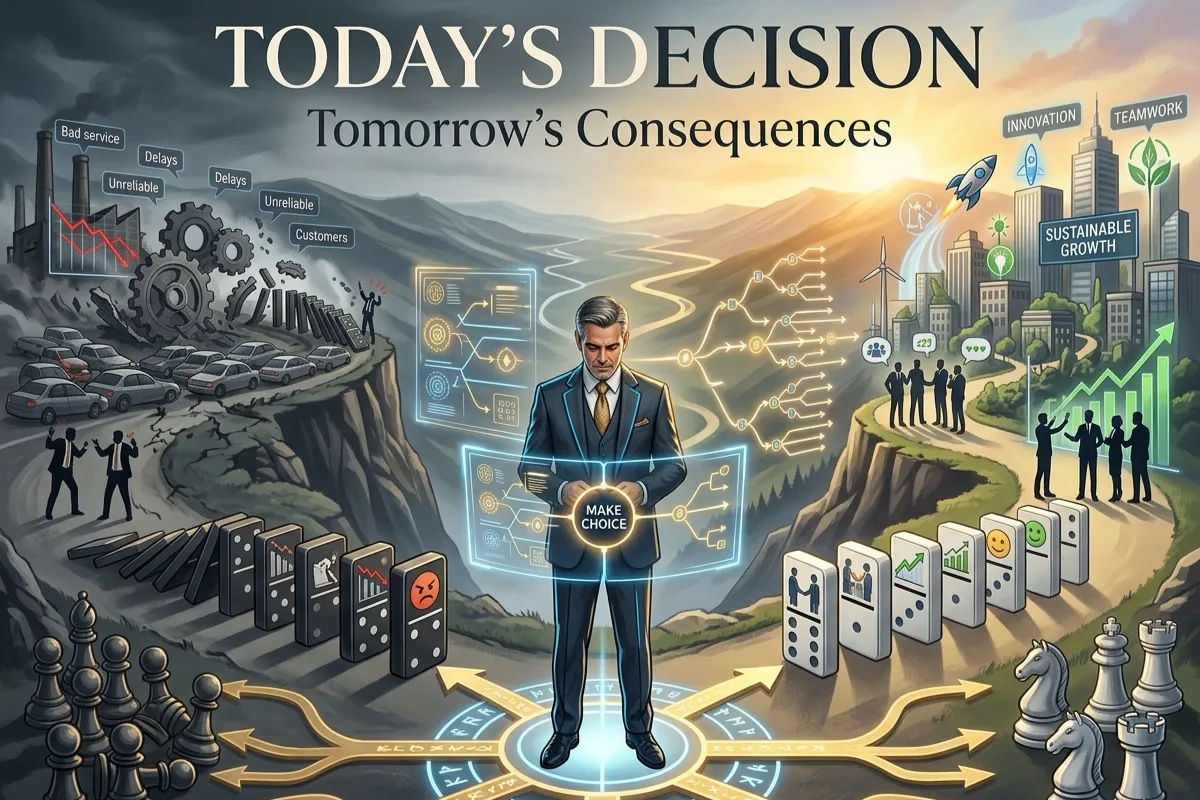
What Is Second-Order Thinking?
Most people evaluate a decision based on its immediate outcome. If a solution appears to work today, it's often considered successful.
Second-Order Thinking goes one step further. It asks what happens next—and then what happens after that. Instead of focusing only on the first result, it considers the chain of consequences that follow.
For example, cutting employee training may reduce costs this quarter. However, the second-order effects could include lower productivity, more mistakes, reduced innovation, and higher staff turnover over the coming years.
Similarly, offering large discounts may increase short-term sales but train customers to wait for future promotions, reducing long-term profitability.
The best leaders recognize that every decision creates a ripple effect. Some consequences appear immediately, while others emerge gradually as people adapt, systems change, and new behaviors develop.
Second-Order Thinking helps you identify those hidden outcomes before they become expensive problems.
Why Most People Think Only One Step Ahead
Our brains are wired to value immediate results.
When faced with a decision, we naturally focus on the most obvious outcome because it's easier to see and measure. If a change saves money today, increases sales this month, or solves an urgent problem, we instinctively consider it a success.
The challenge is that every decision creates a chain of consequences. Some appear immediately, while others take weeks, months, or even years to emerge.
Imagine a company freezes hiring to reduce costs. The first-order result looks positive—expenses decrease and quarterly profits improve. But over time, the remaining employees become overloaded, customer response times increase, burnout rises, and talented people begin leaving the organization. What started as a cost-saving measure eventually creates recruitment challenges, lower productivity, and declining customer satisfaction.
This is why many short-term wins become long-term problems.
Second-Order Thinkers resist the temptation to judge decisions too quickly. Instead of asking only, "Did this solve today's problem?", they also ask, "What new problems might this create tomorrow?"
The ability to think beyond the immediate outcome separates reactive managers from strategic leaders.
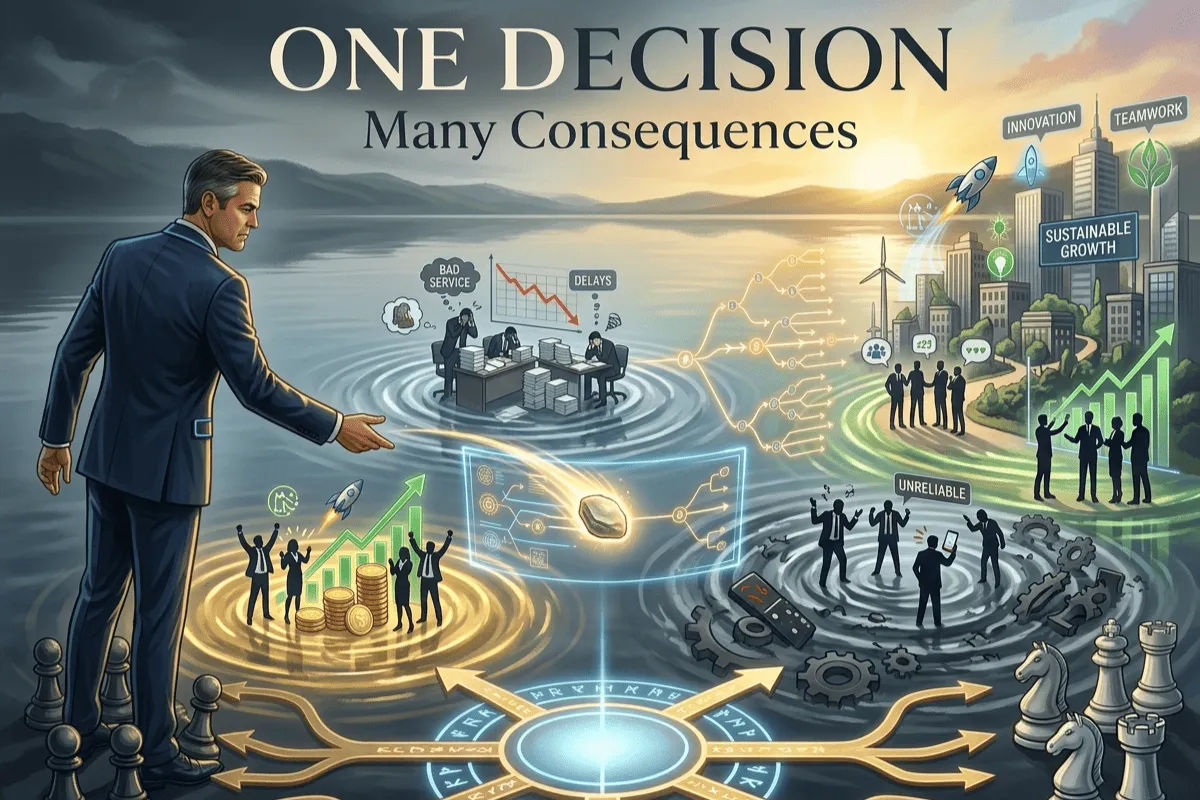
First-Order Thinking vs. Second-Order Thinking
The difference between these two ways of thinking is surprisingly simple.
First-order thinking focuses on the immediate outcome of a decision. It asks, "What happens next?" This approach works well for routine decisions where the consequences are predictable and limited.
Second-order thinking, however, looks beyond the first result. It asks, "What happens after that?" It considers how people will respond, how systems will adapt, and what unintended consequences might emerge over time.
For example, imagine a manager notices that meetings consume too much time.
A first-order solution might be to cancel every recurring meeting. The calendar immediately becomes less crowded, and employees gain more time for focused work.
A second-order thinker looks further. Without regular communication, teams may become misaligned, duplicate work, miss critical updates, and make inconsistent decisions. Instead of eliminating every meeting, the leader redesigns them—shorter, more focused, and only involving the people who truly need to attend.
The immediate solution saves time.
The long-term solution improves both productivity and collaboration.
| First-Order Thinking | Second-Order Thinking |
|---|---|
| Focuses on immediate results | Considers long-term consequences |
| Solves today's problem | Prevents tomorrow's problems |
| Optimizes short-term gains | Balances short- and long-term impact |
| Reacts quickly | Thinks several steps ahead |
| Often creates unintended consequences | Anticipates ripple effects |
Neither approach is always right or wrong. Many everyday decisions only require first-order thinking. But when the stakes are high—whether you're leading a team, launching a product, or making strategic investments—thinking one step further often prevents costly mistakes.
Five Questions That Reveal Long-Term Consequences
Every significant decision deserves more than a quick answer. Before acting, pause and ask these five questions:
1. What happens immediately?
Start by understanding the obvious outcome. What problem will this decision solve today, and who benefits from it? This creates your baseline before exploring deeper consequences.
2. What happens next?
Think beyond the initial result. How will people respond? Will they change their behavior? Will customers, employees, or competitors react differently than expected?
3. What could go wrong over time?
Every decision involves trade-offs. Consider the unintended consequences that may appear weeks or months later. Looking for risks early is far less expensive than fixing them later.
4. What opportunities could this create?
Second-order thinking isn't only about avoiding problems. Great decisions often unlock new possibilities. Ask whether today's choice could lead to innovation, stronger relationships, or future competitive advantages.
5. If I repeated this decision for five years, where would it lead?
This question forces you to zoom out. A decision that seems harmless today can become transformational—or disastrous—when repeated consistently over time. Looking at long-term patterns often changes how you evaluate short-term wins.
Applying Second-Order Thinking in the Real World
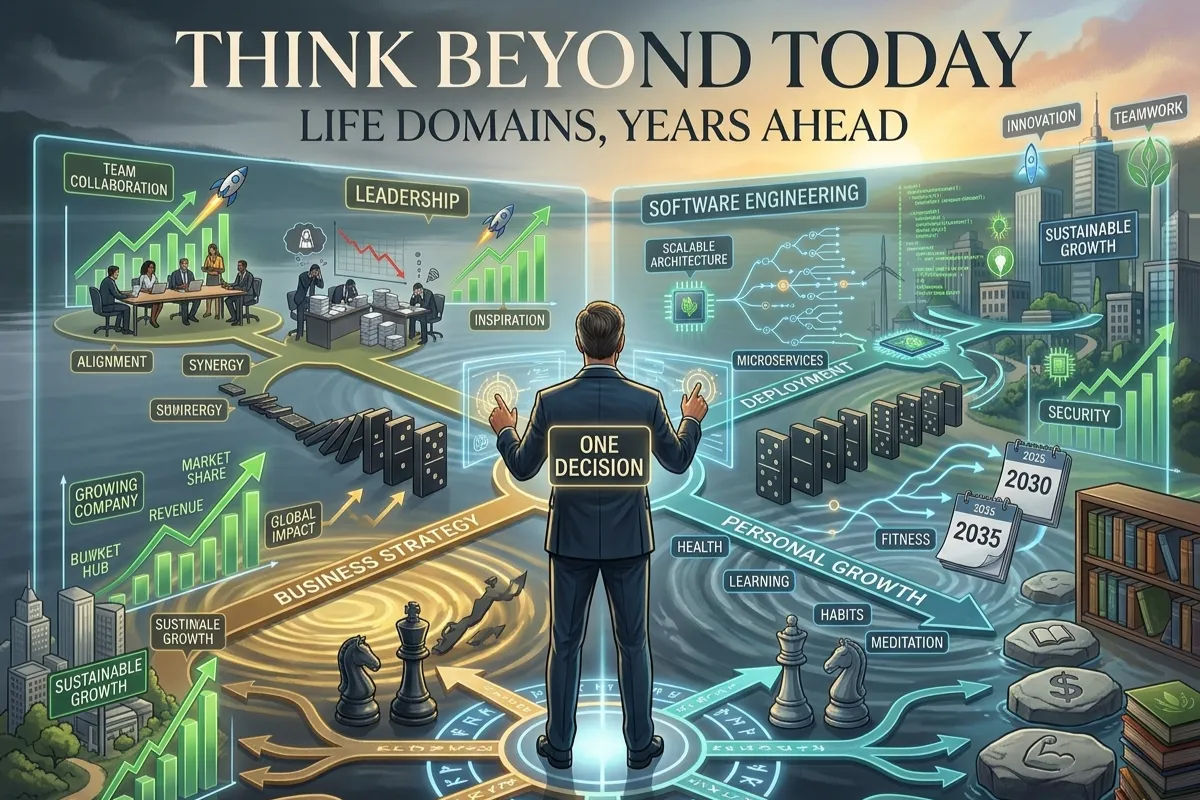
The real value of Second-Order Thinking comes from applying it before making important decisions. Instead of reacting to immediate outcomes, you begin evaluating how today's choices will influence tomorrow's results. Whether you're leading a team, building software, growing a business, or making personal decisions, thinking one step further often prevents costly mistakes.
In Leadership and Management
Great leaders understand that every policy changes behavior. A new performance metric may improve productivity initially, but it can also encourage employees to focus on numbers instead of meaningful outcomes. Before introducing new processes, effective leaders ask how their teams are likely to respond over time. This helps them create systems that remain effective long after the initial excitement fades.
In Software Engineering
Technical decisions rarely affect only the current release. Choosing a quick workaround may help meet today's deadline, but it can increase technical debt, reduce scalability, and slow future development. Second-Order Thinking encourages engineering teams to balance immediate delivery with long-term maintainability, making software easier to evolve as business needs change.
In Business Strategy
Business leaders constantly make decisions involving pricing, hiring, marketing, and investments. A discount campaign may boost short-term sales but reduce future profit margins if customers begin expecting frequent promotions. By considering how customers and competitors will respond over time, leaders can avoid strategies that create long-term disadvantages.
In Everyday Life
Second-Order Thinking also improves personal decisions. Skipping exercise saves an hour today, but repeating that decision for months affects health and energy. Reading for thirty minutes each day may not seem significant immediately, yet over several years it compounds into valuable knowledge and skills. Small daily decisions often produce the biggest long-term outcomes.
Five Common Mistakes That Prevent Better Decisions
Even experienced professionals struggle with long-term thinking. Watch out for these common mistakes:
- Optimizing only for short-term results. Quick wins are valuable, but not if they create larger problems later.
- Ignoring unintended consequences. Every decision changes behaviors, incentives, and expectations. Think about what happens after the immediate outcome.
- Assuming people won't adapt. Employees, customers, and competitors respond to new situations. Their reactions often determine whether a decision succeeds.
- Confusing activity with progress. More meetings, reports, or approvals may feel productive while actually slowing the organization.
- Failing to revisit past decisions. The best leaders regularly evaluate whether yesterday's decisions are still producing the intended results.
A Practical Five-Step Framework for Better Decisions
Before making an important decision, work through these five steps:
Step 1: Define the immediate goal. Be clear about the problem you're trying to solve today.
Step 2: List the first-order effects. Identify the obvious benefits and immediate outcomes.
Step 3: Explore the second-order effects. Ask how people, systems, customers, and future decisions might change because of this choice.
Step 4: Evaluate the trade-offs. Every decision has costs. Consider whether the long-term benefits outweigh the short-term gains.
Step 5: Review and adapt.
Monitor the results over time and adjust your approach as new information becomes available.
Thinking ahead doesn't eliminate uncertainty, but it dramatically improves the quality of your decisions.
Key Takeaways
Before making your next important decision, remember these Second-Order Thinking principles:
- Don't judge a decision by its immediate outcome alone.
- Ask what happens after the first result.
- Consider how people will adapt and respond.
- Evaluate long-term trade-offs before acting.
- Look for opportunities as well as unintended consequences.
- Review important decisions regularly instead of assuming they're permanently correct.
- Great leaders think several steps ahead, not just one.
Final Thoughts
The best decisions are rarely the ones that produce the fastest results. They're the ones that continue creating value long after the initial problem has been solved.
Second-Order Thinking helps you move beyond reactive decision-making by considering the ripple effects every choice creates. Whether you're leading a team, developing software, growing a business, or making personal decisions, thinking one step further can prevent expensive mistakes and uncover opportunities that others miss.
Before making your next important decision, pause for a moment. Ask yourself not only what will happen tomorrow, but what will happen next month, next year, and beyond.
The future is often shaped by the questions we ask before we act.