 WORKPLACE SIGNALS
 Simple Productivity Hacks That Actually Work (No Fluff, Just Results)
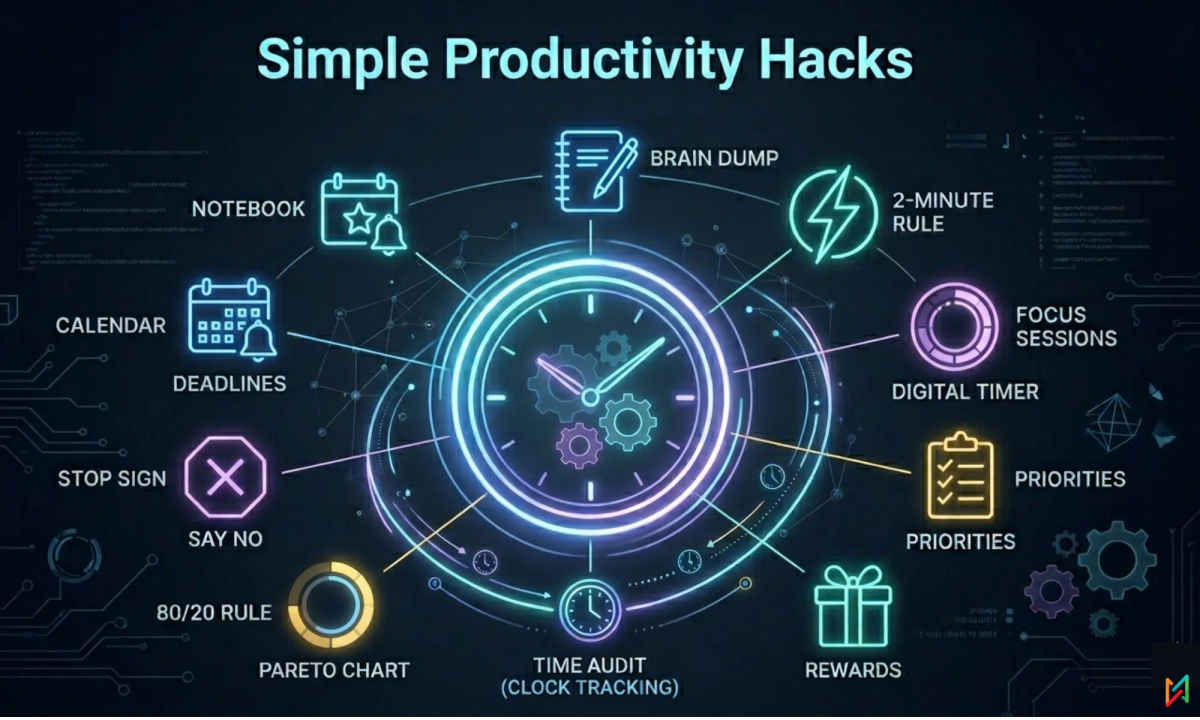
Productivity Isn’t About Doing More—It’s About Doing What Matters
Most people struggle with productivity not because they lack effort, but because they lack clarity and systems. Without a clear understanding of what truly matters, even the most diligent efforts can feel futile and unproductive. For instance, imagine spending hours each day checking emails and attending meetings, only to find that you neglect critical tasks that align more closely with your goals.
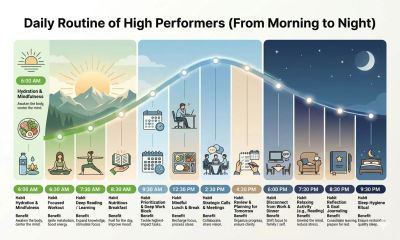
The truth is simple: you don’t need more tools; you don’t need more motivation. What you really need are better habits. A recent study highlighted that individuals who establish consistent morning routines see a 25% increase in productivity throughout the day. Such routines can include anything from exercising to reviewing priorities, setting the tone for an effective workday.
These practical productivity hacks are easy to implement and powerful enough to create immediate impact in your daily work and life. By focusing on what truly matters and establishing systems that support this focus, you can achieve more with less stress.
Keep a “Brain Dump” Notebook
Your mind is not designed to store everything. When random thoughts, tasks, and worries accumulate, they create mental clutter that can be overwhelming and distracting. A simple yet effective solution is to maintain a dedicated notebook or digital document where you jot down all these ideas and concerns as soon as they arise.
By regularly engaging in this practice of what’s often called a “brain dump,” you clear your mind and allow yourself to focus more intently on the tasks at hand. For instance, if you find yourself preoccupied with remembering a grocery list while trying to write an important report, jotting down that list immediately can help redirect your attention back to work. Surprisingly, many people underestimate how much mental energy is required just to hold onto fleeting thoughts.
“A study found that people who regularly practice brain dumping experience a 40% reduction in stress levels related to forgetfulness.”
This habit not only boosts your productivity but also ensures that you don’t miss out on any important tasks or opportunities. It’s a powerful tool for anyone looking to enhance their mental clarity and organizational skills.
Use the 2-Minute Rule
The 2-minute rule, popularized by productivity expert David Allen in his book "Getting Things Done," suggests that if a task can be completed in under two minutes, it should be done right away. This could involve anything from responding to a quick email or text message to tidying up your workspace. By tackling these small tasks immediately, you avoid the mental stress and clutter that come with procrastination.
For instance, imagine you receive an email requesting a minor update to a document. Instead of adding it to your task list, spending time organizing it, and then coming back to it later, addressing it straight away saves both time and mental effort. This immediate action keeps your workflow streamlined, preventing small tasks from piling up into larger stressors.
"The irony is that the less time a task takes, the more we tend to overlook its importance," reflects a productivity coach, highlighting how minor actions can significantly impact our efficiency when managed promptly.
Work in Timed Focus Sessions
To avoid mental fatigue and maintain productivity, work in short, intense focus sessions known as the Pomodoro Technique. Instead of staring at a task for hours on end, break your work into manageable 25-minute intervals followed by brief breaks.
During each focused session, dive deep into your project with full attention, minimizing distractions and maximizing output. For instance, if you're writing an essay, use these sessions to concentrate solely on crafting compelling arguments rather than getting bogged down in research or editing. After four such sessions—about two hours of work—you can take a more extended break.
Research shows that this method not only boosts efficiency but also enhances creativity and reduces stress-related burnout. For example, when applied to software development teams, the Pomodoro Technique has been shown to decrease the time spent on meetings and increase coding productivity by up to 25%. Despite its structured nature, it's surprising how flexible and adaptable this technique can be across various work environments.
Plan Your Top 3 Priorities the Night Before
Starting your day without a clear plan often leads to reactive work, where urgent tasks crowd out important ones. By identifying and setting aside time for your top three priorities the night before, you sidestep morning decision fatigue and approach each day with purpose. This strategy boosts productivity and maintains mental clarity throughout the hectic morning rush.
For instance, waking up to a packed inbox and schedule can lead to tackling emails or meetings as they arrive rather than focusing on high-impact tasks. A study by the Harvard Business Review found that employees who plan their day in advance are 23% more productive than those who don’t. Having a clear to-do list for critical activities ensures progress even if unexpected challenges arise, crucial for professionals facing unpredictable work environments where daily tasks can shift rapidly.
Reward Yourself After Completing Tasks
Productivity should not feel like a relentless grind but rather an opportunity for personal growth and satisfaction. By integrating small rewards after completing tasks, you foster a positive reinforcement cycle that keeps motivation high. For instance, after finishing your morning to-do list, treat yourself to a cup of coffee or a quick walk outside. This simple act sends a powerful message to your brain: productivity leads to enjoyment.
Over time, this practice helps establish an enduring connection between hard work and immediate rewards, enhancing overall consistency and performance. According to a study published in the Journal of Experimental Psychology, individuals who reward themselves after completing tasks are 26% more likely to stick with their goals long-term. Instead of seeing each task as a burden, view them as stepping stones towards enjoyable outcomes.
When productivity feels like a chore, it's time to introduce some fun elements. Whether it’s a playlist you love or a cozy corner in your home, make the act of getting things done feel rewarding.
Apply the 80/20 Rule
Not all tasks are equal. A small percentage of your efforts often produces the majority of your results, a principle famously known as the Pareto Principle or the 80/20 rule. By identifying and focusing on these high-impact tasks, you can dramatically improve your effectiveness and achieve more with less effort.
For instance, consider a project manager juggling multiple deadlines. Rather than trying to complete every small task simultaneously, they might find that just five critical actions could address 80% of the problems at hand. This prioritization not only saves time but also ensures that the most significant issues are tackled first.
Instead of spreading yourself thin across many activities, prioritize what truly moves the needle. A realistic example is a salesperson focusing on the top 20% of leads that typically generate 80% of revenue. By dedicating more attention to these high-value opportunities, they can close deals faster and enhance overall productivity.
Learn to Say “No”
Saying "yes" to every request can overwhelm your schedule, leaving little room for high-impact work. Committing to low-value tasks or unnecessary meetings trades time that could be spent on critical projects; an hour daily on unimportant emails or admin tasks amounts to over 190 hours annually, a significant chunk of professional life.
Saying "no" does not mean isolating yourself; it's about making thoughtful choices. Focusing on meaningful work enhances productivity and reduces stress. Instead of agreeing to non-essential projects, suggest delegating them to colleagues with less pressing commitments.
Set clear boundaries and communicate priorities transparently. When declining requests, acknowledge the request but emphasize your current workload or existing commitments. This maintains professional relationships and encourages others to respect your time more effectively.
Set Clear Deadlines for Everything
Work expands to fill the available time, as Cyril Northcote Parkinson observed. Small tasks drag endlessly without a defined deadline. Clear time limits create urgency and improve efficiency, studies show. For example, participants given tight deadlines for mundane tasks performed more efficiently than those with no set times. Deadlines bring structure and prevent procrastination by focusing the mind on completion rather than avoidance.
When I had to draft a 10-page report in one week, having that strict deadline pushed me to organize my time better and prioritize effectively. Interestingly, once the initial panic subsided, I found myself more energized and productive as the project progressed. Deadlines also encourage accountability beyond self-imposed goals. Committing to delivering something by a specific date makes you responsible not just to yourself but also to others waiting for your work. This external pressure can be surprisingly motivating, pushing you to overcome obstacles and deliver high-quality results on time.
Track Your Time for One Day
You can’t improve what you don’t measure. By tracking your time for just one day, you uncover surprising patterns and inefficiencies that might otherwise go unnoticed. For instance, a recent study found that the average office worker loses over two hours daily to distractions like social media or unnecessary emails.
This awareness is crucial because it allows you to see how much time is wasted on low-value tasks that yield little benefit. Once you identify these patterns, you can take concrete steps to reduce such interruptions and reclaim your focus. For example, setting aside specific times for checking emails rather than responding to them as they come in can significantly cut down on this lost time.
Interestingly, many people find that simply being aware of how much time is wasted can be a powerful motivator to change behavior without needing any new tools or strategies at all. This shift in mindset can lead to more productive days and a better sense of control over your schedule.
Why These Hacks Work
These strategies succeed because they concentrate on shaping behavior rather than relying solely on motivation. By doing so, they make it easier for individuals to follow through with their goals consistently, without the need for constant internal pep talks.
They simplify decision-making processes and reduce mental load, allowing people to focus more effectively on what truly matters. For instance, automating daily tasks like setting alarms for exercise routines can free up cognitive resources that might otherwise be wasted on deciding whether or not to work out. This reduction in the complexity of choices leads to better overall performance.
Moreover, these hacks create a structured environment without adding unnecessary complications. By streamlining activities and removing superfluous options, individuals can achieve their objectives with ease and efficiency. It's crucial that such strategies are sustainable over long periods, ensuring continued adherence without burnout or frustration.
Final Thought
The concept of productivity often gets conflated with being perpetually busy. However, true productivity is about intentionality rather than mere busyness. When you clear your mind and focus on what truly matters, you start to prioritize tasks that yield the most significant results.
For instance, instead of checking emails every hour, setting specific times to handle correspondence allows for deeper concentration during other work periods. Building sustainable habits is key; it’s not about making grand changes overnight but fostering small, consistent routines.
onsider starting with something as simple as dedicating 15 minutes each morning to plan your day’s priorities. This straightforward practice can dramatically enhance focus and efficiency throughout the day. Real productivity is indeed a daily endeavor, not an occasional burst of activity.
Real productivity isn’t built in a day—it’s built daily.