8 Smart Questions to Ask When a Recruiter Says “Do You Have Any Questions?”
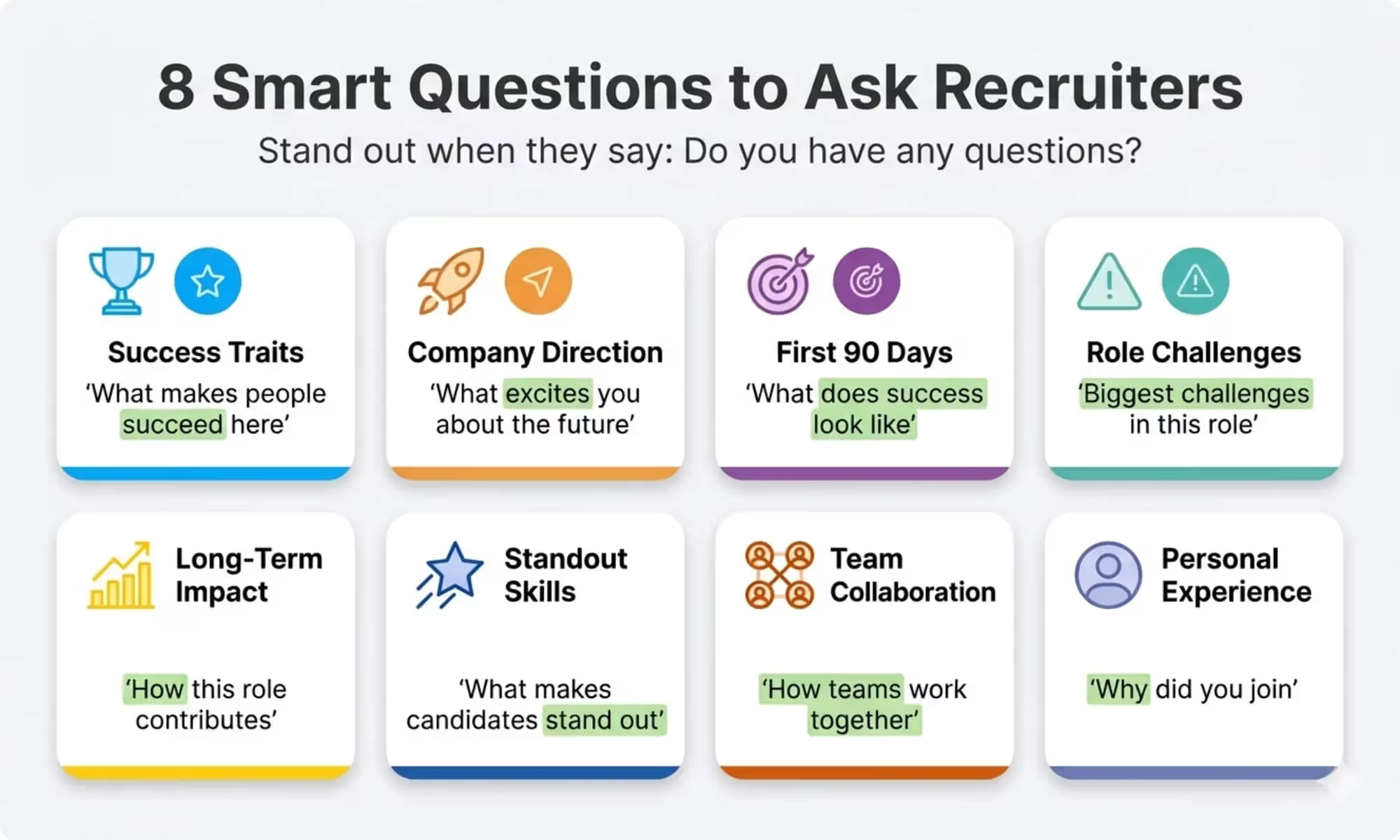
The final question in an interview often goes overlooked: “Do you have any questions for me?” While many candidates decline or ask generic inquiries, this moment allows you to showcase your thought process and preparation. Instead of basic benefits or vacation policies, ask about future projects the team is excited about or the biggest challenge the role faces over the next year. Such insightful questions demonstrate genuine curiosity and strategic thinking, leaving a positive impact on the interviewer.
1. What Traits Have You Seen in People Who Succeed in This Role?
Interviewing with this question is invaluable as it delves into the nuances of success beyond listed responsibilities. Job descriptions often paint broad pictures but fail to capture specific behaviors essential for thriving within an organization. For instance, in a tech startup, candidates who showed strong collaboration skills were more likely to succeed than those focusing solely on technical prowess.
Probing into these factors uncovers what the company values most—be it innovation, teamwork, or resilience under pressure. This insight is crucial as it directly influences how performance is evaluated and rewarded within the organization. Interpersonal skills often make all the difference despite the assumption that being a lone wolf can lead to more impactful contributions.
Asking about success traits demonstrates your proactive approach to achieving excellence rather than merely securing employment. This initiative sets you apart, showing potential employers that you are aiming for a role where you can truly flourish and contribute meaningfully.
2. What Excites You Most About Where the Company Is Headed?
The question of where a company is headed reveals your genuine interest in its long-term vision and growth. When I joined my current company last year, their commitment to expanding into new markets within the next five years excited me because it aligns with my professional aspirations.
Discussing a company's direction allows you to assess whether its future goals resonate with your personal objectives, crucial for long-term job satisfaction and career growth. For example, if the company emphasizes innovation and technological advancement as key pillars of their strategy, employees who thrive on cutting-edge projects will find immense value in such an environment.
Conversations about future plans create a more engaging and personal connection during interviews or casual chats with colleagues. Instead of reciting generic responses, sharing your excitement over specific initiatives can foster meaningful dialogue. While most employees are excited about the company's expansion into new markets, some may feel apprehensive about navigating unfamiliar business landscapes.
3. What Would Success Look Like in the First 90 Days?
Asking what success looks like in the first 90 days of a new job demonstrates foresight and sets you apart from other candidates focused solely on landing the position. This proactive mindset clarifies your immediate priorities and aligns them with stakeholders' expectations for performance outcomes. For instance, a new project manager might identify key team members within the first week, establish initial project timelines by day 20, and initiate stakeholder meetings to gather feedback by week four.
Such strategic actions build credibility and demonstrate a commitment to swift results and continuous improvement, crucial in fast-paced environments where quick wins can make or break team morale. Framing success proactively allows you to anticipate challenges and devise solutions from day one, essential for navigating the unpredictable early stages of a new role.
4. What Are the Biggest Challenges Someone in This Role Usually Faces?
Every professional role comes with unique challenges, and asking about them during an interview shows realism and preparedness. This demonstrates a deeper understanding of the job beyond mere enthusiasm. It sets realistic expectations, helping you grasp both positive and negative aspects, while fostering mental resilience to handle any situation.
For instance, knowing high-stress periods are part of the role lets you plan support networks or stress management techniques in advance. Such inquiries signal a problem-solving mindset crucial for roles with common obstacles, showcasing your ability to navigate complex situations effectively. Learning that managing competing priorities is challenging allows you to start prioritizing tasks efficiently now.
5. How Does This Role Contribute to the Company’s Long-Term Goals?
This question reflects a strategic mindset, connecting your role within the company to its overarching vision and objectives. Understanding how your position supports long-term goals reveals the broader impact of your work. For instance, in marketing, driving brand awareness is key for future growth, so focus on campaigns that build lasting consumer relationships rather than just short-term sales spikes.
Seeing this alignment helps prioritize tasks more effectively. Imagine a scenario where two initiatives could be pursued: one offers immediate revenue but lacks long-term value, while the other requires upfront investment but will pay dividends for years to come. Understanding the company’s long-term strategy allows you to choose the path that aligns with its vision and contributes meaningfully to future success.
For interviewers, your ability to articulate how your role fits into the company's strategic plan demonstrates maturity and foresight, showing that you are not just focused on completing tasks but also on contributing to the organization’s enduring mission.
6. What Skills or Strengths Would Make Someone Stand Out in This Role?
To excel in this role, recognize the unique qualities of top performers. Understanding these traits helps you identify and highlight them effectively during interviews. For instance, if a company values problem-solving skills and innovative thinking, showcasing how you've tackled complex issues with creative solutions can be particularly impactful.
Aligning your experiences with the employer's priorities makes you more memorable and stands out among candidates. Weaving these strengths into responses throughout the interview ensures every interaction reinforces why you are a perfect fit for the role.
"In one instance, I took an existing process and streamlined it using technology, resulting in a 25% efficiency gain." Such specific examples demonstrate your skill set and tangible impact.
7. How Does the Team Collaborate with Other Departments?
Work rarely happens in isolation; effective cross-departmental collaboration is crucial for success. This question examines team dynamics and the ability to integrate diverse skills and perspectives, enhancing productivity and innovation. Understanding communication flow between departments provides valuable insights for interviewers and potential hires. Clear lines of communication are essential when a marketing team coordinates with finance to manage advertising budgets.
Effective collaboration ensures smooth inter-departmental interactions, avoiding misunderstandings or delays. For interviewers, articulating your ability to collaborate signals teamwork and goal alignment. A specific example is when software development teams work closely with quality assurance teams to ensure product reliability before release, demonstrating proactive problem-solving.
8. What Made You Personally Decide to Join This Company?
This question adds a human element, shifting the conversation to personal experiences and preferences. People enjoy sharing stories that connect on a deeper level. Conversations create instant connections invaluable for building rapport during interviews. For instance, at XYZ Tech, the interviewer asked why I chose them specifically.
This allowed me to discuss how their focus on innovation and community engagement resonated with my career aspirations. Companies like XYZ Tech foster cultures where employees can grow both professionally and personally, standing out to me as crucial. Understanding what drives me helped the interviewer see if I would be a good fit for their team and whether the company’s culture would support my growth over time.
In today’s competitive market, finding that alignment is crucial; it's not just about landing any job but joining an organization where you can thrive.
Why Asking Questions Matters
In interviews, asking questions is not just a formality; it transforms the interaction into a dynamic conversation. This shift allows both parties to explore mutual interests and objectives more deeply. When you engage thoughtfully by inquiring about projects, challenges, or company culture, you reveal much about your character.
- Firstly, you show confidence in your ability to navigate complex topics, setting a positive tone for the discussion.
- Secondly, demonstrating curiosity about the role and team highlights your genuine interest and commitment to understanding what the position entails.
- Last but not least, building rapport with thoughtful questions can lead to more meaningful exchanges and stronger connections during the interview process.
This approach also grants you valuable insights that help in making informed decisions. For instance, when a candidate asks about future career development opportunities at a tech startup, they uncover critical information about potential growth paths within the company. Such questions not only reassure both parties but also set realistic expectations for mutual success.
How to Choose the Right Questions
The key to effective conversation lies in selecting 2–3 questions that fit the moment, not asking every question available. Your choice of questions should be informed by the direction the dialogue has taken and emerging topics. Consider the flow; a well-timed question can deepen understanding or shift focus to more relevant areas.
For example, if discussing project timelines reveals a disconnect between expectations and progress, ask about specific challenges faced by the team to uncover underlying issues. This approach clarifies misunderstandings and opens new avenues for discussion. What truly matters is asking questions from genuine curiosity rather than following a checklist. A nuanced question like
“How do you think our recent changes have impacted productivity?”
leads to insightful revelations and meaningful exchanges, far more valuable than generic follow-ups. Quality in questioning beats quantity; every inquiry should deepen engagement and understanding.
Common Mistakes to Avoid
Many job seekers waste time by asking easily researched questions, leaving a negative impression on interviewers who expect homework completion. Another mistake is prioritizing salary over company culture, growth opportunities, and work-life balance early in the application process. Surprisingly, many candidates enter interviews unprepared, focusing too narrowly on generic details while missing crucial insights about day-to-day responsibilities that ensure role fit.
One candidate spent hours researching questions but ignored learning about integration into the team and support during their first year, leading to post-interview frustration if reality doesn't match expectations. Instead of asking generic questions, show genuine interest in a company's values by inquiring about new hire integration processes and long-term support. Avoid focusing on perks like gym memberships or flexible hours until after assessing whether work aligns with professional goals and personal aspirations.
Conclusion
The end of an interview doesn’t signal its conclusion; it’s a critical moment to leave a lasting impression. Asking insightful questions distinguishes you from other candidates, showcasing interest and engagement beyond just answering prompts.
For example, inquiring about upcoming projects or company challenges demonstrates proactive thinking and a genuine desire to contribute. Interviews are opportunities for mutual evaluation, not mere Q&A sessions. A well-crafted question reveals aspects of the role that fit you uniquely, such as asking about team dynamics or mentoring programs, showing depth in your understanding and aligning your career goals with the organization’s needs. As one hiring manager noted,
“Candidates who ask thoughtful questions are more memorable.”