 WORKPLACE SIGNALS
 10 Things NOT to Say in a Job Interview (And What to Say Instead)
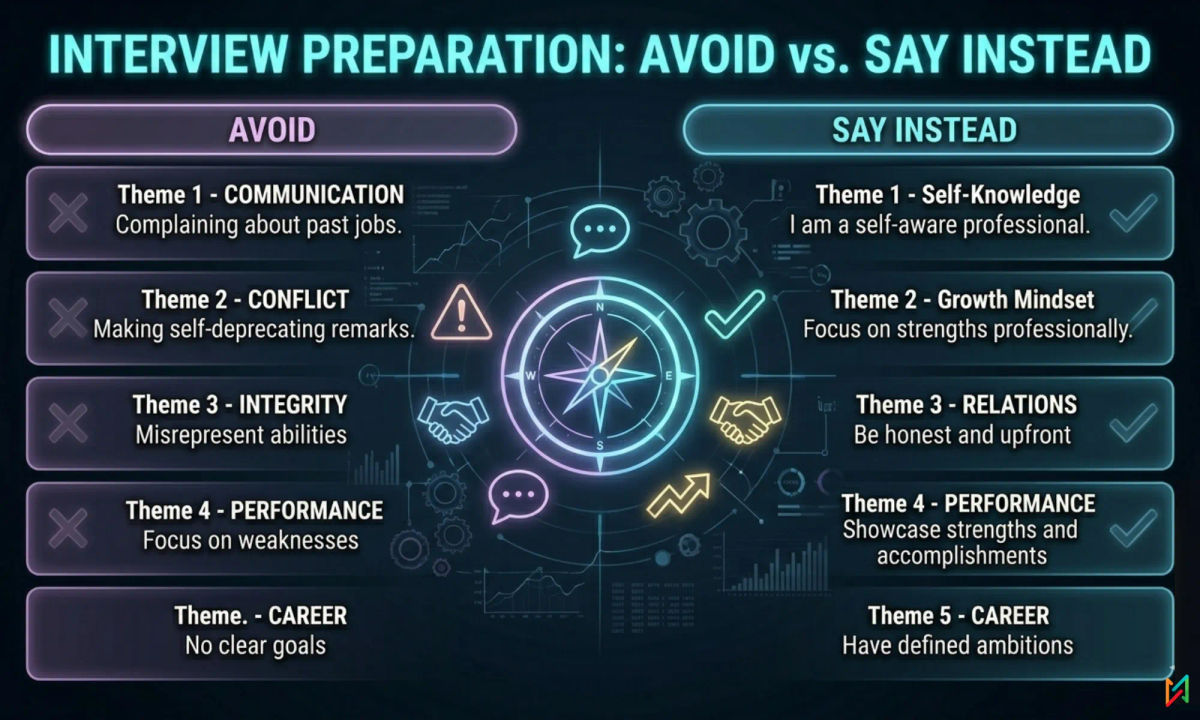
Why What You Say Matters More Than You Think
The interview process is a critical juncture for securing your ideal job position. It goes beyond merely showcasing technical skills and requires effective communication under pressure. A simple misstep can jeopardize your chances, often because of how you articulate yourself rather than what you say. For instance, during an intense interview, hesitating before answering with clichéd responses like "I work too hard" might signal a lack of self-awareness or authenticity to the interviewer.
Strong candidates anticipate these moments and prepare thoughtful answers that reflect their commitment to personal growth and improvement. Surprisingly, many overlook the critical aspect of delivery: tone, inflection, and body language all play pivotal roles in how your message is received. According to a study by the University of California, Berkeley, 93% of communication effectiveness depends on non-verbal cues and vocal elements rather than just words alone. A well-delivered answer that aligns verbal content with confident body language can leave a lasting positive impression.
Success in high-pressure scenarios hinges on your ability to articulate yourself clearly and confidently. Mindfulness of the nuances, such as maintaining eye contact or avoiding filler phrases like "um" and "uh," can make all the difference between securing an offer and being overlooked. This level of awareness transforms how you are perceived during pivotal moments.
Lack of Clarity Can Hurt Your Position
When you say "I'm open to anything" during job interviews, it may seem like you lack direction. Employers are looking for candidates who understand their strengths and have clear goals in mind. Showing clarity about your ambitions can make a strong impression on potential employers because it indicates that you've given careful thought to what you want to achieve.
In contrast, expressing vague interests doesn't help you stand out from other applicants. For instance, if you're interviewing for a tech startup and say "I'm interested in technology," it might not set you apart from someone else who is equally open about their technological curiosity. However, specifying your interest in innovative software development or data analytics can demonstrate a more nuanced understanding of the industry.
Before an interview, thorough research about the company is essential. While honesty is important, admitting to a lack of knowledge might be interpreted as a lack of preparation. Instead, asking insightful questions such as "What are some recent challenges your team has faced?" or sharing relevant insights from your own experience can create a positive first impression and highlight your enthusiasm for the position.
Self-Awareness Matters More Than Perfection
In today’s competitive job market, perfectionism often hinders rather than helps candidates. Instead of striving for an unattainable image of flawlessness, acknowledging and addressing personal weaknesses can set you apart from others. For instance, when discussing leadership skills during an interview, mention any steps you’ve taken to improve in areas where you feel less confident. Perhaps you took a course or sought mentorship—these actions speak louder than words.
Consider the example of Sarah, who admitted her initial struggle with public speaking but shared how she enrolled in workshops and joined Toastmasters to become more comfortable leading meetings. Her self-awareness and proactive approach impressed hiring managers, demonstrating that personal growth is valued over perfection. When describing yourself as a perfectionist, it’s crucial to provide context. Explain your dedication to high standards while balancing efficiency and priorities.
For instance, you might say, "I set ambitious goals but prioritize tasks based on urgency and importance, ensuring I meet deadlines without compromising quality." This nuanced approach highlights your commitment to excellence while also showing that you are adaptable and realistic about the demands of professional life. By emphasizing self-awareness, you present yourself as a mature and well-rounded candidate who is ready for any challenge.
Negativity Leaves a Lasting Impression
Discussing past employers can be precarious ground, especially when the conversation veers towards negative aspects. Such comments often raise red flags about an individual's professionalism and maturity. Instead of dwelling on past grievances, it’s far more effective to focus on future opportunities where you can grow and expand your skill set. By doing so, you not only highlight your learning ability but also demonstrate adaptability—a trait highly valued in today’s dynamic work environment.
When crafting your narrative around previous experiences, emphasize the lessons learned and how they have prepared you for new challenges. For instance, if you faced a difficult project at your last job, instead of complaining about it, discuss what strategies you used to overcome obstacles and how these same skills can be leveraged in future roles. This approach not only showcases your resilience but also leaves potential employers with a positive impression of your problem-solving capabilities.
According to a recent study by LinkedIn, recruiters are twice as likely to hire candidates who present themselves positively and confidently, regardless of their past experiences. Therefore, it’s crucial to focus on the strengths you bring to the table and how they align with future opportunities. This forward-looking perspective not only sets the tone for constructive conversations but also builds a narrative that highlights your potential and readiness to take on new challenges.
Questions Reflect Your Interest and Mindset
Candidates who walk into an interview without prepared questions often miss a crucial opportunity to engage meaningfully. Such behavior can signal a lack of curiosity or engagement, which might indicate that the candidate is not truly interested in understanding the role or the company's culture. Interviews are two-way conversations designed for both parties to gain insight and make informed decisions. Asking thoughtful questions reveals your genuine interest and enthusiasm, setting you apart from those who merely go through the motions.
Instead of stating, "I don't have any questions," focus on inquiring about challenges, expectations, or growth opportunities within the role. For instance, asking about professional development programs or steps taken to ensure employee engagement can highlight your proactive approach and willingness to grow with the organization. A specific example is when a candidate asks how the company fosters innovation among its employees, demonstrating an understanding of the importance of continuous improvement in today's fast-paced work environment.
It’s also wise to avoid leading with questions about salary or benefits, as this might suggest that your primary interest lies in personal gain rather than in learning about the role and the organization. Understanding the responsibilities and expectations associated with a position before discussing compensation demonstrates your commitment to finding the right fit. This nuanced perspective can make a significant difference in how you’re perceived by potential employers.
Teamwork and Accountability Are Always Being Evaluated
In the dynamic landscape of modern workplaces, the ability to collaborate effectively is not just a preference but a necessity. While there are individuals who shine when working alone, demonstrating proficiency in teamwork can set you apart from the crowd. Employers highly regard employees who can adapt to various work styles and environments, underscoring the importance of showcasing both your independent capabilities and your aptitude for team settings.
Consider, for example, a project where I led a cross-functional team tasked with launching a new product within an aggressive timeline. By leveraging strong communication skills, we established clear goals and roles, ensuring everyone was on the same page from day one. This not only fostered a sense of ownership among team members but also helped us navigate complex challenges efficiently. Through this project, I learned that effective leadership involves more than just delegating tasks; it’s about inspiring a shared vision and creating an environment where every voice is heard.
Accountability in the workplace goes beyond acknowledging mistakes—it's about taking proactive steps to improve. One specific instance involved recognizing my tendency to overlook small details under time pressure, which led to minor errors in project deliverables. To address this, I introduced a structured daily review process and actively sought feedback from team members on both progress and areas needing attention. This approach not only helped me mitigate future issues but also reinforced the importance of transparency and continuous improvement within our team.
Growth Over Impatience
In today's fast-paced work environment, it can be tempting to prioritize growth and advancement above all else. However, this mindset can often lead to a focus on how soon you can get promoted, rather than what value you're bringing to the role. This kind of thinking can give the impression that you're more interested in climbing the corporate ladder than in making meaningful contributions.
A more effective approach is to shift your focus from getting ahead to growing as an individual and as a professional. Ask yourself questions like "What skills do I need to develop to excel in this role?" or "How can I leverage my strengths to make a positive impact on the team?" By doing so, you'll demonstrate a willingness to put in the effort required to succeed, rather than simply seeking shortcuts to advancement.
Moreover, by prioritizing growth over impatience, you'll be better equipped to handle setbacks and failures along the way. When you're focused on personal development and improvement, you're more likely to view challenges as opportunities for learning and growth, rather than threats to your ego or sense of self-worth. This mindset can lead to a greater sense of fulfillment and satisfaction in your work, even when faced with obstacles.
Final Thought
The key to acing an interview lies in a thoughtful and intentional approach, not memorized answers. This demonstrates critical thinking and strategic skills valued by employers. For instance, when asked about past challenges, instead of vague responses like "We lacked resources," provide nuanced insights showcasing problem-solving and adaptability. A typical scenario might involve identifying the root cause of an issue and developing a new strategy for success.
Such thoughtful responses highlight proactivity, resourcefulness, and learning from experiences. Preparation should focus on conveying key themes and skills rather than just avoiding pitfalls. Reflect on your experiences to craft messages that stand out, making a positive impression and increasing your chances of landing the job.