 WORKPLACE SIGNALS
 Work Conversations: Do’s and Don’ts That Instantly Improve Your Communication
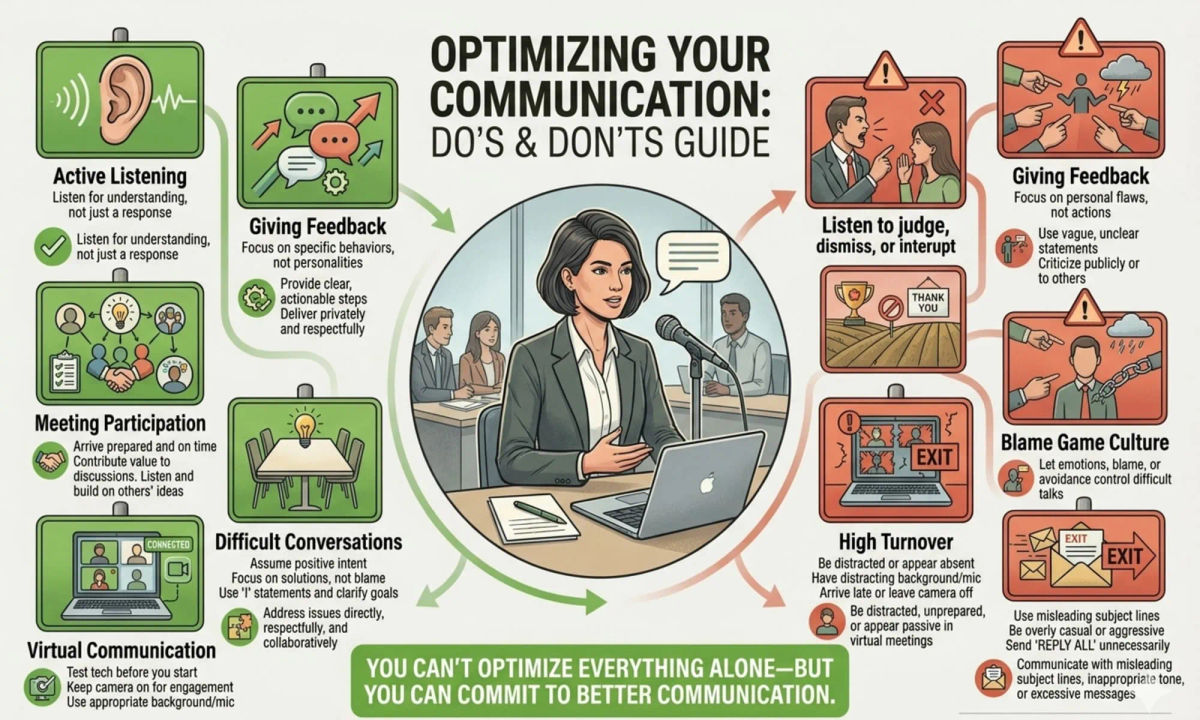
Unlock the Power of Workplace Communication
Workplace communication is one of the most underestimated career accelerators. You can be highly skilled, technically strong, and hardworking—but if your communication style is off, it quietly limits your growth. The difference between being heard and being ignored often comes down to how you show up in everyday conversations.
Avoid Common Pitfalls
Silos, misaligned priorities, and lack of context can quickly derail even the most well-intentioned efforts at collaboration. It's essential to understand that workplace communication is not just about sharing information; it's about building trust, fostering connections, and resolving conflicts.
- Avoid interrupting others
- Listen actively and ask clarifying questions
- Show genuine interest in others' perspectives
- Clarify expectations and avoid assumptions
Surface-level communication may help you get by, but it won't take your career to the next level. To truly unlock the power of workplace communication, you need to dig deeper, understand the underlying dynamics at play, and adapt your approach accordingly.
Active Listening: A Foundation for Effective Communication
One of the most fundamental skills is active listening. In most workplaces, people listen to respond, not to understand. This leads to interruptions, misunderstandings, and shallow conversations.
Strong communicators do the opposite. They give full attention, maintain eye contact, and ask thoughtful questions. This signals respect and builds trust.
This foundation is essential for effective communication because it allows individuals to fully grasp the context and nuances of a conversation. When we actively listen, we can pick up on subtle cues, clarify misunderstandings, and respond in a way that aligns with the original message.
In everyday scenarios, this might look like asking clarifying questions after someone shares their thoughts or experiences. It could also mean maintaining eye contact while someone is speaking, rather than glancing at your phone or computer screen.
| Key Takeaways |
|---|
| Active listening requires attention and understanding |
| Strong communicators prioritize understanding over response |
The Art of Giving Feedback
Focusing on Actions, Not Traits
Giving feedback that builds relationships requires a specific approach. It's not about criticizing individuals, but rather focusing on the actions or behaviors that need improvement. This approach acknowledges that people are more than their mistakes and allows for growth and learning.
- Acknowledge what's working
- Provide clear, constructive suggestions
- Deliver feedback privately to maintain a safe environment
Poor feedback can be damaging, so it's essential to avoid common pitfalls. Criticizing someone publicly can lead to defensiveness and hurt their reputation. Vague complaints or emotionally charged language can also cause more harm than good.
Example scenario: A manager gives a team member feedback on a specific task, focusing on the action rather than the person. The team member feels heard and motivated to improve, leading to better outcomes. A key principle of effective feedback is to prioritize clarity over kindness. It's not about being harsh or uncaring, but rather providing clear guidance that helps others grow. When done correctly, feedback can be a powerful tool for building trust and improving performance.
Meetings: A Platform for Visibility and Influence
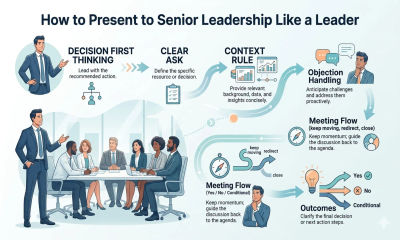
When it comes to building visibility and influence, meetings are a crucial platform. By showing up prepared, contributing relevant ideas, and helping move discussions forward, you position yourself as someone who adds value.
This mindset is what sets apart high-performers from the rest. It's not just about attending meetings; it's about being intentional with your time and contributions. By doing so, you create a strong impression that can have lasting effects on your career and relationships.
A simple habit like summarizing next steps before a meeting ends can make all the difference. It shows that you're responsible, organized, and willing to take ownership of your actions. This may seem like a small gesture, but it's a powerful way to demonstrate your commitment to getting things done.
Navigating Difficult Conversations
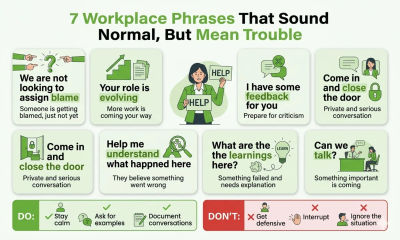
Difficult conversations are inevitable in any workplace. The way you handle them defines your maturity as a professional.
Starting conversations with a neutral or positive tone, using phrases like "I feel" instead of blame-oriented language, and focusing on solutions helps keep the discussion productive.
Solutions Over Blame
Avoid accusatory language that can lead to defensiveness. Instead, emphasize the impact of the issue on the team or organization.
- Focus on shared goals and how they relate to the conversation topic.
- Use "what" questions instead of "why" questions to encourage collaboration.
Acknowledge the other person's perspective and show empathy. This helps build trust and creates a safe environment for constructive dialogue.
"The key is to stay calm, listen actively, and focus on finding a solution." — Anonymous Professional
Solutions-oriented approach:
| Challenge | Solution |
|---|---|
| Defensiveness | Acknowledge the other person's concerns and show empathy. |
| Lack of clarity | Use clear, concise language to explain your point. |
The Importance of Virtual Communication
Virtual communication has become an indispensable aspect of modern work, presenting both opportunities and challenges. By cultivating simple yet effective habits, such as conducting thorough setup checks prior to calls, maintaining a distraction-free virtual background, speaking clearly, and summarizing key points afterwards, professionals can significantly enhance the effectiveness of their remote interactions. On the other hand, poor audio quality, visual distractions, or lack of structure in virtual communications can erode clarity and professionalism.
While technical issues can arise, they are often a minor obstacle compared to the cognitive and emotional demands of maintaining focused attention during lengthy virtual meetings. To mitigate these challenges, individuals must develop strategies for managing their own engagement and staying committed to the discussion at hand.
- Awareness is key: Recognize when your mind starts to wander and refocus on the conversation.
- Engage actively: Prepare thoughtful questions, share relevant insights, or offer constructive feedback to stay invested in the dialogue.
- Maintain visual cues: Use nonverbal indicators like nodding, making eye contact, or using facial expressions to demonstrate engagement and maintain a connection with others.
Email Etiquette: A Key to Efficient Communication
Effective email etiquette hinges on several key elements. Clear subject lines, for instance, help readers quickly grasp the purpose of the message, allowing them to prioritize their time accordingly.
Avoiding ambiguity and maintaining a concise tone are also crucial. Well-defined next steps, such as specific actions or deadlines, can keep recipients on track. Finally, proofreading emails before sending ensures that messages are free from errors, reducing misunderstandings and misinterpretations.
Simplify your communication approach to streamline interactions.
- Avoid ambiguous or misleading subjects that may lead to unnecessary responses or misinterpretations,
- Maintain a concise and straightforward tone in your email body to minimize misunderstandings,
- Use defined next steps, such as specific actions or deadlines, to keep the recipient on track,
- Proofread your emails for spelling, grammar, and punctuation errors before hitting send,
By adopting these habits, you can significantly reduce email-related frustrations and increase overall productivity. Remember that people appreciate emails that respect their time and attention.
The Bottom Line: Effective Workplace Communication is Key to Success
At its core, effective workplace communication is not about saying more—it is about saying the right things in the right way. The professionals who grow fastest are not always the most knowledgeable. They are the ones who communicate clearly, listen actively, and create positive interactions consistently.
Mastering these do's and avoiding these don'ts will not just improve your conversations—it will improve how people perceive your value.
Do:
- Communicate clearly
- Listen actively
- Create positive interactions
Don't:
Remember, effective workplace communication is not just about saying the right things. It's also about being approachable and open to feedback.
“Communication is the lifeblood of any organization.”
| Do | Don't |
|---|---|
| Communicate clearly | Avoid miscommunication |
| Listen actively | Interrupt or dismiss others |
| Create positive interactions | Maintain a negative tone |