 WORKPLACE SIGNALS
 7 Workplace Phrases That Sound Normal But Actually Mean Trouble
Workplace communication is rarely as straightforward as it sounds. On the surface, conversations appear polite, neutral, and professional. But beneath that surface, there is often a layer of meaning that isn’t explicitly stated. Managers and leaders frequently choose their words carefully—not to mislead, but to maintain professionalism, avoid conflict, or soften difficult messages.
The result is a set of phrases that sound completely normal but carry hidden signals. If you don’t recognize them, you may miss important cues about your performance, expectations, or upcoming challenges. Understanding these phrases gives you an advantage. It allows you to respond thoughtfully instead of reacting emotionally, and more importantly, it helps you navigate difficult situations with clarity and confidence.
Here are seven common workplace phrases—and what they often really mean.
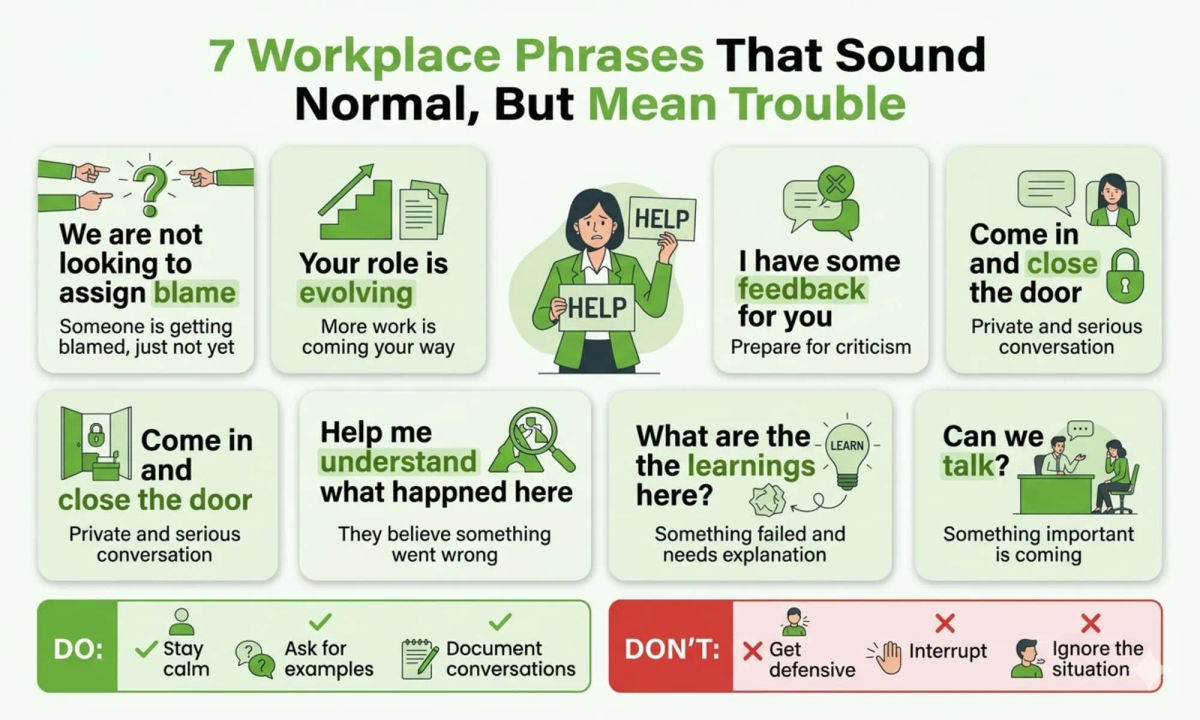
1. “We are not looking to assign blame”
At first glance, this phrase sounds reassuring. It suggests a collaborative environment where mistakes are treated as learning opportunities rather than failures. However, in many cases, it signals that accountability is already being considered.
When this phrase is used, it often means that something has gone wrong and leadership is trying to understand the situation without escalating tension immediately. While they may not be assigning blame in that moment, they are certainly trying to identify responsibility.
The best response is to stay calm and factual. Avoid defensiveness or shifting blame onto others. Instead, focus on clearly explaining what happened, what you observed, and what can be done to resolve the issue. This demonstrates maturity and professionalism, which can significantly influence how the situation is perceived.
2. “Your role is evolving”
This phrase is commonly framed as an opportunity for growth, and sometimes it genuinely is. However, it can also indicate that expectations are increasing—often without immediate adjustments to compensation or resources.
An evolving role may mean additional responsibilities, shifting priorities, or even the need to take on tasks outside your current scope. While this can be beneficial for long-term growth, it can also lead to overload if not managed carefully.
The key is to respond with curiosity and clarity. Instead of passively accepting the change, ask thoughtful questions about priorities, expectations, and trade-offs. Understanding what should be deprioritized is just as important as knowing what is being added. Handled well, this situation can position you for growth. Handled poorly, it can lead to burnout.
3. “I have some feedback for you”
Feedback is essential for growth, but this phrase often signals that the conversation may be uncomfortable. In many workplaces, positive feedback is shared casually, while critical feedback is introduced more formally.
Hearing this phrase usually means you should prepare to listen carefully. The natural instinct may be to defend your actions, but that often works against you.
Instead, focus on understanding the specifics. Ask for examples, clarify expectations, and take notes if necessary. This shows that you are serious about improving and value the input being given.
The way you handle feedback often matters more than the feedback itself. A calm, receptive response can significantly strengthen your professional reputation.
4. “Come in and close the door behind you”
Few phrases create as much immediate tension as this one. It signals a private conversation, often about something serious or sensitive. This does not always mean bad news, but it does indicate that the topic requires discretion. It could involve performance concerns, team dynamics, or organizational changes.
In these situations, composure is critical. Bring a notebook if possible, listen carefully, and avoid interrupting. Taking notes not only helps you retain information but also signals that you are treating the conversation seriously. Regardless of the outcome, maintaining professionalism in these moments can leave a lasting positive impression.
5. “Help me understand what happened here”
This phrase is often used when something has gone wrong and leadership wants your perspective before making a judgment. While it may sound neutral, it usually implies that there is already concern about the situation. The goal is to gather context, not necessarily to accuse. Your response should focus on clarity and accountability.
Explain the situation objectively, avoid emotional language, and highlight any steps taken to address the issue. If mistakes were made, acknowledging them honestly often builds more trust than trying to deflect responsibility. This is an opportunity to demonstrate integrity under pressure.
6. “What are the learnings here?”
This phrase typically follows a mistake, missed target, or unsuccessful outcome. It reflects a shift toward understanding and improvement rather than immediate blame. However, it also signals that performance did not meet expectations. Leaders ask this question to evaluate how you process failure.
Do you reflect thoughtfully, or do you avoid responsibility? Do you extract meaningful insights, or do you provide generic responses? A strong answer includes specific lessons and actionable next steps. This shows that you are capable of growth and can turn setbacks into improvements. Handled correctly, even failure can strengthen your position.
7. “Can we talk?”
This is perhaps the most open-ended—and often the most anxiety-inducing—phrase in the workplace. Its ambiguity leaves room for interpretation, which can lead to unnecessary stress. In most cases, it simply means that a conversation is needed. However, the lack of context makes it important to prepare.
A professional response is to acknowledge the request and seek clarity if appropriate. Asking what the discussion will be about allows you to prepare without appearing defensive. Approaching the conversation with calmness and openness ensures that you are ready for whatever topic comes up.
How to Handle These Situations
Recognizing these phrases is only the first step. How you respond determines the outcome. Staying calm is essential, even if the situation feels stressful. Emotional reactions rarely help and can sometimes make things worse. Asking for specific examples ensures that feedback is actionable rather than vague.
Taking time to document important conversations can also be valuable, both for clarity and for your own records. At the same time, there are clear pitfalls to avoid. Becoming defensive, interrupting, or dismissing concerns can damage your credibility.
Ignoring the situation entirely is equally risky, as it may signal a lack of accountability. Professional growth often depends on how you handle uncomfortable moments—not just comfortable ones.
Conclusion
Workplace communication is layered. What is said and what is meant are not always the same, and understanding that difference is a critical professional skill. These phrases are not designed to mislead—they are part of how organizations manage complexity, maintain professionalism, and navigate difficult conversations.
By learning to interpret them correctly, you position yourself to respond with clarity, confidence, and maturity. In the end, success at work is not just about what you do.
It is also about how well you understand—and respond to—what is being said around you.