 WORKPLACE SIGNALS
 Prioritization Is Not About Saying Yes to Everything — It’s About Choosing What Matters Most
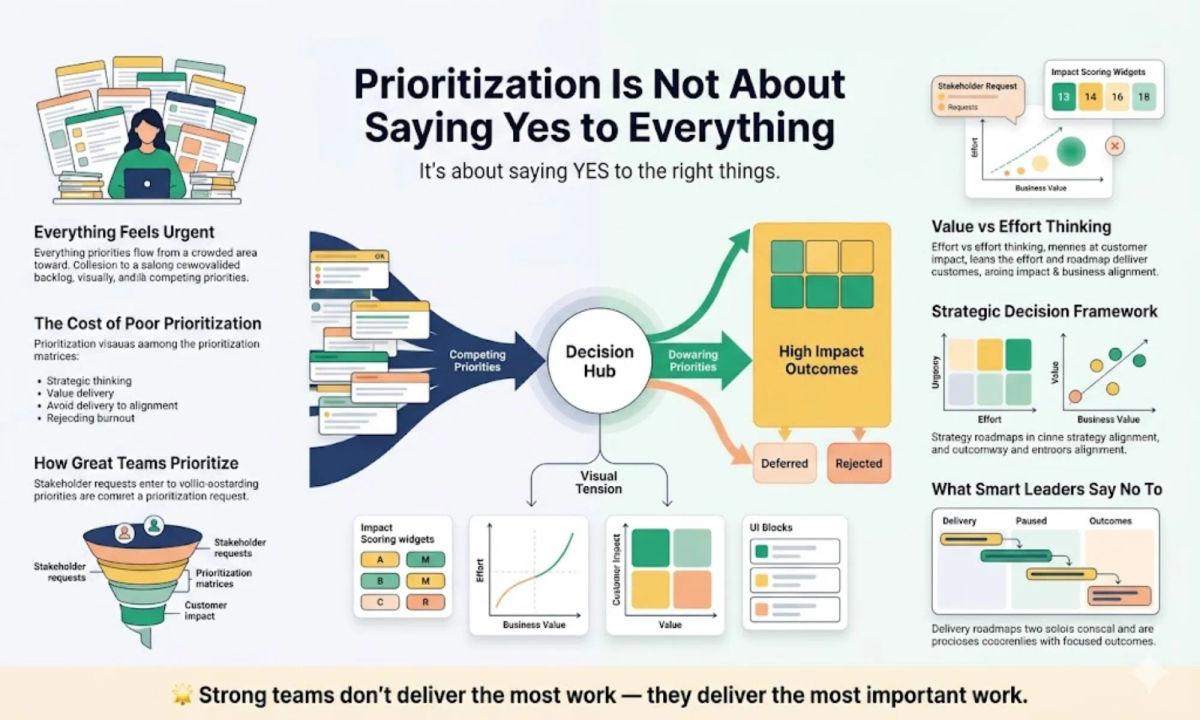
One of the biggest misconceptions in modern workplaces is believing that good teams say yes to everything. In reality, the highest-performing teams, leaders, and organizations become successful because they learn what NOT to prioritize. Every company faces more requests, ideas, meetings, initiatives, and opportunities than it can realistically execute well. Resources are limited. Time is limited. Attention is limited.
Prioritization is the discipline of deciding where focus creates the greatest impact. Without prioritization, teams become reactive instead of strategic. Workloads expand endlessly, priorities conflict constantly, and employees begin operating in survival mode rather than focused execution.
Strong prioritization is not about avoiding work. It is about protecting focus so teams can deliver meaningful outcomes instead of scattered activity. The ability to say “yes” selectively is one of the most valuable leadership and productivity skills in any modern organization.
Why Everything Starts Feeling Urgent
Many workplaces struggle with prioritization because urgency and importance are often confused. A loud request can appear important simply because someone escalates it emotionally or repeatedly.
Emails marked “urgent,” last-minute stakeholder requests, surprise meetings, and constant context switching create environments where teams feel pressure to respond immediately to everything. Over time, organizations develop reactive cultures where:
- priorities change daily
- teams constantly switch focus
- strategic work gets delayed
- burnout increases
- execution quality declines
The problem is not lack of effort. Most teams are already working extremely hard. The real issue is lack of prioritization clarity. When everything becomes a priority, nothing truly receives focused attention.
The Hidden Cost of Poor Prioritization
Poor prioritization creates damage that often spreads quietly across an organization. At first, saying yes to everything can feel collaborative and responsive. Eventually, however, the consequences become visible.
Common outcomes include:
- overloaded teams
- missed deadlines
- delivery inconsistency
- lower work quality
- employee burnout
- decision fatigue
- constant reprioritization
- frustrated stakeholders
Perhaps the most dangerous consequence is diluted impact. Teams spend enormous energy completing work that produces limited business value while high-impact opportunities remain underfunded or delayed. Busy organizations are not always productive organizations. Without prioritization discipline, activity increases while meaningful outcomes decline.
Why Prioritization Is Really About Trade-Offs
Every prioritization decision is ultimately a trade-off. Choosing one initiative means delaying another. Approving additional work usually impacts timelines, focus, or quality elsewhere. This is why mature organizations approach prioritization strategically rather than emotionally.
Strong leaders ask questions such as:
- What creates the highest value?
- What aligns with current goals?
- What produces long-term impact?
- What can wait?
- What should we stop doing?
- What creates unnecessary complexity?
These questions force clarity. Good prioritization is not simply task management. It is strategic resource allocation. Organizations that understand this make more intentional decisions and maintain stronger execution consistency.
High-Performing Teams Focus on Outcomes
One of the biggest differences between average teams and high-performing teams is focus. Average teams often measure success through volume: more meetings, more features, more projects, more activity. High-performing teams focus on outcomes instead.
They prioritize work that:
- solves meaningful problems
- improves customer experience
- supports strategic goals
- reduces operational friction
- creates measurable business value
This mindset changes how decisions are made. The goal becomes delivering the right work rather than delivering the maximum amount of work. This distinction is critical for sustainable productivity.
Why Saying No Is a Leadership Skill
Many professionals struggle with prioritization because saying no feels uncomfortable. Leaders may fear disappointing stakeholders. Employees may worry about appearing unhelpful. Teams may avoid difficult trade-off conversations.
However, effective prioritization requires clarity and boundaries. Saying yes to low-value work often means indirectly saying no to more important opportunities. Strong leaders communicate this transparently.
Instead of rejecting ideas emotionally, they evaluate them against:
- strategic alignment
- customer value
- timing
- resource availability
- business impact
- operational cost
This creates healthier decision-making environments. Professional prioritization is not about negativity. It is about protecting focus and maximizing impact.
Common Prioritization Frameworks
Many organizations use structured frameworks to improve decision quality.
Popular prioritization approaches include:
Value vs Effort Matrix
This framework evaluates work based on expected value compared to implementation effort.
High-value, low-effort initiatives are often prioritized first.
MoSCoW Method
Work is categorized into:
- Must Have
- Should Have
- Could Have
- Won’t Have
This helps teams distinguish critical needs from optional additions.
RICE Scoring
Initiatives are evaluated based on:
- Reach
- Impact
- Confidence
- Effort
This approach is widely used in product management and roadmap planning.
Weighted Shortest Job First (WSJF)
This framework prioritizes work based on economic impact and delivery efficiency.
The best framework depends on organizational context, but the principle remains the same:
Focus resources where they create the greatest value.
The Relationship Between Prioritization and Burnout
Poor prioritization is one of the biggest hidden causes of workplace burnout. When teams constantly juggle competing priorities, cognitive overload increases significantly. Employees feel pressure to multitask continuously while expectations remain unclear.
This creates:
- mental fatigue
- reduced focus
- lower creativity
- delivery stress
- emotional exhaustion
Healthy prioritization improves not only productivity but also team sustainability. Focused teams operate with greater clarity, confidence, and execution quality. Protecting attention is becoming one of the most important leadership responsibilities in modern work environments.
How Great Leaders Communicate Priorities
Strong prioritization requires strong communication.
Employees perform better when they understand:
- what matters most
- why certain work is prioritized
- what trade-offs exist
- what success looks like
- what can wait
Ambiguous priorities create confusion and fragmented execution. The best leaders repeatedly reinforce strategic focus through transparent conversations and consistent decision-making. Clarity reduces unnecessary work dramatically. Teams move faster when they stop chasing conflicting priorities.
Practical Ways to Improve Prioritization
Improving prioritization does not always require complex systems. Small behavioral changes often create major improvements. Effective strategies include:
- limiting active initiatives
- clarifying business goals
- reviewing workload capacity realistically
- creating explicit trade-offs
- measuring outcome impact
- reducing unnecessary meetings
- protecting focused work time
- reevaluating low-value recurring tasks
Organizations that continuously refine prioritization habits build stronger execution cultures over time.
Final Thoughts
Prioritization is not about doing more. It is about making intentional decisions about where time, energy, and resources create the greatest value. Strong teams understand that every “yes” comes with a cost.
The most effective organizations are not the ones chasing every opportunity simultaneously. They are the ones capable of maintaining focus while navigating complexity. When leaders improve prioritization discipline, teams become:
- more productive
- less overwhelmed
- more aligned
- more strategic
- more sustainable
In modern workplaces filled with constant demands, prioritization has become one of the most important competitive advantages organizations can develop. Because success rarely comes from saying yes to everything. It comes from consistently saying yes to the right things.